South Korea Threatens Ukraine With Further Measures in Prisoner Dispute
The diplomatic clash over two North Korean prisoners underscores how geopolitical trust can shape defense technology ties and cross-border innovation partnerships.
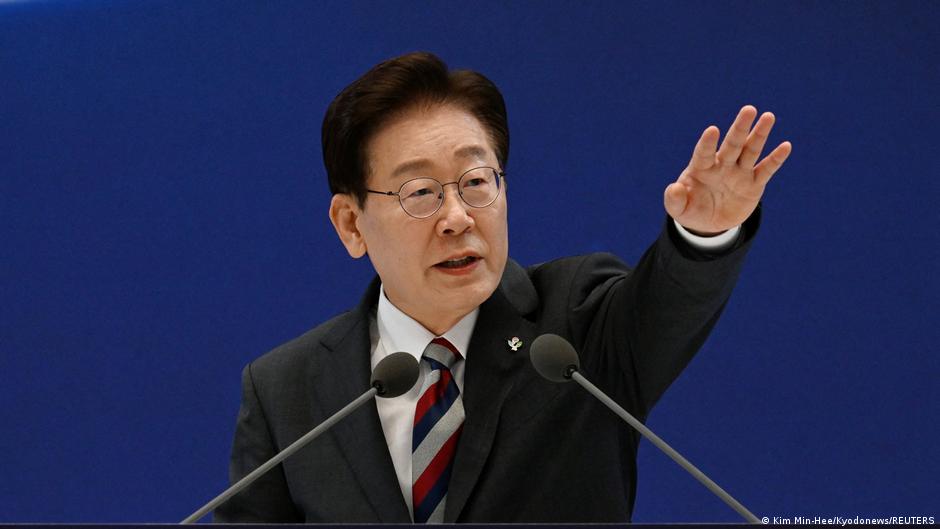
South Korean President Lee Jae Myung has warned that Seoul will take “further measures” if Ukraine refuses to publicly acknowledge the existence of a confidentiality agreement concerning the transfer of two North Korean prisoners of war to South Korea and does not apologize for disclosing the matter.
Lee did not specify what those measures would be. In a post on X late Thursday night, October 2, he accused Kyiv of portraying Seoul as a liar and framed the dispute as a matter of national standing.
“If the acknowledgement of the facts and a public apology continue to be rejected, we will take further measures. This is a matter of honor for the Korean people and the state that we cannot ignore,” Lee wrote.
The confrontation has added a new layer of uncertainty to relations between Ukraine and South Korea, two countries whose cooperation has strategic significance well beyond diplomacy. For technology startups, defense suppliers and venture investors watching the security sector, the dispute highlights how sensitive intelligence, military assistance and trust between governments can influence the operating environment for dual-use innovation.
Trust Becomes a Strategic Asset
The dispute began after Ukrainian President Volodymyr Zelensky said at the United Nations General Assembly in late September that Kyiv had handed over two North Korean prisoners of war to South Korea. Seoul reacted sharply, saying the disclosure could endanger the prisoners’ relatives in North Korea and negatively affect relations between Seoul and Pyongyang.
South Korean First Vice Foreign Minister Park Yoon-joo said Kyiv’s denial of a confidentiality agreement undermined mutual trust and demanded formal explanations and an apology from Ukraine. Ukrainian presidential communications adviser Dmytro Lytvyn, however, said there had been no agreement between Kyiv and Seoul that information about the fate of the prisoners could not be disclosed. South Korea’s presidential administration expressed “deep regret” over those claims.
For venture-backed companies working in cybersecurity, drones, demining, battlefield communications, logistics, satellite analytics and other defense-adjacent fields, government-to-government trust is not an abstract diplomatic issue. It can determine whether technology partnerships proceed, whether procurement channels remain open and whether investors treat a market as scalable or politically exposed.
South Korea has so far supplied Ukraine mainly with non-lethal military equipment, including demining equipment. Reuters has noted that some Western countries have recently urged Seoul to also supply lethal weapons to Ukraine. Any deterioration in trust could complicate that debate and affect the broader ecosystem of contractors, hardware manufacturers and software vendors around defense modernization.
Kyiv Seeks a Rapid Resolution
Ukraine’s foreign minister, Andrii Sybiha, said in Kyiv that Ukraine is interested in resolving the diplomatic dispute with South Korea as quickly as possible and continuing cooperation with Seoul. His comments came several hours before Lee’s public statement.
“I would not like to call this an incident. Let’s say it is a diplomatic misunderstanding,” Sybiha said, according to RBC-Ukraine.
Sybiha said he had been personally speaking daily in recent days with his South Korean counterpart. He stressed that Ukraine sees South Korea as an important country and hopes for continued momentum, cooperation and concrete results.
“I very much want this situation to be resolved in the near future, and we are working on it,” Sybiha said. “For us, South Korea is an important country. And I very much hope for momentum, continuation and concrete results that we are indeed achieving with them.”
That language matters for Ukraine’s innovation economy. Since Russia’s full-scale invasion, Ukraine has become a testing ground for rapid wartime development in drones, electronic warfare, battlefield software and demining technologies. South Korea, meanwhile, is home to advanced electronics, robotics, semiconductor, AI and defense manufacturing capabilities. A sustained partnership between the two could have implications for startup commercialization, procurement pipelines and strategic investment across dual-use technologies.
Political risk, however, remains a major constraint on capital formation in wartime and defense technology markets. Investors assessing Ukrainian startups or South Korean companies with exposure to Ukraine must account for the fact that partnerships often depend on highly sensitive diplomatic arrangements. A public dispute over confidentiality can raise concerns about governance, disclosure protocols and the durability of cross-border cooperation.
Domestic Politics in Seoul
The dispute also carries domestic political implications in South Korea. Shin Yul, a political science professor at Myongji University, told AFP that Seoul’s approach to the diplomatic conflict with Ukraine “could prove problematic” given the current administration’s restrained stance toward North Korea, its nuclear-armed neighbor.
On September 28, South Korean news agency Yonhap reported that the Foreign Ministry had summoned Ukraine’s ambassador over Kyiv’s disclosure of information about the North Korean prisoners of war. On September 30, AFP reported, citing South Korean lawmaker Yoon Kun-young, that both prisoners had arrived in South Korea in mid-September. After questioning and screening by the security service, authorities in Seoul are expected to decide whether to grant them protection and begin the resettlement process.
The episode comes as North Korea’s role in Russia’s war against Ukraine remains under scrutiny. Last week, Zelensky wrote on social media that, according to his information, about 8,000 North Korean troops are currently in Russia and another 10,000 are preparing to be sent there for the war against Ukraine.
For VentureLine’s readership, the immediate question is not only whether Seoul and Kyiv can repair the diplomatic breach. It is whether the episode slows, redirects or reinforces the emerging network of security partnerships linking wartime demand in Ukraine with advanced industrial capacity in allied technology economies. In that market, confidence between governments often becomes the hidden infrastructure on which startup contracts, strategic M&A and venture funding depend.