Putin Nuclear Warning Adds Geopolitical Risk for Startups and Investors
The Russian president used the Valdai forum to blame the West for the war in Ukraine and signal new risks around AI, defense tech and European security.
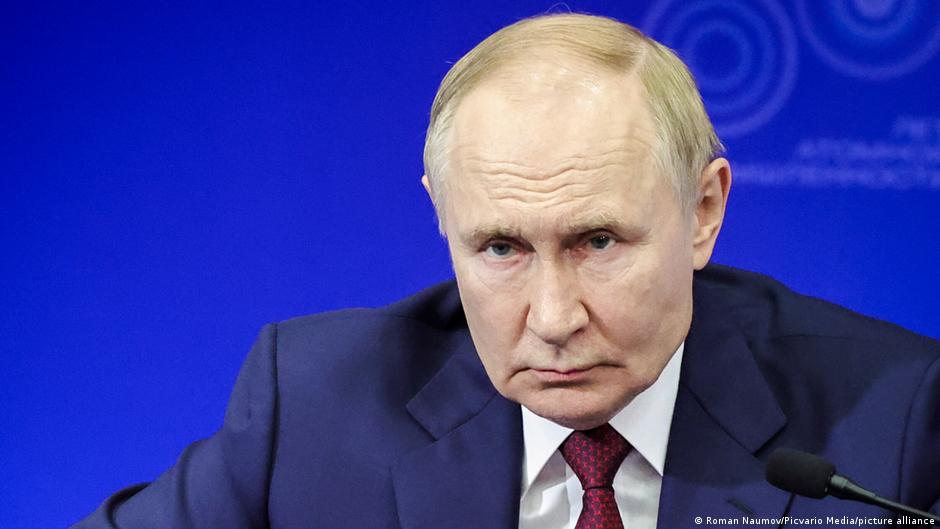
Russian President Vladimir Putin again accused Western countries of aggression against Moscow and warned of a scenario that could have “fatal consequences” for the world, remarks that add another layer of geopolitical uncertainty for technology startups, venture capital investors and companies exposed to European defense and infrastructure markets.
Speaking at the plenary session of the Valdai international discussion club on Thursday evening, October 1, Putin described the situation in Europe and the wider world as “very dangerous.” This year’s Valdai session was moved from Sochi to the Moscow region because of concerns about possible Ukrainian attacks, according to the British newspaper Financial Times, which cited four sources. Two of those sources said the relocation was made at the insistence of Putin’s security service. The Moscow region is also where Russia has concentrated more air defense capabilities.
Putin said several countries possess weapons “capable of destroying all living things.” Asked by himself whether he was confident such weapons would not be used, he answered in the negative. He compared nuclear weapons to a gun hanging on a theater stage that, under the rules of the genre, must eventually be fired.
“If we want to live — and everyone wants to live — let us live together,” Putin said, while warning that further escalation could leave “no school textbooks and no one to study them.”
For global investors, the remarks reinforce a familiar but costly backdrop: capital-intensive startups in Europe, especially those tied to energy, logistics, semiconductors, cybersecurity, dual-use technologies and defense supply chains, are operating in a market where political risk can quickly become operating risk. Although Putin did not announce a new military doctrine, his repeated nuclear references may weigh on cross-border M&A, late-stage financing and enterprise procurement decisions in sectors linked to national resilience.
War Narrative and Territorial Claims
Discussing Russia’s war in Ukraine, now in its fifth year, Putin again claimed that Russia “did not start the war” and that Moscow’s invasion of Ukrainian territory was a response to NATO and Ukraine. “The truth is that it was not we who wanted and started fighting; they started fighting against us,” he said.
According to Putin’s version of events, the West had for years encouraged “aggressive nationalism and Russophobia” in Ukraine in order to turn the country into an “instrument” against Russia. He also claimed that “radicals in Kyiv” had been pushed toward a “coup,” and that NATO allegedly planned to place bases on Russia’s “historical territories.” He again accused Western countries of “aggressive aspirations.”
Putin also made claims about the battlefield. He said Russian forces had allegedly captured 3.5 times more territory over the past month than in the previous one. He claimed Russia currently controls 89% of Donetsk region. According to the Institute for the Study of War, Russia currently controls 81% of Donbas.
Several days earlier, Kyiv said Ukrainian forces had retaken 176 square kilometers of Ukrainian territory during three seasons of the counteroffensive operation “Vivaldi.” At Valdai, Putin again expressed confidence that Russia would seize all of those territories and said Ukraine had no reason to hold on to them.
The dueling claims matter for technology and venture markets because the war has become a sustained driver of demand for drones, electronic warfare, satellite imagery, cybersecurity, battlefield software, autonomous systems and logistics technology. It has also made European governments more active customers for startups that might previously have struggled to sell into defense and public-sector channels.
AI, Nuclear Protocols and Dual-Use Innovation
In the same speech, Putin called for a new convention on the conduct of warfare, referring to the rapid development of artificial intelligence technologies. He cited the case of Soviet officer Stanislav Petrov, who in 1983 did not give the order to launch a nuclear strike even though protocol required him to do so. In Putin’s view, artificial intelligence would have acted differently.
That comment points to a central concern for the innovation ecosystem: the growing overlap between AI, military decision-making and autonomous systems. Startups building AI models, sensor fusion tools, command-and-control software or automated threat detection may face rising scrutiny from governments, investors and acquirers as policymakers debate where human judgment must remain in the loop.
For venture capital, the tension is already visible. Defense tech has attracted more investor attention as Europe rethinks security spending, yet the category carries reputational, regulatory and export-control constraints. Putin’s remarks are likely to reinforce the view that AI governance is no longer only a consumer or enterprise compliance issue, but a strategic matter tied to escalation risk.
Asked about the possibility of strikes on military enterprises in Europe, Putin said Russia would “not necessarily” act in that way, but would “monitor threats.” He said Moscow considers the participation of Western countries in strikes on Russian territory to be a direct threat.
For startups and corporate buyers, that type of warning may sharpen assessments of geographic exposure. Founders with teams, suppliers or data infrastructure in Eastern Europe may face more questions from investors about continuity planning, security architecture and customer concentration. Larger technology companies evaluating acquisitions in the region may also apply higher risk discounts, especially where targets serve defense, aerospace, communications or critical infrastructure clients.
The Valdai address did not introduce a specific new policy affecting startups directly. Its significance for VentureLine’s readership is broader: geopolitical volatility continues to shape the cost of capital, the direction of public procurement and the categories of technology that can scale quickly. The same environment that creates demand for defense and resilience startups can also slow cross-border deals, complicate compliance and make exit timelines harder to predict.