Lithuania backs property curbs on Russians and Belarusians near key sites
The proposed restrictions add a security-driven layer of regulatory risk for foreign founders, investors and dealmakers operating in Lithuania.
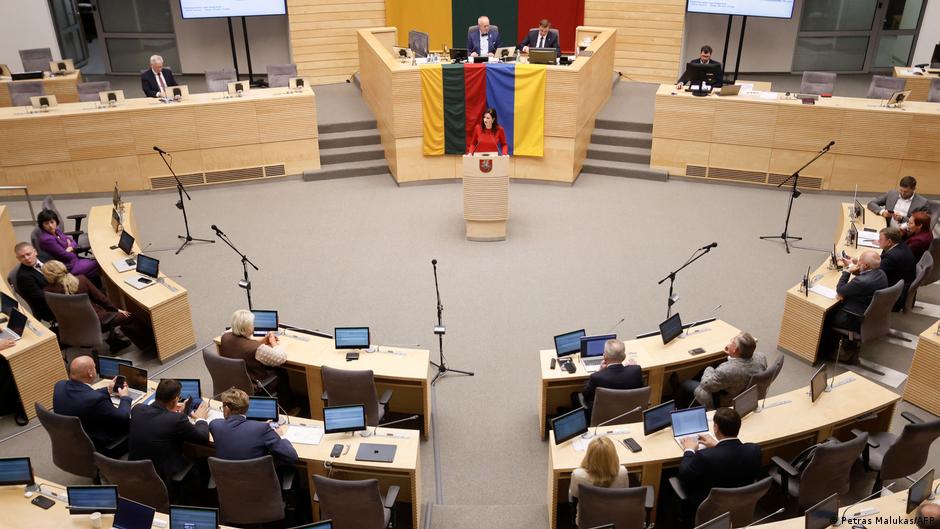
Lithuania’s government has approved a draft law that would bar citizens of Russia and Belarus, including those holding valid residence permits, from buying real estate near strategically important sites, according to Lithuanian National Radio and Television. The measure, approved by the government on Wednesday, September 30, is framed as part of Vilnius’s broader effort to counter espionage, intelligence activity and hybrid operations.
For Lithuania’s startup and venture capital ecosystem, the proposal is not aimed at technology companies directly. But it underscores how national security rules are increasingly shaping the operating environment for founders, investors and acquirers across Europe’s border states. Real estate access, residence status, founder mobility and investor diligence are becoming intertwined with defense policy, particularly in countries exposed to heightened geopolitical risk.
The draft law would restrict purchases in areas close to objects deemed strategically significant. The ban would also apply to Russian and Belarusian citizens with temporary or permanent residence permits. It would not apply where ownership is acquired through inheritance.
According to the draft, the ban is intended to “significantly reduce” intelligence activity and “hybrid operations” in the country.
The document cites risks such as monitoring military exercises or tracking troop movements. If Lithuania’s parliament, the Seimas, approves the bill, the amendments are scheduled to take effect on January 1, 2027. Latvia and Finland already have similar restrictions in force, while Estonia is planning to introduce a comparable ban.
Security policy becomes part of the investment climate
Lithuania has built a reputation as a fast-growing technology hub in the Baltic region, attracting fintech companies, software startups and international talent. The new proposal does not change corporate law or startup financing rules, but it may affect how founders and investors assess relocation, office expansion, executive housing and long-term residency planning.
The practical impact could be most visible for Russian and Belarusian entrepreneurs who have moved to Lithuania since the start of the war in Ukraine or during earlier waves of political and economic migration. Even with residence permits, affected individuals would face limits on property ownership in sensitive locations. For venture-backed companies, that may add another diligence item when reviewing founder residency, asset ownership and exposure to future sanctions-related rules.
The issue also matters for M&A. Buyers conducting cross-border acquisitions in Lithuania’s technology sector may need to examine whether shareholders, executives or key employees from Russia or Belarus are exposed to restrictions that could affect relocation packages, retention plans or security clearances. While the proposed law concerns real estate rather than equity ownership, it signals a broader policy direction in which nationality-linked compliance risks can expand beyond financial sanctions into everyday business operations.
According to Lithuania’s Central Register data for May of this year, 5,104 Russian citizens and 2,781 Belarusian citizens with temporary or indefinite residence permits had acquired real estate in Lithuania, including property near strategically important sites. That existing footprint helps explain why lawmakers are moving from general sanctions toward location-specific ownership controls.
A wider sanctions and defense backdrop
The property bill follows a series of Lithuanian measures targeting Russian and Belarusian citizens. In late April, the Seimas voted 95 to six to extend until December 31, 2027 a sanctions law applying to citizens of Russia and Belarus. The law was originally adopted on May 3, 2023.
Under that framework, Lithuania has suspended the acceptance of applications from Russian and Belarusian citizens for Schengen and national visas. Russian citizens are also prohibited from acquiring real estate in Lithuania, bringing Ukrainian hryvnia cash into the country and obtaining electronic resident status.
Temporary residence permits for Russian citizens can be annulled if authorities establish that the person visited Russia or Belarus more than once in the past three calendar months. Exceptions apply when the trip was caused by objective reasons or was connected to work in international transport.
Neighboring Latvia has also tightened its approach. In June, the Latvian parliament approved restrictions on issuing residence permits to citizens of Russia and Belarus. For venture investors looking at the Baltics as a single regional market, these parallel measures point to a compliance landscape that is becoming more coordinated, but also more complex.
The Lithuanian debate is taking place alongside wider security moves. On September 22, members of the Seimas supported a proposal to repeal the constitutional ban on storing weapons of mass destruction, including nuclear weapons, on Lithuanian territory. According to LRT, 99 lawmakers supported the decision, 13 opposed it and five abstained. To be adopted, the amendment must pass several rounds of voting. The first is scheduled for October 6, and the final vote is scheduled for January 12, 2027.
Lithuanian President Gitanas Nauseda also wrote on X that U.S. troops rotating in to replace American forces that had previously left Lithuania were already on their way to the country. He said he had received confirmation that a new contingent of U.S. military personnel was heading to Lithuania and thanked U.S. President Donald Trump for the decision.
For startups, the core message is that Lithuania remains an innovation market shaped by its security geography. The country’s appeal to founders and investors is likely to continue, but due diligence will increasingly need to cover not only capital, customers and talent, but also nationality-based restrictions, property rules, visa exposure and the policy direction of the Baltic region as a whole.