EU Shelves Defense Expert Group After German and Italian Pushback
The canceled initiative slows a planned channel for Ukraine-linked battlefield innovation to shape Europe’s defense investment agenda.
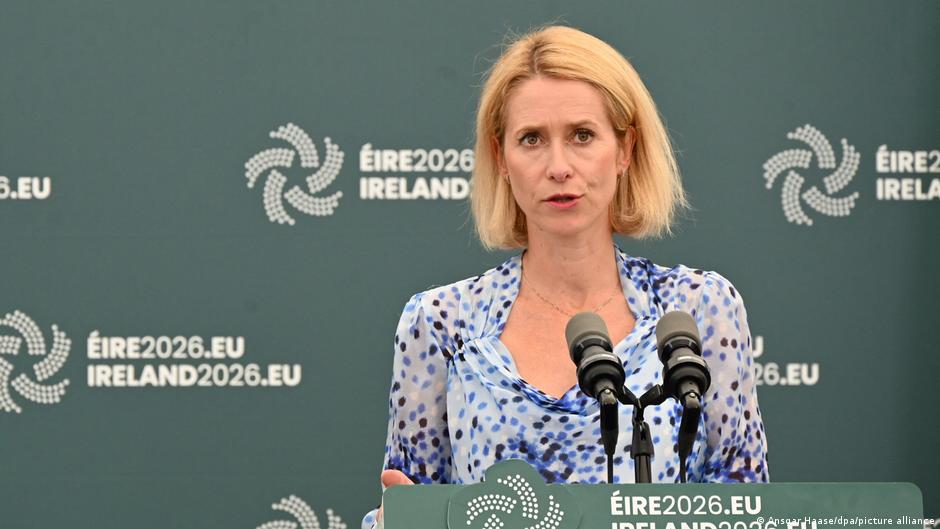
EU foreign policy chief Kaja Kallas canceled at the last minute a planned presentation of a high-level expert group on defense after opposition from several member-state governments, including Germany and Italy, according to dpa. The group had been due to be launched on Monday, September 7, and was intended to develop proposals for strengthening European defense policy and closing capability gaps more quickly and effectively.
For Europe’s emerging defense technology sector, the cancellation is more than a bureaucratic setback. The proposed group was expected to bring together senior political and military representatives from several EU countries, as well as the United Kingdom and Ukraine, creating a forum that could have influenced future procurement priorities, cross-border defense cooperation and the direction of innovation spending. Its postponement leaves startups, investors and strategic buyers watching for alternative mechanisms through which Brussels may align military needs with private-sector technology development.
An EU official in Brussels told dpa late on September 6 that some member states had concluded the initiative was not the right step at this time. After talks with EU defense ministers, the bloc decided not to proceed with this specific initiative, the official said.
“Some member states felt that this was not the right step at this time,” the EU official told dpa.
Defense Innovation Loses a Planned Policy Forum
The expert group was to operate under Kallas’s leadership and prepare a report with concrete recommendations on how Europe could move faster in addressing shortfalls in military capability. The participants were scheduled to be presented at a launch event on the morning of September 7. For startups working in dual-use technologies, battlefield software, drones, secure communications, artificial intelligence, electronic warfare and other defense-adjacent sectors, such a report could have helped signal where governments may place future demand.
Venture investors increasingly treat defense as a market shaped not only by technology but by policy synchronization, procurement pathways and interoperability requirements. A high-level EU group involving Ukraine and the UK could have offered a visible bridge between operational lessons from the war in Ukraine and Europe’s longer-term defense planning. Its cancellation therefore adds uncertainty around how quickly those lessons will be translated into fundable programs, acquisition targets or pan-European procurement opportunities.
According to dpa, the governments of Germany and Italy were among those that had earlier opposed the creation of the expert group. One possible reason cited for Germany’s refusal was Berlin’s critical stance toward Kallas personally as head of the EU’s foreign policy service. In defense policy, the German authorities are said to prefer relying on NATO planning processes. Berlin is also currently advocating that a significant part of the EU External Action Service, which Kallas oversees, be merged with the European Commission.
That institutional debate matters for the startup ecosystem because defense technology commercialization depends heavily on clear demand signals. If member states prefer NATO-led planning, while parts of Brussels seek EU-level coordination, founders and investors may face competing priorities and slower routes from pilot projects to scaled procurement. M&A strategies in the sector could also be affected, as larger defense contractors and software platforms often look for policy clarity before acquiring early-stage capabilities.
Ukraine’s Role Was Central to the Plan
Kallas had announced on September 1, after an informal meeting of EU defense ministers in Wicklow, Ireland, that Ukraine would be involved in the search for solutions to strengthen Europe’s defense capabilities. Kyiv was expected to join a “new high-level group” alongside senior politicians and military officials from EU countries and the United Kingdom.
At that meeting, a DW correspondent asked Kallas who would represent Ukraine in the new group, noting that former Ukrainian defense minister Mykhailo Fedorov had been brought in by Italy as a defense adviser. Kallas did not name Ukraine’s representative or representatives, saying instead that the full composition of the group would be presented on September 7.
The inclusion of Ukraine would have been significant for Europe’s innovation pipeline. Kallas stressed that although most EU countries are also NATO members, gaps remain in the alliance’s defense capabilities that European states need to fill. She said Europe had continued to act too slowly despite a rising level of threats.
“That is why we are also including Ukraine, because it has extensive experience,” Kallas said, describing Kyiv as a “world leader in battlefield innovation.”
For venture-backed companies, Ukraine’s practical experience has become a reference point for rapid iteration under battlefield conditions. The proposed group could have helped formalize a path for that experience to inform European capability planning. Without it, the question becomes whether Brussels and national capitals can still build a coordinated channel for operational feedback, procurement reform and investment priorities.
The EU foreign policy service still intends to examine new opportunities for cooperation with EU countries on defense policy. The diagnosis remains unchanged, the EU official told dpa: Europe must move faster in defense.
“We do not want to look back in a few years and conclude that Europe was so focused on where it should be in 2035 that it missed the opportunity to do what was necessary in 2027,” the official said.
That timeline captures the tension facing Europe’s defense innovation market. Long-term capability plans may stretch toward 2035, but startups and investors operate on shorter cycles. Funding decisions, product development, partnerships and acquisitions are already being shaped by expectations of what European governments will buy in the next several years. The canceled expert group does not eliminate the demand for new defense capabilities, but it delays one planned effort to organize that demand at a European level.
For now, the immediate impact is a loss of momentum around a visible EU-led initiative that would have linked policymakers, military leaders and Ukraine’s wartime innovation experience. The broader opportunity remains intact, but the route to coordinated European defense technology adoption looks less direct.