Fed Raises Rates for First Time in Three Years, Tightening Startup Capital
The Federal Reserve lifted its benchmark range to 3.75%-4% as inflation pressure reshapes financing conditions for startups and investors.
The U.S. Federal Reserve raised the federal funds rate by 25 basis points to a range of 3.75% to 4% on Wednesday, September 16, marking its first increase in three years and signaling a tougher financing environment for technology startups, venture investors and acquisition-minded companies.
The central bank said the move was justified by the need to counter inflation in the United States. The decision was approved by all 12 members of the Federal Open Market Committee, according to the published announcement. For the venture capital market, the unanimous vote matters as much as the quarter-point rise itself: it suggests policymakers are aligned around inflation control even after a period in which rates had been moving lower.
The increase follows three rate cuts in 2024 and three more in 2025, according to Interfax. That reversal changes the assumptions underpinning startup financing models, particularly for companies that depend on cheap capital, rapid hiring, and investor willingness to fund losses in pursuit of scale. Higher benchmark rates tend to raise the cost of debt, pressure public-market valuation multiples, and make risk-free assets more competitive relative to long-duration venture bets.
Cost of capital moves back to the center
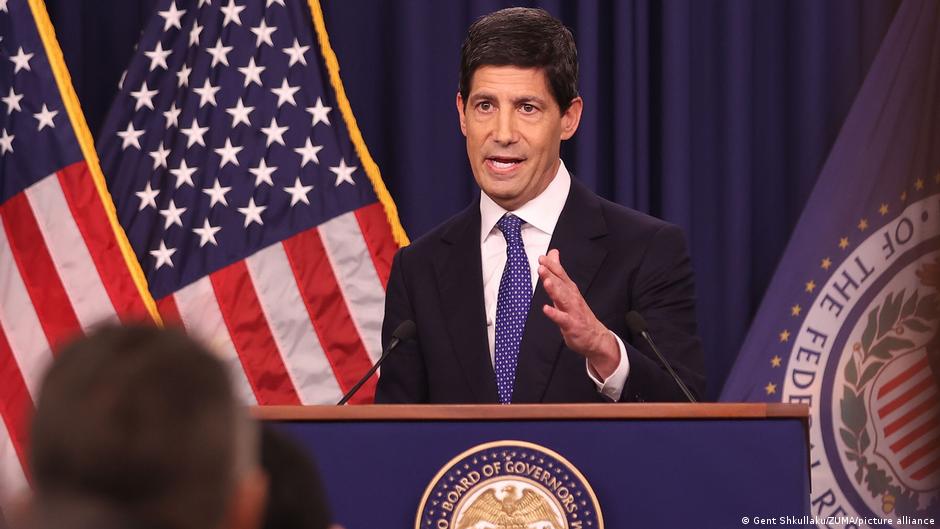
Fed Chair Kevin Warsh framed the decision as a response to persistent inflation rather than a shift aimed at financial markets. At a press conference, he emphasized the central bank's price-stability mandate and said inflation had remained too high for too long.
“Our primary focus within our mandate is on ensuring price stability,” Warsh said. “Simply put, inflation is too high, and this has continued for too long; that is a fact.”
Unlike the European Central Bank in Frankfurt am Main, the U.S. Federal Reserve has a dual mandate: to ensure price stability and a strong labor market, AFP noted. That balance is closely watched by venture investors because labor-market strength shapes both consumer demand and wage costs, while price stability affects discount rates and the availability of capital.
For startups, the practical impact is likely to be uneven. Later-stage companies preparing for public listings or large financing rounds may face more scrutiny on revenue quality, margins and path to profitability. Growth-stage investors may demand tighter unit economics and lower burn rates. Early-stage companies with long development timelines, including deep tech, climate infrastructure and capital-intensive AI startups, could find that the hurdle rate for new funding has risen.
M&A may also feel the effects. Warsh, who previously worked as a banker at Morgan Stanley specializing in mergers and acquisitions, now leads a central bank whose rate decisions can directly influence deal financing. Higher rates can make leveraged acquisitions more expensive, reduce strategic buyers' willingness to pay premium multiples, and push some startups toward structured deals, bridge financing or consolidation at lower valuations.
Political pressure and inflation shock
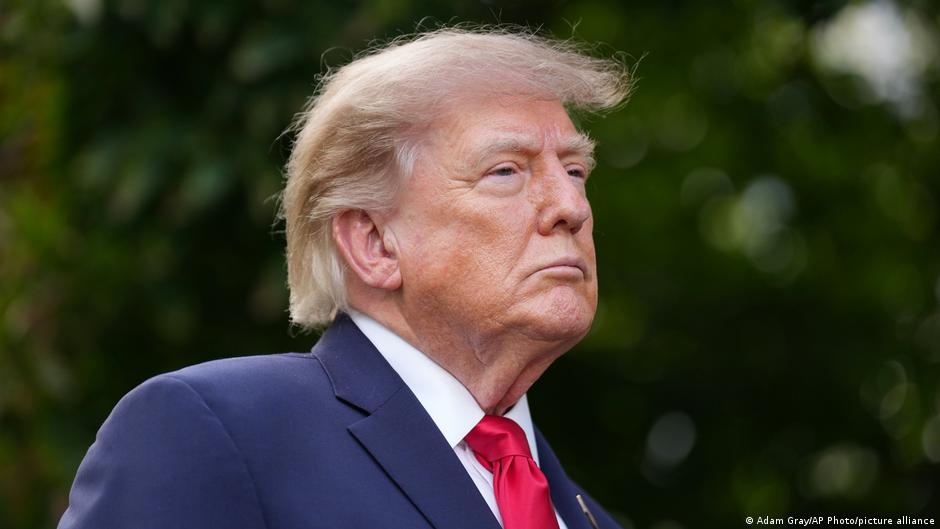
Warsh was nominated to lead the Federal Reserve by U.S. President Donald Trump and took office in mid-May. He served on the Fed's Board of Governors from 2006 to 2011 and had also advised Trump on economic policy. AFP reported that Trump had expected Warsh, as Fed chair, to maintain low interest rates, which among other things would have made real estate loans more affordable.
Instead, inflation pressures have complicated that expectation. According to AFP, the war by the United States and Israel against Iran, ongoing since late February, led to a sharp rise in energy prices and consequently fueled inflation. Warsh said at the September 16 press conference that U.S. inflation had exceeded the Fed's 2.0% target for five years. In July and August of the current year, it stood at 3.4%.
That macro backdrop poses a challenge for venture firms managing portfolios built during looser financial conditions. Energy-driven inflation can affect startups through cloud infrastructure costs, logistics, manufacturing inputs and household purchasing power. It can also influence limited partners' allocation decisions, especially if higher rates make fixed-income returns more attractive and slow the pace of venture fundraising.
Trump sharply criticized the FOMC's decision, saying it was driven by “political motives.” Speaking to journalists in North Carolina on September 16, he said Kevin Warsh was “a good man,” but argued that, regardless of how well he performed his job, he had to deal with hostile leadership. Trump said FOMC members were raising rates to do as much harm to him as possible and claimed they were doing so for political reasons.
For startup founders and investors, the political dispute adds another layer of uncertainty. Rate policy already affects valuation benchmarks, exit windows and investor appetite. A public confrontation between the White House and the central bank can further complicate expectations around future policy moves, especially if inflation remains above target and the Fed continues to prioritize price stability.
The immediate shift is modest in size but meaningful in direction. After six cuts over the previous two years, the Fed has moved back into tightening mode. For the innovation ecosystem, that means capital discipline is likely to remain central: companies may need to extend runway, revisit hiring plans, and prove that growth can survive in an environment where money is no longer getting cheaper.