Finland Completes 200-Kilometer Russia Border Fence With Tech Sector Implications
The NATO member’s eastern border project signals rising demand for security technology, infrastructure resilience and dual-use innovation.
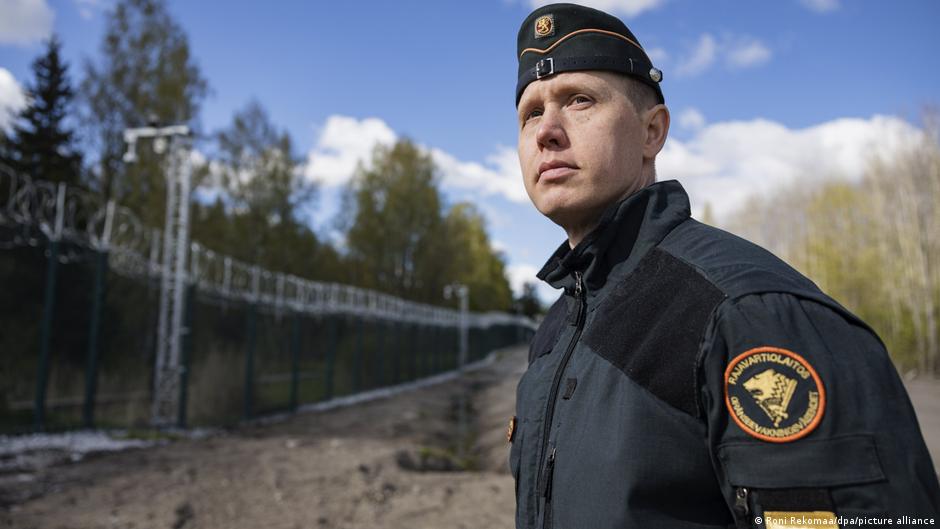
Finland has completed construction of a 200-kilometer barrier along its border with Russia, a major security infrastructure project that also underscores the growing role of technology, surveillance systems and private-sector execution in Europe’s defense and border-management priorities.
The Finnish Border Guard, part of the security apparatus of a NATO member state, said on Monday, September 7, that the barrier had been finished. The project was launched against the backdrop of Russia’s war against Ukraine and Helsinki’s concern that Moscow could use migrants as a tool of pressure against Finland.
Interior Minister Mari Rantanen described the completed fence as a core element of Finland’s border strategy at a time of heightened uncertainty.
“The main task of the state is to ensure the security of its citizens,” Rantanen said, calling the eastern border barrier an integral part of an effective border security system in “these unpredictable times.”
For VentureLine’s readership, the significance of the project extends beyond geopolitics. The Finnish barrier is a case study in how national security spending is increasingly flowing through technology-enabled infrastructure, creating opportunities for startups, contractors and investors focused on surveillance, sensor networks, mobility, rugged communications, construction automation and dual-use systems.
A Security Project With a Technology Layer
The border barrier is not simply a fence. According to the Finnish authorities, it consists of a 4.5-meter-high fence, a technical monitoring system, a road network and a 25-meter-wide cleared strip. That combination points to a broader shift in how European governments are approaching border security: physical barriers are being paired with data, sensors, access roads and persistent monitoring capacity.
For startups operating in security technology, computer vision, edge devices, analytics, unmanned inspection, satellite intelligence or secure connectivity, projects of this type show the scale of public-sector demand that can emerge when defense and internal security budgets move from policy debate into procurement. The Finnish Border Guard described the undertaking as one of the largest infrastructure projects in Finland.
Hundreds of companies were involved in implementing the initiative, with up to 600 people and 150 pieces of equipment working on construction sites each day. That breadth of participation suggests a distributed supply chain rather than a single narrow procurement lane. It also highlights how large security projects can pull in civil engineering firms, technology vendors, equipment providers, logistics operators and specialist subcontractors.
For venture capital, that matters because border and defense infrastructure increasingly functions as a market signal. Government demand can validate categories that were once considered too slow, too regulated or too dependent on public procurement for venture-scale businesses. In Europe, the war in Ukraine has accelerated investor attention to dual-use technologies, and Finland’s project sits within that wider context.
Schengen, NATO and the New Market for Resilience
Rantanen said Finland, as a member of the Schengen Area, bears its share of responsibility for security at the bloc’s external borders. That framing is important for the innovation ecosystem because it links a national infrastructure project to a wider European security perimeter. Products and services tested or deployed in one Schengen or NATO context may find relevance across other markets facing similar risks.
Finland began construction work in March 2023, after Russia’s full-scale war against Ukraine had reshaped security calculations across Europe. Helsinki feared that Russia could use migration flows to pressure the country. The concern was not abstract: in September 2022, a large number of Russians fled to Finland after Russian President Vladimir Putin announced a partial mobilization.
The result is an operating environment in which border security is increasingly seen as part of broader national resilience. That includes not only military deterrence, but also migration management, critical infrastructure protection, surveillance, cyber-secure communications and rapid-response logistics. For founders, this creates openings in markets that sit between defense, public safety and infrastructure technology.
At the same time, the sector carries constraints. Procurement cycles can be long, buyers are highly regulated and political sensitivity is high. Companies serving this market must be able to meet public-sector standards for reliability, privacy, cybersecurity and operational continuity. The Finnish project’s scale also shows that startups are more likely to enter through partnerships, subcontracting, component supply or software layers than by replacing established infrastructure groups outright.
Local Reluctance, Strategic Acceptance
The project has not been greeted with enthusiasm everywhere in Finland. In Imatra, a city near areas where construction took place, Mayor Matias Hilden told DW that residents were not enthusiastic about the barrier but had accepted it. “It is a little sad that we need this,” he said.
That sentiment captures a tension likely to shape the future of security technology investment in Europe. Demand is rising because governments and citizens perceive the security environment as less predictable. Yet the technologies and infrastructure being deployed can be politically and socially uncomfortable, especially when they mark a visible hardening of borders that were once less securitized.
For investors and startup operators, that tension is not peripheral. Companies building in this category will need to navigate public trust, democratic oversight and the practical demands of agencies responsible for border control. The most durable businesses may be those that can deliver operational capability while also satisfying requirements around transparency, accountability and lawful use.
Finland’s completed 200-kilometer barrier is therefore more than a national border project. It is a concrete example of the infrastructure-heavy, technology-enabled security market now taking shape across Europe. As NATO and Schengen members adapt to the consequences of Russia’s war against Ukraine, demand for innovation is likely to concentrate around systems that help states monitor, protect and manage critical borders without relying on physical construction alone.