Flydubai Halts Israel Flights After Midair Incident Raises Startup Travel Risks
The suspension adds uncertainty for Gulf-Israel business links as officials investigate an alleged cockpit attack on a Dubai-Tel Aviv flight.
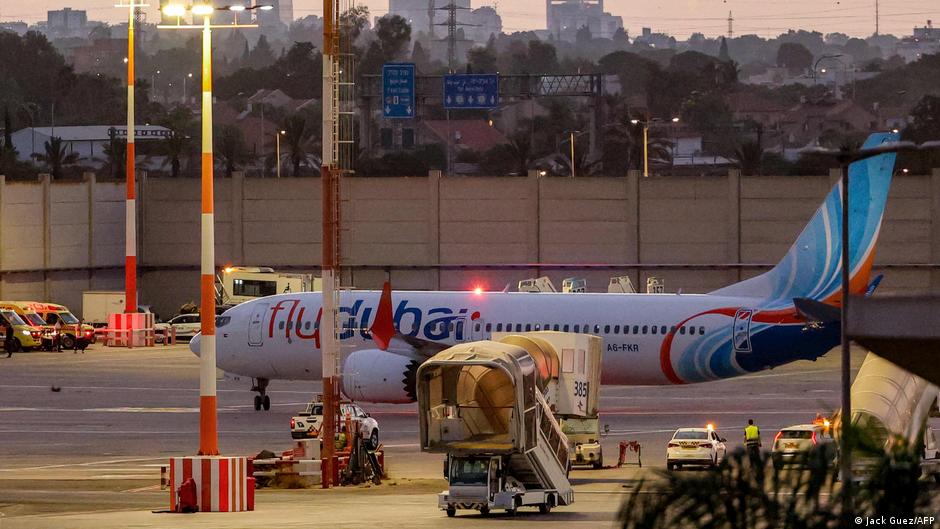
Flydubai has suspended all flights to and from Israel while authorities investigate a serious incident aboard a Boeing 737 MAX 8 traveling from Dubai to Tel Aviv, a disruption that could ripple beyond aviation into the business corridors connecting the Gulf, Israel’s technology sector and regional investors.
The airline said the temporary halt would allow the relevant authorities to continue their work and establish the full circumstances of the incident. A Flydubai representative said overnight on Thursday, October 1, that the carrier was coordinating closely with the government of the United Arab Emirates and other stakeholders. A decision on resuming flights will be made as more information becomes available, the representative added.
The move follows an emergency landing in Saudi Arabia by Flydubai flight FZ1073, which had departed Dubai for Tel Aviv. The aircraft landed at the airport in Tabuk at around 9:00 a.m. local time after a signal indicating an attempted hijacking. The reported cause was a suspected fight in the cockpit. According to the main version described in the source material, the co-pilot attacked the aircraft commander with a knife and attempted to take control of the plane.
During the struggle, the aircraft descended sharply over Saudi territory, dropping from 9,410 meters to 5,105 meters in just 29 seconds. There were 174 people on board, including 27 children, with most passengers identified as Israeli citizens.
Flight Suspension Hits a Sensitive Business Corridor
For startups and investors, the direct air link between Dubai and Tel Aviv has become more than a passenger route. It is part of the physical infrastructure supporting meetings, fundraising trips, founder travel, pilot projects and acquisition talks between Israeli technology companies, Gulf investors and multinational groups using the UAE as a regional base. A temporary suspension does not by itself sever those ties, but it introduces friction at a time when speed and confidence are central to cross-border dealmaking.
The Israeli transport minister, Miri Regev, demanded after the morning incident that all Flydubai flights to Israel be canceled. She called on the Civil Aviation Authority to investigate whether the UAE had violated its aviation agreement with Israel. According to the source article, the agreement stipulates that only pilots holding passports from countries maintaining diplomatic relations with Israel may land in the country. Israel does not have such relations with Oman.
The nationality issue is likely to matter for regulators and corporate travel departments alike. Venture capital firms, accelerators and strategic investors typically rely on predictable travel access when building regional platforms. Any extended disruption, or uncertainty over crew eligibility and aviation security protocols, may prompt companies to reroute travel, delay in-person diligence or shift meetings online while authorities review the incident.
Passengers Describe Chaos in the Cabin
Some passengers said they first heard shouting from the cockpit before the cockpit door opened. They reported seeing that one pilot had been wounded and that his clothing was covered in blood. First aid was provided, and one passenger was a doctor. Crew members and passengers also managed to subdue the attacker.
Flydubai said the suspension would allow authorities to establish all the circumstances of the incident.
The aircraft was landed in Saudi Arabia by two other pilots who were on board as passengers. CNN described them as reserve pilots who were due to operate the next flight. The newspaper Israel Hayom reported that they were Ukrainian and Russian, though there was no official confirmation of that information. Other reports said the aircraft may have been landed by citizens of South Africa and New Zealand.
Israeli Prime Minister Benjamin Netanyahu later said Saudi authorities had arrested the pilot who stabbed his colleague. According to media reports cited in the source, the suspect is an Omani citizen. Sources in Israeli intelligence cited by the British newspaper The Telegraph did not rule out that he intended to seize control of the aircraft and direct it into a skyscraper in Tel Aviv. One source described the suspected scenario as similar to September 11, involving the co-pilot killing the pilot and crashing the plane in Israel with all passengers aboard, most of them Israelis. Israeli Defense Minister Israel Katz called the Flydubai incident an attempted jihadist terrorist attack.
The wounded pilot was identified as the captain, Indian citizen Smith Machchhar. Netanyahu wrote on X that despite serious injuries, Machchhar resisted, opened the cockpit door and enabled passengers and crew to neutralize the attacker, preventing an airborne catastrophe. Machchhar’s condition is described as stable.
Investors Will Watch the Duration of the Halt
After the emergency landing of flight FZ1073 in Saudi Arabia, Flydubai sent a second aircraft to transport passengers onward to Israel. That aircraft landed at Ben Gurion Airport in Tel Aviv.
The central question now is how long the suspension lasts and whether regulators in Israel, the UAE and other involved jurisdictions treat the incident as a contained security breach or as a reason to tighten flight operations more broadly. For the venture ecosystem, the near-term effect is operational rather than financial: founders, board members and investors may face disrupted itineraries, added compliance checks and greater caution around travel between the UAE and Israel.
The incident also underscores the dependence of regional innovation ties on geopolitical and security infrastructure. Since Gulf-Israel commercial links expanded, aviation has supported a growing rhythm of investor roadshows, enterprise sales visits and startup partnerships. If the suspension is brief, the effect may be limited to delayed meetings and temporary rerouting. If it extends, the disruption could complicate cross-border fundraising, business development and M&A conversations that depend on frequent in-person engagement.
For now, Flydubai says it is waiting for further information before deciding when to restart flights. Until then, the investigation into the cockpit attack, the identity and eligibility of crew members, and the security failures alleged by Israeli officials will remain under close scrutiny from governments, airlines and the business community that has come to rely on the Dubai-Tel Aviv route.