France Warns CNews Over Former RT France Chief in Signal to Media Tech
The warning over Ksenia Fedorova underscores how European security policy is tightening around media influence, platform access and information markets.
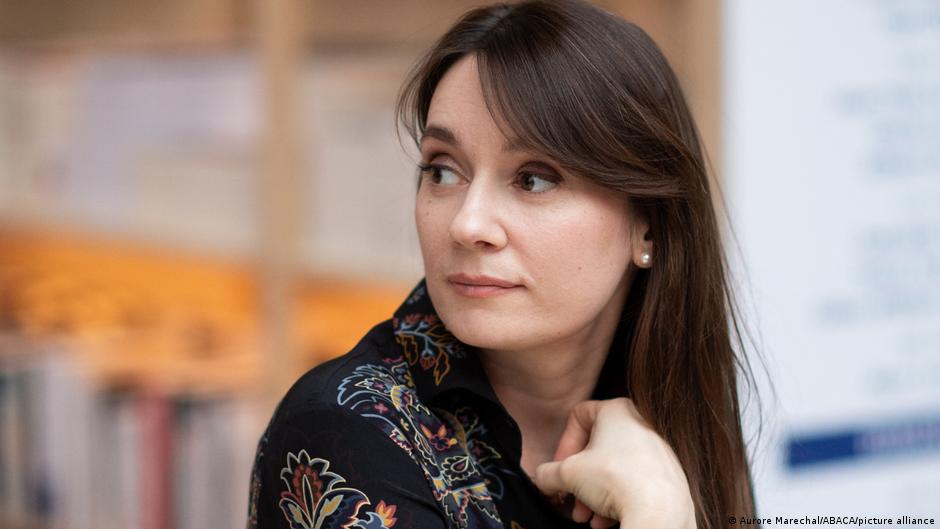
France’s interior minister has warned the right-conservative television channel CNews that it could face a criminal case if it allows Ksenia Fedorova, the expelled former head of RT France, to return to its airwaves by video link. The move places a politically charged media dispute inside a broader European debate that increasingly matters to technology companies, investors and founders: where the line is drawn between speech, security, distribution and state-linked influence.
Interior Minister Laurent Nunez made the warning in a letter to France’s media regulator, according to AFP, which reported the development on Thursday, September 10. The French government’s position is that giving Fedorova airtime after her removal from the country would amount to a circumvention of the expulsion order. French authorities regard her as a Kremlin propagandist and a threat to public order in France.
CNews had previously said Fedorova would continue working with the channel and commenting on international affairs remotely. For media groups, streaming platforms and communications startups, the case highlights a practical question that is becoming harder to avoid: whether remote participation can preserve a commercial relationship when a government has acted to exclude a person from the national information space.
French authorities said Fedorova had acted as a relay for disinformation campaigns directed by Russian authorities.
Regulatory Risk Moves Closer to the Media Stack
For venture-backed companies operating in media, social video, creator infrastructure, adtech, podcasting, moderation, translation or cross-border streaming, the French warning is another reminder that geopolitical compliance is no longer confined to sanctions-screening teams at large corporations. It can touch editorial workflow, livestreaming tools, remote contributor systems, payment rails, audience analytics and content distribution partnerships.
The French interior ministry decided at the end of July 2026 to expel Fedorova. At the time, it justified the deportation decision by saying that the former RT editor’s conduct harmed the fundamental interests of the state. The document said she had served as a retransmitter of disinformation campaigns run by Russian authorities. When the decision came into effect, Fedorova left France on her own.
The operational significance for startups is clear. European governments are increasingly treating information operations as a security matter, not merely an editorial or reputational issue. That trend can create compliance burdens for young companies that distribute content at scale or provide infrastructure to broadcasters, publishers and influencers. It also affects the due diligence process for investors considering media-related assets, especially those with political content, foreign state-linked contributors or audiences across multiple jurisdictions.
Fedorova’s case also has a cross-border dimension. AFP noted that she had previously lived in Germany, but Germany also banned her from entry on security grounds. For companies building pan-European media products, that kind of multi-country restriction creates a more complex risk map than a single national dispute. A founder may have to consider not only whether a contributor can appear in one country, but whether their participation could trigger scrutiny elsewhere in the European Union.
From Broadcast Sanctions to Startup Compliance
RT France stopped broadcasting in January 2023 after European sanctions were introduced. After the channel closed, Fedorova remained in France and published memoirs in French. The reappearance of former state-backed media figures inside private media groups shows how influence networks can shift from sanctioned broadcasters into other parts of the media economy.
In May 2026, it became known that Fedorova had begun commenting on international news and hosting her own weekly segment on CNews, the Europe 1 radio station and the newspaper Le Journal du Dimanche. Those outlets belong to French billionaire and media magnate Vincent Bollore, who is associated with far-right views. Le Monde described Fedorova as Bollore’s protege, and Bollore’s publishing house Fayard also published her memoirs.
Fedorova’s employers said they considered her expulsion a particularly serious attack on freedom of speech. That argument points to the commercial and legal tension that media companies and the startups serving them will have to navigate. Tools that make it easy to broadcast from anywhere can also make it harder for governments to enforce territorial restrictions. At the same time, publishers and platforms face pressure to avoid becoming distribution channels for actors that governments classify as security threats.
For venture capital firms, the case is less about one television appearance than about a category of regulatory exposure. Investors in media platforms, creator monetization tools, online video infrastructure and AI-powered content systems may need to look more closely at governance, contributor vetting, sanctions compliance and escalation procedures. In an M&A context, acquirers may ask whether a target has clear policies for blocked individuals, politically exposed contributors, state-linked media relationships and government takedown requests.
The issue also intersects with AI and automation. Startups using artificial intelligence to clip, translate, summarize, dub or syndicate political content may find themselves exposed if they distribute material from contributors under official restrictions. A platform may not be the original publisher, but its technology can amplify and repackage content in ways regulators increasingly understand as part of the information supply chain.
Macron’s Longstanding Position
President Emmanuel Macron has taken a consistent public position on Fedorova. In 2017, he called her a propagandist and an instrument of Kremlin influence. In June 2026, while commenting on Fedorova’s work within Bollore’s media group, Macron said he had not changed his view, AFP noted.
That continuity matters for the innovation ecosystem because it suggests that France’s stance is not a one-off reaction to a programming decision by CNews. It reflects a longer policy posture toward Russian state-linked media influence. For startups, the implication is that political-risk analysis in Europe increasingly extends into content integrity, national security and platform governance.
The warning to CNews may now become a test of how far French authorities are willing to go in treating remote broadcasting as a way to bypass an expulsion order. If criminal proceedings follow, the case could sharpen the compliance expectations placed on broadcasters and digital intermediaries alike. If CNews avoids putting Fedorova back on air, it may signal that regulatory pressure alone can reshape programming decisions without a formal court battle.
Either way, the dispute lands in a media market where distribution technology has outpaced older assumptions about borders. Video links, syndicated clips, social platforms and AI-assisted republishing allow a commentator to remain commercially present without being physically present. France’s message is that, in cases involving national security and alleged foreign disinformation, that distinction may not be enough.