Georgia Detains Ex-Defense Minister Baramidze in Treason Case
The case against Giorgi Baramidze adds political risk to Georgia’s investment climate as startups and venture investors watch institutional stability.
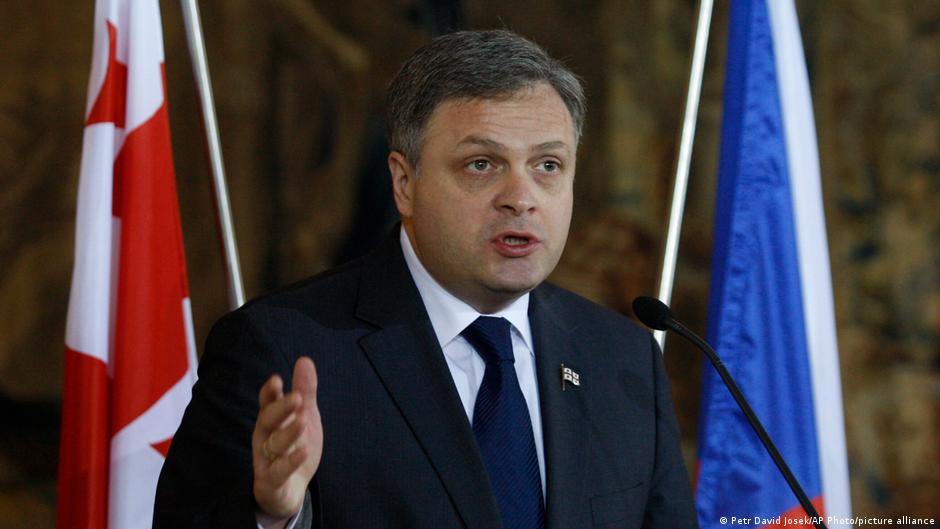
Georgia has detained Giorgi Baramidze, a former acting prime minister and former defense and interior minister, on accusations of “treason against the homeland, namely sabotage,” in a case triggered by his comments about the 1992-1993 war in Abkhazia. Baramidze, 58, is also one of the leaders of the United National Movement, the party associated with former Georgian president Mikheil Saakashvili.
Amiran Guluashvili, Georgia’s deputy prosecutor general, said Baramidze would be charged under the treason-related allegation following a court order. The Prosecutor General’s Office announced the move in a press release published on Friday, September 11.
For Georgia’s technology and startup ecosystem, the detention is not a sector-specific regulatory action. But it lands in a political environment closely watched by venture capital firms, cross-border founders and potential acquirers assessing rule-of-law risk, policy continuity and the predictability of state institutions. In smaller innovation markets, high-profile prosecutions of former senior officials can affect investor perception even when the charges are unrelated to business activity.
Comments on Abkhazia War Prompt Case
The case stems from remarks Baramidze made on “The Birth of Georgia,” a program that aired on July 18 on the YouTube channel of the same name hosted by Iago Khvichia, leader of the opposition libertarian party New Political Center - Girchi. According to prosecutors, Baramidze said in the interview that at the beginning of the 1992-1993 war in Abkhazia, Georgian soldiers did not take prisoners but shot them on the spot, and that this was why the Georgian side, unlike the Abkhaz side, had no exchange fund.
Law enforcement authorities opened an investigation into Baramidze’s statement on August 7 after a complaint from the state veterans affairs service. Prosecutors later said they had found no facts confirming that the Georgian army had shot prisoners.
Prosecutors described Baramidze’s statement as “baseless and fabricated” and said it had an “intentional ideological and propaganda character.”
The Prosecutor General’s Office said the remarks contributed to undermining Georgia’s state and national interests, external security, defense capability and state institutions. Prosecutors also said the statement damaged “Georgia’s image,” harmed the reputation of the country’s Defense Forces, offended the honor and dignity of veterans of the war in Abkhazia and fallen service members, and threatened the process of reconciliation and confidence-building among people affected by the conflict.
According to prosecutors, Baramidze’s comments also undermined Georgia’s policy on peace and de-occupation and complicated the normal work of state agencies. The Prosecutor General’s Office said it intends to seek Baramidze’s pretrial detention through the court. Law enforcement authorities added that the investigation is continuing and that the public will be informed about its progress and results.
Political Risk Enters the Startup Calculus
Georgia has positioned itself in recent years as an accessible market for entrepreneurs, remote teams and cross-border companies, helped by its location between Europe and Asia and by a business environment that has drawn attention from founders operating across emerging markets. For venture investors, however, headline political risk remains part of the broader due-diligence framework. Cases involving opposition figures and former ministers can influence how international capital evaluates governance stability, even where day-to-day startup regulation remains unchanged.
Venture capital is especially sensitive to institutional predictability. Early-stage investors accept product, market and execution risk, but they generally look for stable courts, credible public institutions, reliable enforcement of contracts and a political backdrop that will not unexpectedly complicate fundraising, M&A or expansion. In that context, a treason and sabotage case against a former senior official can become a signal event for investors tracking Georgia’s risk profile.
The issue is particularly relevant for startups seeking international rounds, strategic partnerships or acquisition interest from larger foreign technology companies. Investors and acquirers often treat country risk as part of valuation, deal structure and governance protections. Political volatility can increase demands for offshore holding structures, stronger investor rights or more cautious deployment timelines. None of those outcomes follows automatically from Baramidze’s detention, but the case adds to the political context that foreign backers are likely to monitor.
Domestic founders may also be affected indirectly. A heightened political climate can shift public-sector attention, slow institutional processes or make international partners more cautious about reputational exposure. For companies working in fintech, defense-adjacent software, public-sector technology, logistics or infrastructure, perceptions of state stability and policy continuity can be especially important.
Fifth Former Defense Minister Facing Criminal Case
Baramidze has become the fifth former Georgian defense minister against whom a criminal case has been opened in the country. In July, Bacho Akhalaia, an ally of Saakashvili, was sentenced to two and a half years in prison after being found guilty of publicly calling for the overthrow of the government following remarks he made at a court hearing.
In November 2025, Irakli Okruashvili, a former interior and defense minister who supported Saakashvili until 2007, was sentenced to seven years in prison in connection with the high-profile killing of 19-year-old Amiran Robakidze during a police search in 2003.
Former members of the government of the ruling Georgian Dream party are also in custody. They include Juansher Burchuladze, who headed the Defense Ministry until February 2024, and Irakli Garibashvili. Garibashvili served as defense minister from 2019 to 2021, prime minister from 2021 to 2024, and chairman of Georgian Dream from 2024 until April 2025. Burchuladze is accused, among other things, of taking bribes, while Garibashvili is accused of money laundering.
The widening list of criminal cases involving former senior defense officials creates a complex backdrop for Georgia’s political and economic narrative. For the country’s innovation ecosystem, the key question is whether legal and political institutions are seen as stable, transparent and predictable enough to support long-term capital formation. Startups can continue to build through political uncertainty, but venture-backed growth depends heavily on confidence that the operating environment will remain understandable to investors, founders and strategic buyers.