Germany Sends Eurofighters to Latvia as Election Security Risks Rise
The deployment underscores how Baltic airspace security is becoming a core operating concern for startups, investors and cross-border technology teams.
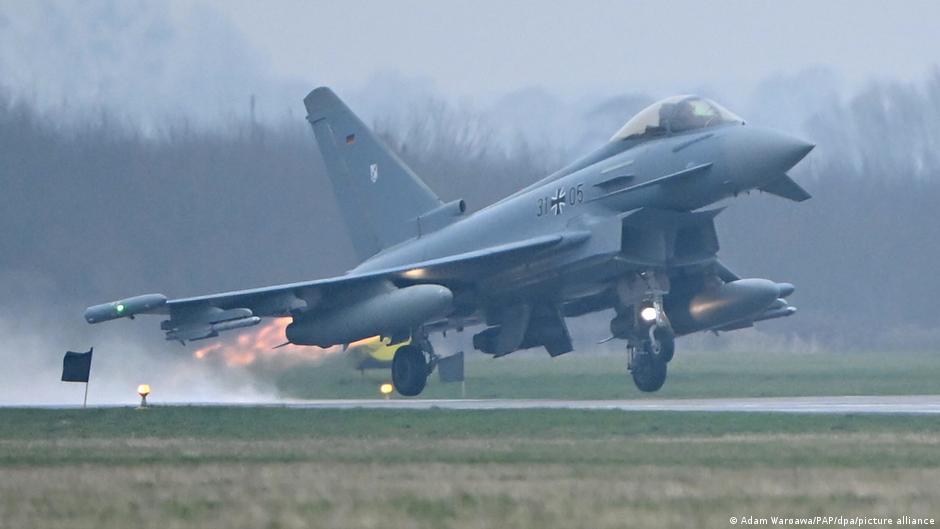
Germany has deployed four Eurofighter jets to Latvia for slightly more than a week to help secure the country’s airspace during its parliamentary election on October 3, a move that highlights the increasingly direct connection between regional security and the technology investment climate in the Baltic states.
The aircraft, from the Bundeswehr’s 74th Tactical Air Wing based at Neuburg an der Donau, were transferred to the Lielvarde military airfield in central Latvia. Latvia’s defense ministry announced the deployment on Thursday, September 24. The jets will support NATO’s integrated air and missile defense system during the election period.
For Latvia’s startup sector and the wider Baltic innovation economy, the mission is more than a military development. It is a reminder that airspace security, critical infrastructure resilience and political stability are now part of the risk calculus for venture investors, founders and strategic acquirers assessing the region.
Latvia asked its NATO allies for support against the backdrop of repeated airspace violations affecting the Baltic countries, according to dpa. The request follows a period in which the skies over Estonia, Latvia and Lithuania have become a recurring point of tension since Russia’s full-scale war against Ukraine began.
“This is a concrete sign of NATO solidarity and our shared commitment to protecting Latvia’s airspace and the security of the Latvian population,” Latvian Prime Minister Andris Kulbergs wrote on X, thanking Germany for its “readiness to help and close cooperation.”
Security Becomes Part of the Startup Operating Environment
The Baltic states have built a reputation as a digitally advanced, founder-friendly region with deep ties to European and global technology markets. Latvia, Estonia and Lithuania are closely watched by venture capital firms for software, fintech, cybersecurity and defense-adjacent innovation. But the Eurofighter deployment shows that geopolitical risk is no longer an abstract background factor for that ecosystem.
For startups, the immediate issue is continuity. Elections, public institutions, telecoms networks, logistics and cloud-dependent services all rely on stable infrastructure and credible public security. A visible NATO air-policing response can help reduce uncertainty during politically sensitive periods, particularly for companies that serve government, financial or cross-border enterprise clients.
For venture capital, the question is less whether startups can still be built in the Baltics and more how to price resilience. Investors evaluating Latvian or Baltic companies increasingly have to consider operational redundancy, cyber defense, data hosting strategies, insurance exposure and access to European security partnerships. Those considerations may lengthen diligence, but they may also strengthen the case for companies that can demonstrate robust continuity planning.
The deployment may also reinforce investor attention on defense technology, dual-use software and infrastructure monitoring. Europe’s security environment has already pushed more capital toward technologies that can serve both civilian and defense applications. In the Baltic context, airspace surveillance, drone detection, secure communications and command-and-control software are not theoretical markets; they sit close to operational demand.
NATO Presence and Innovation Confidence
NATO has protected the airspace on the alliance’s northeastern flank since Estonia, Latvia and Lithuania joined in 2004. The mission has gained sharper significance since Russia launched its full-scale invasion of Ukraine. Since then, drones have repeatedly entered the airspace of Baltic states. In August, NATO fighters shot down a drone that violated Latvian airspace.
That record gives the German deployment a broader policy signal. It suggests that allied air policing can be scaled for specific high-risk windows, including national elections. For international investors, this kind of response may support confidence that political processes and core infrastructure will be defended, even during moments of elevated tension.
At the same time, the events underline that Baltic startups operate in a frontier environment for European security policy. Founders may gain access to urgent public-sector problems and defense-related procurement opportunities, but they also face heightened expectations around reliability, compliance and security standards. Companies seeking enterprise or government customers will likely find that resilience is not merely a technical feature but a commercial requirement.
The same dynamic may influence mergers and acquisitions. Strategic buyers looking at Baltic technology companies may assign value to teams with experience operating in high-security environments. Conversely, acquirers may scrutinize geopolitical exposure, supply-chain dependencies and customer concentration more closely. The result could be a more selective but potentially more mature M&A environment for companies able to show strong governance and operational durability.
The German jets are expected to remain in Latvia only for a little more than a week, tied to the parliamentary election period. But NATO air-policing activity in the region will continue. From December 2026, Eurofighters are again due to take on longer-term NATO airspace surveillance from Estonia as part of the NATO Air Policing mission.
Until March 2027, five Eurofighter jets and their flight crews are scheduled to be stationed at the Amari air base in northwestern Estonia. That longer deployment will keep allied airpower visibly present in the region well beyond Latvia’s October election.
For Latvia and its neighbors, the immediate message is deterrence and reassurance. For the venture ecosystem, the message is more complex: the Baltic region remains deeply integrated into NATO and the European Union, but innovation there is increasingly shaped by defense, resilience and security infrastructure. In that environment, startups that can turn regional risk into credible technology solutions may find investors paying closer attention.