Germany Urges Ukraine to Include Its Defense Firms in Aid-Funded Procurement
Foreign Minister Johann Wadephul said German industry should benefit from Berlin’s support for Kyiv as defense startups and suppliers compete for wartime contracts.
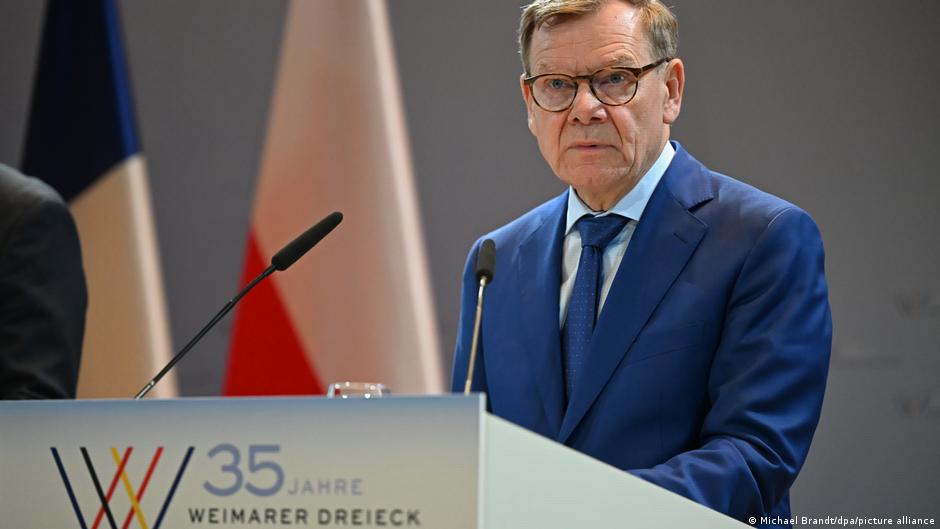
German Foreign Minister Johann Wadephul has criticized Ukrainian President Volodymyr Zelensky and urged Kyiv to pay greater attention to Germany’s interests, framing Berlin’s military and financial backing as support that should also create opportunities for German defense companies.
In an interview with Bild published on Tuesday, September 8, Wadephul said Germany was currently Ukraine’s strongest supporter in terms of financial and military assistance. He added that Germany’s defense industry should naturally benefit from that role, a message that may resonate across Europe’s defense technology sector as governments, startups and incumbent suppliers compete for procurement linked to Ukraine’s war effort.
“At the moment, we are Ukraine’s strongest supporter in terms of financial and military support,” Wadephul said, adding that “German defense industry must benefit from this.”
According to Wadephul, he raised the issue directly with Zelensky during a recent visit to Kyiv. He said he told the Ukrainian president that Germany stood by Ukraine and supported it, but that he also had to explain the spending to German taxpayers. At a minimum, Wadephul said, German defense industry should participate in all procurement processes.
The comments highlight a growing political and commercial tension in Europe’s defense funding landscape. Ukraine’s urgent demand for air defense, drone protection, medical equipment, energy supplies and other wartime capabilities has created a fast-moving procurement market. For established contractors and newer defense technology startups, access to those purchasing channels can shape revenue, validation and future investor interest.
Defense Procurement Becomes an Innovation Battleground
For the venture capital and startup ecosystem, Wadephul’s remarks point to a broader shift: military aid is no longer viewed only as a foreign policy or security commitment. It is increasingly tied to industrial policy, supply-chain positioning and the growth of national defense technology sectors. When governments finance weapons, protection systems or support infrastructure for Ukraine, the question of which companies supply those systems becomes strategically important.
Germany’s position is particularly relevant because Berlin has become a major backer of Kyiv. Wadephul’s argument suggests that German taxpayers’ support should translate into participation for domestic industry. While he did not name specific companies or sectors, his remarks carry implications for defense manufacturers and dual-use startups working on air defense, counter-drone systems, battlefield logistics, energy resilience, secure communications and medical technologies.
Such procurement access can be critical for young companies. Defense startups often face long sales cycles, complex certification demands and limited early customers. Ukraine-related purchasing programs, especially those supported by NATO countries and European governments, can provide real-world deployment opportunities that private venture capital alone cannot deliver. Contracts or participation in procurement processes may help startups demonstrate product-market fit in one of the world’s most demanding operational environments.
At the same time, Wadephul’s comments underline that startup opportunity in defense tech remains closely tied to government priorities. Unlike consumer software or enterprise SaaS, defense innovation depends heavily on public procurement rules, alliance politics and national industrial strategies. If Germany pushes for more structured inclusion of its companies in Ukraine-related purchases, investors may see stronger downstream demand for German defense and dual-use startups, but also a more competitive environment for non-German suppliers.
Berlin Links Aid, Taxpayer Support and Industry
Wadephul visited Kyiv on August 22. At a joint press conference with Ukrainian Foreign Minister Andrii Sybiha, he announced an additional 60 million euros in assistance for Ukraine. The funding announcement reinforced Germany’s continuing role in supporting Kyiv, while his later Bild comments clarified that Berlin also wants its industrial interests reflected in procurement decisions.
Germany will also transfer another 10 million euros to a NATO fund. Money from that fund is used, among other purposes, for supplies of energy resources, medical equipment and systems designed to protect against drones. Those categories sit at the intersection of traditional defense production and emerging startup-led innovation, particularly in autonomous systems, sensors, electronic warfare, battlefield medicine and resilient energy infrastructure.
Wadephul also announced further talks with partners from different countries about supplying Ukraine with additional air defense systems. Air defense has become one of the most consequential areas of support for Kyiv, and it is also an area where procurement decisions can shape industrial winners. Large platforms typically favor established contractors, but supporting technologies such as detection, targeting, software integration, drone defense and maintenance tools may create openings for venture-backed suppliers.
The foreign minister’s message to Kyiv was therefore not simply diplomatic criticism. It was also a signal to Germany’s domestic audience and industrial base that foreign aid should be connected to economic and technological returns. In an environment where European governments are expanding defense budgets and reassessing strategic autonomy, that linkage could influence how future aid packages are designed and how procurement eligibility is structured.
For venture investors, the episode is another indicator that European defense technology is moving from a niche category into a policy-backed market. The opportunity, however, will not be evenly distributed. Startups that align with national procurement priorities, work effectively with incumbent manufacturers and meet urgent Ukrainian requirements may be better positioned for contracts, partnerships or eventual acquisition.
Wadephul’s remarks also suggest potential M&A consequences. If German defense companies are encouraged to participate more broadly in Ukraine-related procurement, larger suppliers may seek partnerships with or acquisitions of smaller technology firms that can strengthen their offerings. Counter-drone protection, energy resilience, medical equipment and air defense support systems are all areas where specialized startups may become attractive targets as incumbents race to respond to government demand.
Ukraine’s procurement needs remain immediate, but Europe’s response is increasingly being shaped by long-term industrial considerations. Wadephul’s call for German defense industry participation shows how aid, innovation and national competitiveness are becoming intertwined. For startups and their backers, the message is clear: wartime procurement is emerging as both a security instrument and a market-defining force in Europe’s defense innovation ecosystem.