House Advances Graham Sanctions Bill With Broad Implications for Tech Markets
The measure would let President Donald Trump impose 100% tariffs on major buyers of Russian energy while extending existing U.S. sanctions on Iran.
The U.S. House of Representatives has cleared a procedural hurdle for consideration of a bill associated with Lindsey Graham that would authorize sweeping new tariffs tied to Russia’s energy exports, opening the way for lawmakers to debate the measure on its merits.
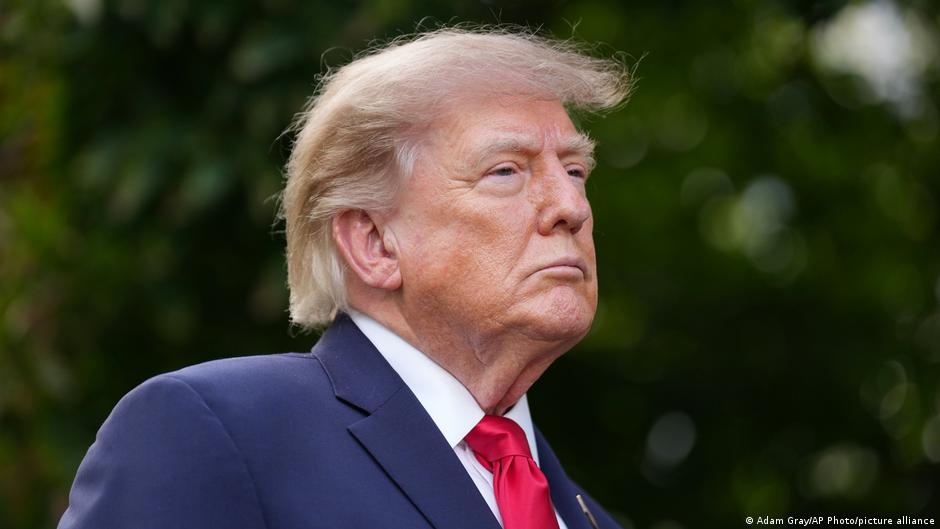
The House voted on Tuesday, September 15, to begin consideration of legislation that would allow President Donald Trump to impose tariffs on countries purchasing Russian energy resources and would extend existing U.S. sanctions against Iran. Media outlets have referred to the measure as the “Graham bill,” in memory of the late Senator Lindsey Graham, who helped develop and actively promote it.
According to The Hill, the rule governing debate on the bill, prepared by the relevant House committee, was approved after two Democrats broke with their party’s position. The resolution passed by a narrow margin, with 214 members voting in favor and 211 opposed.
For technology companies, venture investors and cross-border growth businesses, the bill’s progress matters less as a single sanctions measure than as a signal that Washington may be moving toward a more expansive use of tariff authority in geopolitical disputes. The proposal could affect energy-intensive sectors, global hardware supply chains, cloud infrastructure costs and the risk calculations behind international expansion.
Tariff Powers Move to the Center of the Debate
The legislation would permit Trump to impose tariffs of 100% on the five largest buyers of Russian oil and gas, as well as on five countries that help Russia bypass energy sanctions. Those provisions would expand the economic pressure campaign around Moscow’s war-related energy revenues while putting purchasing countries and sanctions-evasion channels directly in the sights of U.S. trade policy.
For startups, the most immediate concern is not direct exposure to Russian energy trade but second-order effects. Higher tariff risk can feed into volatility across manufacturing, logistics and energy markets. Venture-backed companies in AI infrastructure, data centers, robotics, advanced manufacturing, electric mobility, battery systems and semiconductor-adjacent hardware are especially sensitive to shifts in input costs and geopolitical trade barriers.
The bill’s supporters presented the vote as a message to U.S. adversaries and allies alike. At a House Rules Committee hearing on Monday, September 14, Republican Representative Michael McCaul of Texas described the next day’s vote as exceptionally important both as a message to Russian President Vladimir Putin about American support for Ukraine and as a warning to Chinese President Xi Jinping against attempting aggression toward Taiwan.
McCaul framed the vote as a signal of U.S. support for Ukraine and a warning to China over Taiwan.
That framing is likely to resonate across the innovation economy, where Taiwan’s central role in semiconductor manufacturing already sits near the top of boardroom risk registers. Any measure that links Ukraine policy, Russia sanctions and warnings over Taiwan reinforces a broader trend: venture-backed companies increasingly operate in markets where strategic technology, energy security and national security policy are intertwined.
Democratic Critics Warn of Consumer Costs
Democratic critics of the bill argue that the measure would sharply expand Trump’s authority over customs tariffs without requiring mandatory sanctions against Russia. They warned that the approach could raise prices for Americans and, over time, weaken support for Ukraine.
Representatives Don Beyer, Gregory Meeks and Richard Neal were among those warning that the legislation would lead to higher prices for U.S. consumers and undermine long-term support for Ukraine. Their criticism points to a central tension in the bill: whether flexible tariff authority strengthens U.S. leverage or creates economic costs that could erode political consensus.
That debate has direct relevance for venture capital. Investors have spent the past several years adjusting to a world in which export controls, sanctions, industrial policy and tariffs can quickly reshape startup markets. A company’s exposure to geopolitical risk is no longer limited to where it sells products. It can include where suppliers source energy, where components are fabricated, where cloud capacity is priced, and whether customers in strategic sectors face sudden regulatory or trade restrictions.
If passed, the bill could become another data point in diligence conversations around supply-chain resilience. Startups dependent on low-margin imported hardware, globally sourced components or energy-intensive compute may face tougher questions from investors about cost buffers and alternative suppliers. Conversely, companies offering compliance software, trade intelligence, energy analytics, supply-chain mapping, industrial automation, domestic manufacturing tools or sanctions-screening products may see greater demand if tariff and sanctions regimes become more complex.
The proposed extension of existing U.S. sanctions against Iran adds another layer for companies operating in fintech, logistics, insurance, enterprise software and cross-border payments. Even where startups do not directly touch sanctioned markets, their customers and financial partners may require more robust compliance infrastructure as rules tighten or become more politically salient.
Implications for Funding and M&A
For venture investors, the House vote does not by itself change deal terms. The bill has not yet become law, and the next major test will be a vote by the full House before the end of the current week. If the “hellish” sanctions package wins support in that procedure as well, the bill will be sent to Trump for signature. He has previously stated his support for the initiative.
Still, policy momentum can affect valuations before formal enactment. Startups with exposure to energy pricing, international trade flows or Taiwan-related supply chains may face new sensitivity in financing rounds, while acquirers may spend more time evaluating sanctions and tariff contingencies during M&A diligence. Strategic buyers in defense tech, energy tech and critical infrastructure may also view the bill as part of a broader policy environment favoring resilience, domestic capacity and allied supply networks.
The House vote’s narrow margin also underscores the political uncertainty surrounding trade and sanctions policy. Two Democrats were decisive in advancing the rule, while critics within the party objected to what they described as an expansion of presidential tariff power. For founders and investors, that uncertainty itself is part of the operating environment: policy can move quickly, but its durability may depend on fragile coalitions.
The bill now moves from procedural approval toward substantive consideration. Its passage would not merely add pressure on countries buying Russian energy. It would also sharpen the investment community’s focus on how geopolitical enforcement tools are becoming embedded in the cost structure and strategic planning of technology companies.