Houthi Missile Attempt on Riyadh Raises New Risk for Gulf Tech Investment
Saudi Arabia said it intercepted a ballistic missile aimed at Riyadh, intensifying security concerns around energy routes central to Gulf markets.
Saudi Arabia said Yemen’s Iran-aligned Houthi rebels attempted to strike Riyadh with a ballistic missile overnight, an escalation that adds a new layer of geopolitical risk for Gulf investors, technology startups and venture capital funds operating across the region.
The Saudi-led Coalition to Restore Legitimacy in Yemen said on Saturday, September 19, that the Houthis had for the first time tried to hit the Saudi capital with a ballistic missile. Brigadier General Turki al-Maliki, the coalition’s official spokesperson, said on X that the missile had been “intercepted and destroyed.”
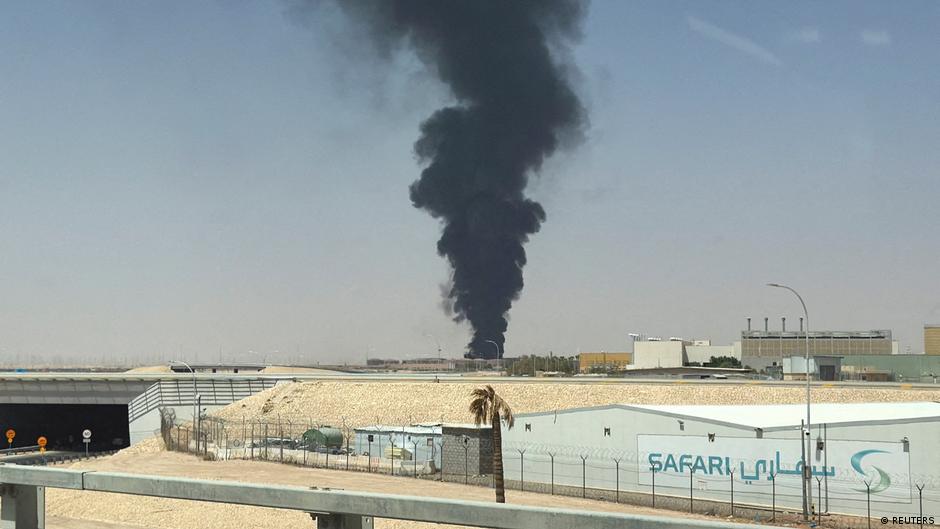
An air raid alert was declared in Riyadh during the night, and some residents reported hearing an explosion. There were no reports of casualties or damage. Later, a column of smoke was visible near the airport. AFP, citing its correspondent, reported that a fuel tank belonging to Saudi Aramco, the kingdom’s largest oil company, had caught fire and that the blaze was extinguished. It was not clear whether the fire was connected to the attempted missile strike on the city. Aramco did not respond to journalists’ requests for comment.
Energy Security Becomes a Startup Risk Factor
For Saudi Arabia’s technology sector, the incident matters beyond immediate military implications. Riyadh has positioned itself as a regional hub for venture capital, artificial intelligence, fintech, logistics technology and enterprise software, with the broader Gulf increasingly competing for founders and global investors. Attacks near critical infrastructure and major urban centers can alter how investors price country risk, insurance exposure, supply-chain reliability and the timing of cross-border deals.
The Saudi authorities also said the Houthis attempted to attack civilian infrastructure, including targets in the Red Sea port city of Yanbu, but that those attempts were thwarted. The Houthis claimed they had struck “important facilities” in Riyadh and Aramco infrastructure in Yanbu using drones, cruise missiles and ballistic missiles.
Saudi Arabia said the missile targeting Riyadh was intercepted and destroyed, while the Houthis claimed broader strikes on important facilities and Aramco infrastructure.
The uncertainty around energy infrastructure is especially relevant for venture-backed companies in logistics, mobility, industrial software, climate technology and cloud-linked operations that depend on predictable fuel supply, stable data center operations and regional transport routes. Even when direct damage is not confirmed, repeated alerts and attempted strikes can complicate diligence for investors evaluating startups with operations, customers or physical assets in the kingdom.
The disruption also intersects with Saudi Arabia’s ambition to diversify its economy away from hydrocarbons while using oil revenue to fund innovation. Venture capital firms and strategic investors have been watching whether the kingdom can continue turning state-backed capital, sovereign funds and corporate investment into a durable startup ecosystem. Security concerns around ports, pipelines and shipping lanes may not halt that trajectory, but they can raise the cost of growth for companies with exposure to hardware, energy, trade finance and regional fulfillment.
Pipeline Disruptions Add Pressure
On September 11, the Financial Times reported that Saudi Arabia had halted operations on the East-West pipeline, which ends at the port of Yanbu, after a drone attack launched from Iraqi territory. On September 18, Saudi Aramco notified at least two European refineries that it would not supply them with oil in October, Bloomberg reported. According to Bloomberg, the pipeline was expected to be partially restarted within days and fully restored within a month and a half.
After the start of the U.S. and Israeli war with Iran, which significantly complicated tanker passage through the Strait of Hormuz, Saudi Arabia increased exports through the East-West pipeline. That route has become more important as security conditions around maritime energy transport have deteriorated.
In recent weeks, the route’s capacity has declined because of Houthi attacks on Saudi tankers in the Red Sea. In August, around 2.5 million barrels per day were shipped through Yanbu, the lowest level since 2013, according to the International Energy Agency.
For technology companies, these figures are not abstract commodities data. Higher uncertainty around oil flows can ripple into transportation costs, industrial demand, government budgeting assumptions and investor sentiment. Startups selling into energy, construction, logistics and manufacturing clients may face delayed procurement decisions if large corporate or state-linked customers reassess budgets or operational priorities.
Red Sea Control Raises M&A and Funding Questions
Reuters and AFP reported on September 11 that the Houthis had seized strategically important islands in the Bab el-Mandeb Strait, which connects the Red Sea with the Arabian Sea. Around 12% of global cargo traffic passes through the strait, including oil trade. The passage has become particularly important for Saudi Arabia after the closure of Hormuz. The Houthis said shipping through Bab el-Mandeb was “safe for all commercial vessels, except Saudi ones.”
It also emerged the day before that the Houthis had taken control of the port of Mokha on Yemen’s coast along the Bab el-Mandeb Strait. Reuters reported that the Houthi advance was being directed by Iran’s Islamic Revolutionary Guard Corps. Sources in Tehran said Iran was seeking to open a new front in its confrontation with the United States.
Such developments can influence venture and M&A activity in several ways. Global funds considering Gulf expansion may seek stronger risk premiums or delay new commitments. Strategic buyers may scrutinize operational exposure before acquiring logistics, energy services or industrial technology startups. Founders building in the region may need to show investors more robust contingency planning around infrastructure, shipping, payments and customer concentration.
The security picture has been deteriorating on several fronts. On September 16, the Saudi-led coalition said the Houthis attacked Mecca, the holy city for Muslims, with a drone that was shot down on approach. The Yemeni rebels denied the accusation.
For now, Saudi Arabia’s core technology and investment ambitions remain intact, but the attempted missile strike on Riyadh underscores how closely the region’s startup economy is tied to energy security, maritime chokepoints and geopolitical escalation. Venture investors may still see long-term opportunity in the kingdom’s innovation agenda, yet the latest attacks are likely to sharpen questions about resilience, insurance, operational redundancy and the pace of capital deployment.