Kallas Urges EU Envoys to Extend Russia Sanctions as Billionaire Dispute Looms
The EU’s sanctions renewal has become entangled in disagreements over Alisher Usmanov and Mikhail Fridman, a flashpoint for investors tracking Russia exposure.
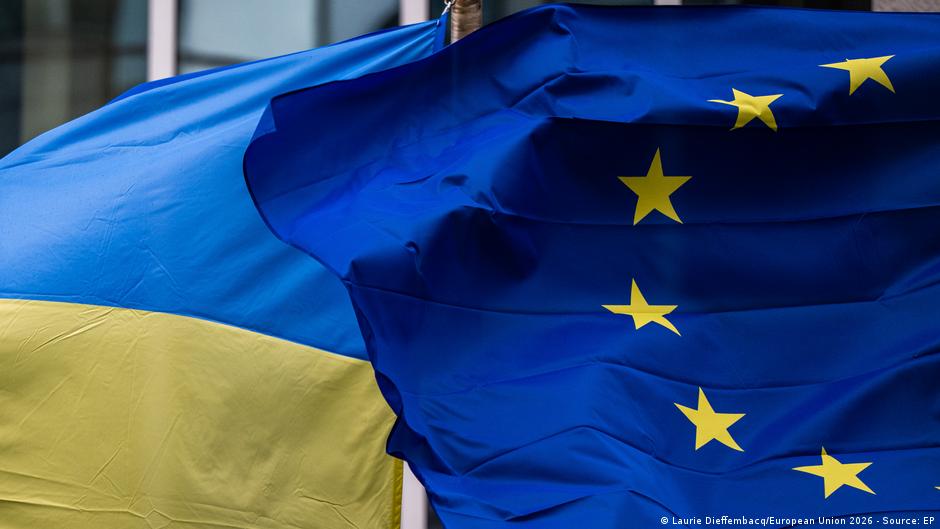
EU foreign policy chief Kaja Kallas has urged permanent representatives of European Union member states to extend sanctions against Russia over the war in Ukraine, pressing for continuity in a regime that remains central to Brussels’ economic response to Moscow.
Speaking to journalists in New York on Monday, September 21, ahead of a new meeting of EU ambassadors, Kallas said maintaining the measures was essential. The sanctions, she said, are a key part of the bloc’s response to the war launched by Russia and are intended to deprive Moscow of financing.
“Sanctions are a key element of our response to the war unleashed by Russia,” Kallas said.
According to Kallas, cited by AFP, representatives of EU member states are seeking to complete negotiations on extending the punitive measures against Russia in the near term and ensure their rapid entry into force. She stressed that the EU’s position remains unchanged and that Brussels is already working on a new package of sanctions.
For venture capital firms, technology startups, and corporate investors operating across Europe, the debate is not only a foreign policy issue. Sanctions policy helps define the boundaries of permissible capital flows, counterparty risk, and cross-border dealmaking involving Russian-linked individuals, entities, and assets. Any uncertainty over renewals can complicate diligence processes for funds and startups with international investors, strategic partners, or acquisition targets.
Ambassadors Face Deadline on Sanctions Renewal
The next meeting of permanent representatives of EU member states is scheduled for the morning of September 22, according to a DW correspondent in Brussels citing an EU diplomat. The ambassadors are expected to discuss whether to remove sanctions from Russian billionaires Alisher Usmanov and Mikhail Fridman while preserving restrictive measures against thousands of other individuals and organizations.
The issue follows an earlier failure to reach agreement. On September 14, EU ambassadors were unable to approve the next six-month extension of sanctions imposed on Russia for violating Ukraine’s territorial integrity. Instead, they decided to prolong the existing regime temporarily while consultations continued, setting a deadline that runs until midnight on September 22.
Sources speaking to DW on condition of anonymity said the disagreements centered on efforts by Slovakia to remove Usmanov and Fridman from the sanctions list. France, for its part, blocked the renewal of the sanctions regime while seeking the removal of Usmanov. Luxembourg also supported lifting punitive measures against Fridman, Reuters reported on September 21, citing diplomatic sources.
The dispute underscores how sanctions enforcement can intersect with business and capital markets questions. For startups and venture-backed companies, especially those building in fintech, enterprise software, cybersecurity, logistics, or dual-use technologies, sanctions lists are not abstract policy documents. They are embedded in bank compliance checks, investor onboarding, acquisition due diligence, export-control reviews, and customer screening systems.
That makes the EU decision relevant to the broader innovation ecosystem even when the immediate negotiations concern named individuals and state-level diplomacy. A stable sanctions framework gives compliance teams and investors clearer rules; political disagreement over renewals can delay decisions or increase caution around transactions that involve complex ownership structures, historic Russian capital, or cross-border counterparties.
Ukraine Opposes Removing Usmanov and Fridman
Ukraine has criticized the possibility of lifting sanctions from both Russian billionaires. Ukrainian Foreign Minister Andrii Sybiha said Usmanov and Fridman were included in the sanctions lists because of their affiliation with the “Russian aggressive regime, which is waging a war of conquest against Ukraine.” Nothing has changed since then, Sybiha said.
Kallas’ intervention signals that the EU’s foreign policy leadership wants ambassadors to resolve the dispute without weakening the broader sanctions architecture. She also made clear that Brussels is working beyond the current extension and preparing another sanctions package.
The immediate question for EU governments is procedural but consequential: whether they can reconcile member-state objections concerning Usmanov and Fridman with the continuation of measures covering thousands of individuals and organizations. For the private technology sector, the outcome will feed into risk models used by investors, banks, acquirers, and founders as they assess exposure to sanctioned persons and jurisdictions.
Venture capital activity depends heavily on confidence in the enforceability of legal and financial rules. In Europe, where many startups raise capital from multinational syndicates and sell into regulated markets, sanctions clarity can influence financing timelines, M&A diligence, and market-entry decisions. The EU’s handling of the Russia sanctions renewal will therefore be watched not only in diplomatic circles but also by compliance officers, fund managers, and startup executives navigating the region’s geopolitical risk environment.
As the September 22 deadline approaches, Kallas’ message to EU ambassadors is that the sanctions should remain in place as part of the bloc’s response to Russia’s war in Ukraine. The unresolved question is whether disagreements over two high-profile billionaires can be separated from the broader sanctions regime quickly enough to avoid another impasse.