North Korea Missile Launch Adds Risk for South Korea’s Startup Economy
Seoul said Pyongyang fired at least one ballistic missile toward the Sea of Japan after a border blast injured three South Korean soldiers.
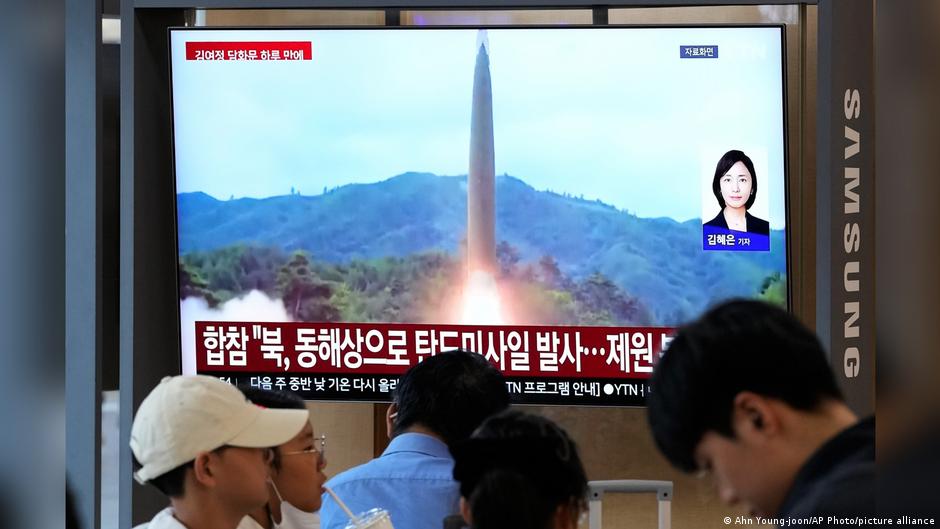
North Korea fired at least one ballistic missile toward the Sea of Japan, South Korea’s military said Saturday, October 3, adding a fresh security shock to a region that is central to Asia’s technology supply chains, startup financing and cross-border investment activity.
The launch was announced by South Korea’s Joint Chiefs of Staff, which said Seoul, Washington and Tokyo were maintaining a high level of readiness while closely sharing information on North Korean ballistic missiles. The statement came after a September 21 explosion in the border area between North and South Korea that injured three South Korean soldiers.
“South Korea, the United States and Japan maintain a high level of combat readiness, while maintaining close information-sharing on North Korean ballistic missiles,” Seoul said.
For venture capital investors and technology companies, the latest escalation is not only a geopolitical headline. South Korea is one of the region’s most important innovation markets, home to advanced semiconductor, artificial intelligence, robotics, gaming, e-commerce and enterprise software ecosystems. Any rise in military tension on the Korean Peninsula can affect how international investors assess timing, risk premiums and exit prospects for companies operating in or selling into the market.
South Korean military sources cited by AFP have said Seoul believes the September 21 blast was caused by the detonation of North Korean anti-personnel mines. South Korean Defense Minister Kang Shin-chul accused Pyongyang of violating the armistice and said Seoul intended to take response measures. The Joint Chiefs of Staff demanded that North Korea apologize.
North Korea rejected the accusations. Kim Yo Jong, the sister of North Korean leader Kim Jong Un, called the South Korean claim “extremely low and dirty,” according to the North’s state news agency KCNA.
Security Tensions Meet Startup Risk Models
The Korean Peninsula remains a recurring geopolitical variable for investors backing growth companies in Northeast Asia. While South Korea’s technology sector has continued to attract founders, strategic partners and capital through repeated periods of tension, missile launches and border incidents can still influence investor behavior at the margins.
For venture funds, the immediate questions are less about day-to-day startup operations and more about valuation discipline, fundraising conversations and strategic planning. Funds with South Korean exposure may face additional diligence from limited partners, while startups dependent on foreign capital may encounter more cautious conversations around market risk, currency volatility, insurance, supply chain continuity and executive travel.
The effect can be particularly relevant for startups building in sectors tied to national resilience and critical infrastructure. Cybersecurity, defense-adjacent software, satellite analytics, logistics, industrial automation and secure communications companies may see renewed attention when regional tensions rise. At the same time, consumer and enterprise startups may have to reassure customers and investors that they can operate through periods of uncertainty.
South Korea’s role in global hardware and semiconductor ecosystems also makes the broader technology market sensitive to security signals from the peninsula. Startups that depend on Korean manufacturing partners, chip suppliers, cloud infrastructure customers or strategic acquirers can be affected by shifts in boardroom risk assessments, even when there is no immediate disruption to business activity.
The latest launch follows a familiar pattern in which military moves by Pyongyang reverberate beyond defense ministries. In the venture market, such incidents often become part of a broader risk narrative that includes regional security, export controls, supply chain concentration and the strategic competition shaping technology policy across Asia and the United States.
A Frozen Conflict With Market Consequences
South and North Korea technically remain at war. The Korean War ended in 1953 with an armistice agreement, not a formal peace treaty. The two countries are divided by the Demilitarized Zone, with a demarcation line running through the middle of the mined strip. It is one of the world’s most heavily fortified and mined borders.
That unresolved status is an enduring background condition for South Korea’s economy and its innovation sector. Seoul has become a major global technology hub despite the security environment, and the country’s startup ecosystem has built deep links with U.S. investors, Japanese corporates and regional venture networks. Still, each escalation can remind investors that geopolitical risk is not abstract in one of Asia’s most sophisticated digital economies.
For merger and acquisition activity, the implications are similar. Strategic buyers evaluating Korean startups, or Korean companies considering outbound acquisitions, may not pause deals solely because of a missile launch. But heightened tensions can lengthen risk reviews, add board-level scrutiny and reinforce the need for contingency planning. For later-stage startups seeking exits through IPOs or strategic sales, timing can matter when public markets or acquirers are sensitive to geopolitical headlines.
The South Korean, U.S. and Japanese coordination described by Seoul is therefore significant beyond the military sphere. For the innovation economy, allied information-sharing and readiness are part of the stability framework that allows capital, talent and technology partnerships to keep moving despite repeated provocations.
The missile launch also underscores the importance of resilience planning for founders. Companies operating in South Korea or relying on Korean partners may need to show investors that they understand their exposure to regional shocks. That can include supplier diversification, incident response protocols, data redundancy and clear communication plans for employees, customers and financial backers.
No immediate business disruption was reported in the source account of the launch. But in venture capital, perception can shape capital flows before operational effects appear. The latest incident adds another data point to the geopolitical calculations surrounding one of Asia’s most important startup and technology markets.