Latvian Men Detained at RAF Molesworth as Security Risks Shadow Defence Tech
The breach at a UK base hosting US and NATO intelligence operations adds pressure on defence startups and investors focused on resilient security systems.
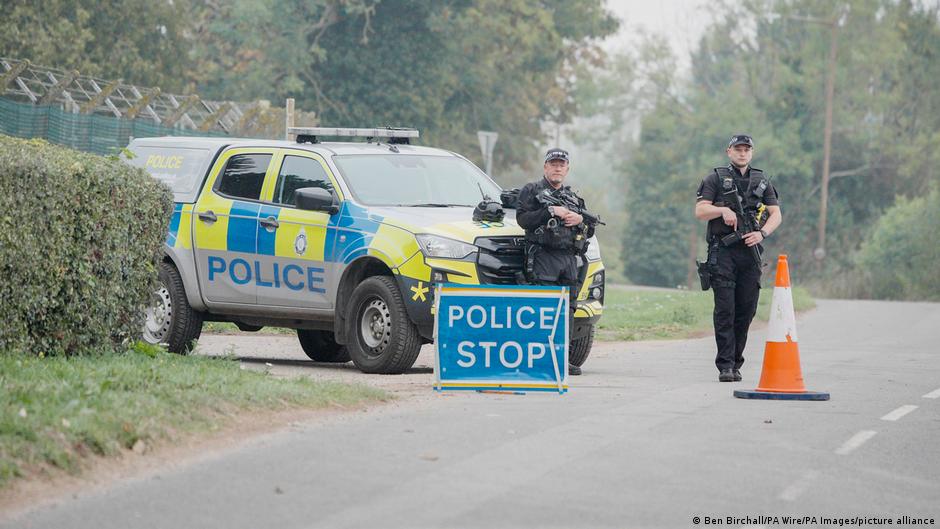
British counterterrorism police detained two Latvian citizens after they entered the grounds of RAF Molesworth, a military airbase in southeastern England that hosts US and NATO intelligence centres. The two men, aged 32 and 36, damaged fencing around the site and were taken into custody after the overnight breach on October 8.
Police said the men were suspected of entering the facility with the aim of causing harm to the United Kingdom. An investigation is under way, and authorities have not said publicly what specific equipment, personnel or operations may have been targeted. The incident nevertheless lands in a sensitive period for the UK defence establishment, which has faced heightened scrutiny over the security of military infrastructure and the resilience of sites used by allied forces.
For venture-backed companies operating in defence, intelligence, perimeter monitoring and critical-infrastructure security, the episode is likely to sharpen an already active market conversation. Startups selling sensor networks, drone detection, access-control systems, anomaly detection software and AI-enabled surveillance tools have increasingly positioned themselves as suppliers not only to armed forces but also to operators of ports, energy assets, data centres and logistics hubs. A breach at a site linked to NATO and US intelligence operations reinforces the argument that physical security is now closely tied to the digital and geopolitical risk stack.
Police said the suspected purpose of the breach was to cause harm to the United Kingdom.
Security Incidents Become a Market Signal
RAF Molesworth is not a conventional passenger or cargo aviation facility. Its significance lies in the intelligence operations housed there, making the alleged intrusion more consequential than an ordinary trespass case. The facility’s connection to NATO and the United States gives the incident a cross-border dimension at a time when European governments are under pressure to harden military and dual-use infrastructure.
That matters for the innovation ecosystem because defence procurement has been shifting, gradually but visibly, toward faster adoption of commercial technologies. VentureLine’s readership will recognize the pattern: incidents that expose vulnerabilities can accelerate budget attention, shorten sales conversations and alter the priorities of corporate venture arms, government-backed funds and specialist defence investors. The challenge for startups is that national-security customers rarely move at consumer-software speed, even when the threat environment appears urgent.
The Molesworth case may therefore be less a single procurement trigger than another data point in a broader investment thesis. Investors have already been watching categories such as base security, counter-intrusion analytics, secure communications, autonomous monitoring and infrastructure intelligence. The operational need is clear: military sites must detect, classify and respond to activity around their perimeters before a breach becomes a crisis. But companies in this sector must also navigate classification rules, export controls, data sovereignty issues and long validation cycles.
The police have said there is currently nothing to indicate a link between the Molesworth incident and a separate security scare at RAF Fairford in late September. In that earlier case, a local resident reported suspicious activity near the base. Police then found three vans containing a quantity of petrol, cordoned off the area and evacuated residents from a nearby village. Seven suspects were detained and later released under certain conditions.
The Fairford episode carried additional geopolitical weight because US B-1 bombers had been based there. The United States subsequently decided to withdraw the B-1 bombers from RAF Fairford. US President Donald Trump attributed that decision to threats from people he described as being connected to Iran.
Implications for Defence Startups and M&A
For founders, the immediate lesson is not to overstate the commercial impact of a developing investigation. No public evidence has tied the Molesworth breach to a particular technology failure, and the facts released so far are limited. Still, the combination of damaged perimeter fencing, entry into a prohibited military environment and counterterrorism involvement points to a problem set that startups are actively trying to solve.
That could influence both funding and acquisition activity. Larger defence contractors and security integrators often look to acquire or partner with startups when emerging threats demand capabilities they do not already have in-house. Technologies that can fuse physical sensors with software-based threat assessment may become more attractive if military customers demand layered systems rather than single-point products. The same logic applies to companies working on rapid alerting, edge AI, secure video analytics and automated incident documentation.
For venture capital firms, however, the opportunity comes with constraints. Defence and intelligence customers can offer durable contracts, but the path from pilot to deployment is complex. Startups must prove reliability in difficult environments, meet strict security requirements and build trust with agencies that may be cautious about young vendors. The sales cycle can test conventional VC timelines, especially for companies that need hardware manufacturing, certifications or on-site integration.
The UK and its allies are likely to remain focused on protecting military sites and critical infrastructure from intrusions, sabotage risks and suspected hostile activity. The detention of two Latvian citizens at RAF Molesworth, coupled with the earlier RAF Fairford scare, gives policymakers another reason to examine whether existing systems are adequate. For the startup ecosystem, that scrutiny may translate into demand, but only for companies able to meet the standards of national-security buyers.
The investigation into the Molesworth breach continues. Until police release more details, the commercial implications remain indirect. But the direction of travel is hard to miss: security is becoming a core infrastructure market, and the companies that can bridge physical defence, intelligence workflows and software-driven resilience may find themselves in a more strategic position than ever.