Ukraine Delegation to Discuss Trump Envoys’ War Plan With Tech Stakes
Talks in the United States come as Kyiv links diplomacy, sanctions, Starlink access and strikes on Russian data infrastructure.
A Ukrainian delegation is set to hold talks in the United States on October 9 and 10 with special representatives of U.S. President Donald Trump over a new proposal aimed at ending Russia’s war against Ukraine, a diplomatic push with direct implications for the country’s technology sector, venture-backed companies and the wider innovation ecosystem.
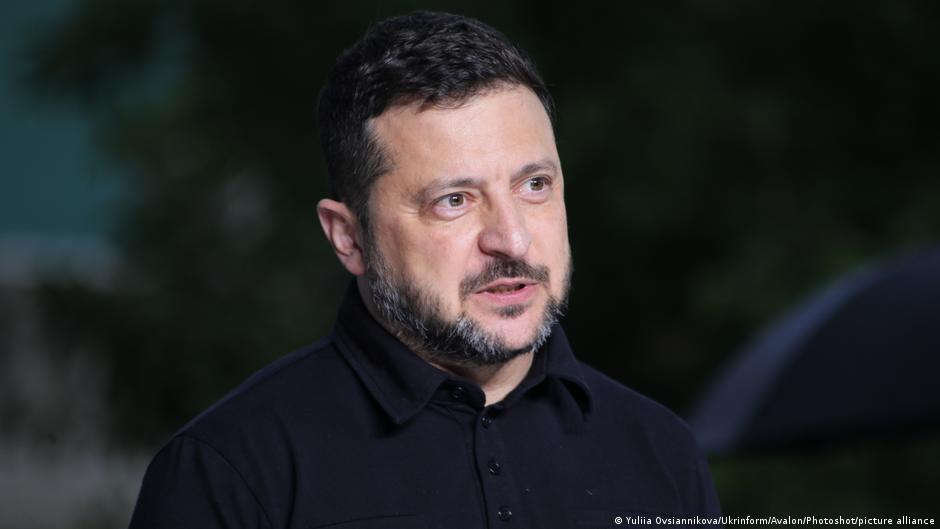
Ukrainian President Volodymyr Zelensky told journalists on Thursday, October 8, that the delegation would travel to the United States for meetings with Jared Kushner and Steve Witkoff, according to the UNIAN news agency. The Ukrainian side is expected to be represented by Kyrylo Budanov, head of the Office of the President; Serhiy Kyslytsya, deputy head of the Office of the President of Ukraine; Davyd Arakhamia, head of the Servant of the People faction in parliament; and Rustem Umerov, head of Ukraine’s Foreign Intelligence Service. Zelensky also said a European side may join the talks.
For Ukraine’s startup economy, the negotiations arrive at a moment when war risk remains one of the central variables shaping investment, hiring, cross-border sales and potential consolidation. Venture investors and strategic acquirers have continued to assess Ukrainian technology companies through the lens of resilience: the ability to operate during air attacks, maintain engineering teams, protect cloud and data infrastructure, and keep access to international customers. Any credible pathway toward de-escalation would therefore be watched not only by diplomats, but by founders, limited partners, defense-tech investors and global technology buyers.
A peace proposal with economic consequences
According to the Ukrainian service of Voice of America, citing a senior U.S. official, the meeting will address a new proposal that covers all aspects of the conflict and is intended to end the war. The source article did not disclose the proposal’s terms, and Ukrainian officials have not publicly provided details of the plan.
The lack of detail matters for markets. For venture capital, the difference between a ceasefire framework, a broader security settlement or an unresolved diplomatic process can translate into sharply different assumptions about risk premiums, currency exposure, insurance, capital controls and the ability of Ukrainian startups to raise larger growth rounds. Defense technology, cybersecurity, dual-use communications, drones, infrastructure monitoring and energy resilience have all become more strategically important during the war, but they also operate within a policy environment shaped by U.S. and European support.
Zelensky also responded on October 8 to remarks by U.S. Secretary of State Marco Rubio, who said the war in Ukraine had reached a deadlock and that, in his view, there were no prospects for resolving the conflict through negotiations. Rubio made the comments in an interview with the Greek newspaper Kathimerini.
“We are not in a diplomatic deadlock,” Zelensky said, criticizing the suggestion that negotiations had no path forward.
Zelensky rejected Rubio’s position and argued that the United States and its partners should increase economic pressure on Russia rather than describe the situation as stalled. He said it was inconsistent to discuss future economic projects with Russia while saying Ukraine was in a political or diplomatic deadlock. He called for Russia’s economy to be closed off and for sanctions on its weapons, according to Ukrinform.
That message has a business dimension. Sanctions policy affects technology supply chains, export controls, component access, software restrictions and the financing environment around dual-use systems. For startups building in defense, aerospace, cybersecurity and communications, the enforcement and expansion of sanctions can influence both market opportunity and compliance burdens. For larger technology firms and acquirers, the same policy choices affect due diligence, customer screening and the risk of exposure to sanctioned Russian entities.
Starlink, air dominance and infrastructure risk
Zelensky also called on the United States to allow Ukraine to use Starlink over Russian territory. He said such access would help Ukraine “dominate” in the sky and ultimately force Russian President Vladimir Putin to sit down at the negotiating table.
The Starlink request highlights how commercial space infrastructure has become a strategic layer in the war. Satellite connectivity is no longer simply a telecom issue; it is tied to command-and-control systems, drone operations, battlefield communications and the operational continuity of both public institutions and private companies. For the innovation ecosystem, it also underscores the growing overlap between civilian technology platforms and national security outcomes.
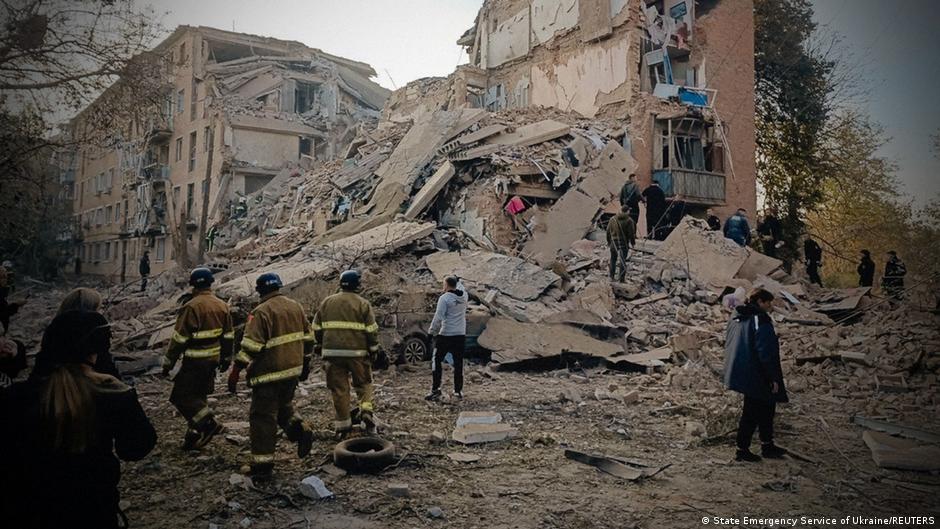
Ukraine has also described its response to Russian strikes as reciprocal, including against data centers. Zelensky said Russia had attacked Ukrainian data centers and that Ukraine had responded, though he declined to provide details, according to RBC-Ukraine.
Ukraine’s armed forces struck a Yandex data center in the city of Sasovo in Russia’s Ryazan region with drones during the night of October 8. A fire broke out, the data center completely stopped operating, and no one was injured.
For technology operators, the data center strike is a reminder that digital infrastructure has become part of the physical battlespace. Cloud availability, backup architecture, redundancy, energy supply and geographic distribution are now core strategic questions for companies operating in or around the conflict zone. Ukrainian startups have often had to design for disruption from the outset, a constraint that can increase operational discipline but also raises costs and complicates scaling.
The October 9-10 talks therefore carry significance beyond the immediate diplomatic track. A new war-ending proposal, the possibility of European participation, the debate over sanctions, and the request for expanded Starlink use all intersect with the conditions under which Ukrainian technology companies raise capital and compete globally. For venture investors, the question is not only whether negotiations move forward, but whether they reduce uncertainty enough to unlock more patient capital, cross-border partnerships and M&A activity involving Ukrainian innovation.
Until the proposal’s contents are known, founders and investors are likely to remain cautious. But the agenda described by Ukrainian and U.S.-linked sources shows that the war’s next diplomatic phase is inseparable from technology infrastructure, private-sector platforms and the financing of innovation under wartime pressure.