Lavrov Rejects Ukraine Talks Pause as War Risk Clouds Startup Investment
Russia said it would not halt military action for negotiations, while U.S. diplomacy at the UN underscored persistent geopolitical risk for investors.
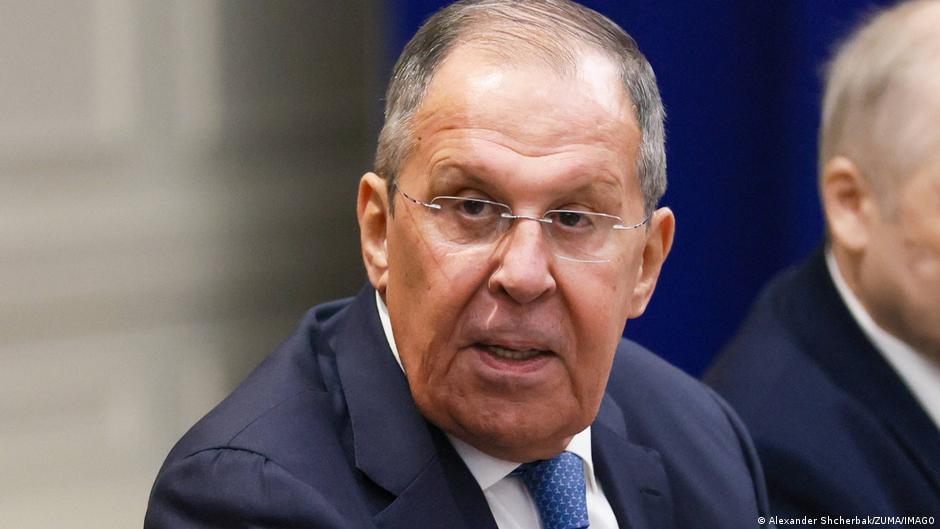
Russian Foreign Minister Sergei Lavrov said Moscow would not agree to any “pause” in its war with Ukraine for negotiations, a position that keeps geopolitical risk high for technology startups, venture investors and companies exposed to Eastern European talent, infrastructure and markets.
Lavrov made the statement on Wednesday, September 23, during a meeting of the UN Security Council in New York, where the UN General Assembly is taking place. According to the Russian foreign minister, Moscow remains ready for negotiations aimed at reaching what he described as a “lasting just peace.” At the same time, Russia continued strikes on Kyiv, underscoring the gap between diplomatic language and conditions on the ground.
The comments came as Lavrov met U.S. Secretary of State Marco Rubio in New York. Their talks lasted about an hour, according to Interfax. It was the fifth meeting between the heads of the two countries’ foreign ministries since 2025, reflecting a continuing channel of high-level dialogue even as the conflict remains unresolved.
Diplomacy Without a De-Escalation Signal
Lavrov said Russia would not make a pause for negotiations with Ukraine in any format. The Russian Foreign Ministry quoted him as saying that Europe wanted such a pause “with the same simple aim of getting a breather and replenishing the depleted military arsenals of the Kyiv regime.”
Russia is ready for negotiations to achieve a “lasting just peace,” Lavrov said, according to the Russian Foreign Ministry.
For venture capital and technology markets, the statement matters less as a diplomatic talking point than as a signal that near-term de-escalation remains uncertain. Startups operating in Ukraine, hiring from the region, serving defense-adjacent customers or relying on cross-border engineering teams continue to face a risk environment shaped by strikes, sanctions, export controls, currency volatility and investor caution.
Ukraine’s technology sector has remained active through the war, but any prolonged conflict complicates fundraising timelines, customer acquisition and acquisition talks. Investors often price in operational continuity, legal certainty and predictable access to talent. A refusal to pause fighting for talks keeps those assumptions under pressure, particularly for early-stage companies without large cash reserves or diversified operations.
The same dynamics affect larger technology companies and strategic acquirers. M&A involving assets, teams or customers in the region can require deeper diligence around sanctions exposure, cybersecurity, continuity planning and government contract risk. Even when companies are not directly based in Ukraine or Russia, the conflict can influence board decisions on expansion, hiring and capital allocation.
Rubio Says Washington Is Ready to Play a Role
At the UN General Assembly in New York, Rubio again said Washington was prepared to play a constructive role in achieving a ceasefire. The U.S. position, as described in the source account, leaves open the possibility of continued diplomatic engagement, but Lavrov’s remarks suggested that Russia is not prepared to suspend military operations as part of talks with Kyiv.
Before Lavrov’s speech, he and Rubio held their meeting in New York. The fact that the meeting occurred, and that it was the fifth such encounter since 2025, will be watched by companies and investors looking for signs of a possible change in the trajectory of the war. For startup ecosystems, however, channels of dialogue are not the same as reduced risk. Investors typically look for concrete changes: ceasefires, durable frameworks, sanctions clarity and credible reconstruction pathways.
Rubio had earlier said that the United States invited Russian President Vladimir Putin to take part in the G20 summit scheduled for December in Miami. “To solve problems, you need to meet with people with whom you have disagreements or certain frictions, so we invited President Putin to the G20 summit,” Rubio said.
Rubio also indicated that the Miami summit would give the Russian leader a possible opportunity to meet U.S. President Donald Trump and other world leaders. “We hope he will accept this invitation,” Rubio added.
Investor Attention Turns to Risk, Resilience and Reconstruction
For venture investors, the immediate takeaway is that the political and security backdrop remains unresolved. Defense technology, cybersecurity, logistics, energy resilience, infrastructure software and dual-use innovation have all become more relevant in wartime conditions. But the same environment that creates demand for new technologies can make investment decisions more complex.
Startups building in security, communications, autonomous systems or critical infrastructure may find stronger customer demand from governments and enterprises seeking resilience. Yet they also operate in a more sensitive regulatory environment. Investors must assess export rules, end-user restrictions and reputational risk, especially when technologies can be used in military contexts.
For Ukrainian founders and regional engineering teams, the continuation of Russian strikes and the absence of a negotiating pause may reinforce the importance of distributed operations, cloud-based infrastructure, relocation options and diversified customer bases. These measures can support business continuity, but they also add costs that can weigh heavily on young companies.
The diplomatic calendar now includes the UN meetings in New York and the planned G20 summit in Miami in December. For global venture markets, those events may provide signals, but not certainty. Until there is a clearer path toward a ceasefire or settlement, the innovation ecosystem around Ukraine will remain defined by a combination of resilience, heightened demand for security-focused technology and persistent constraints on capital formation.
Lavrov’s statement that Russia will not pause for talks keeps the conflict firmly within the risk models of investors and corporate buyers. Rubio’s comments show that Washington wants to preserve a diplomatic role. Between those positions, startups and venture funds are left to plan for a long horizon of uncertainty.