Macron Warns Russian Mobilization Could Raise Risks for Europe’s Tech Sector
The French president said a Russian call-up of about 300,000 people was plausible as Europe faces rising hybrid threats.
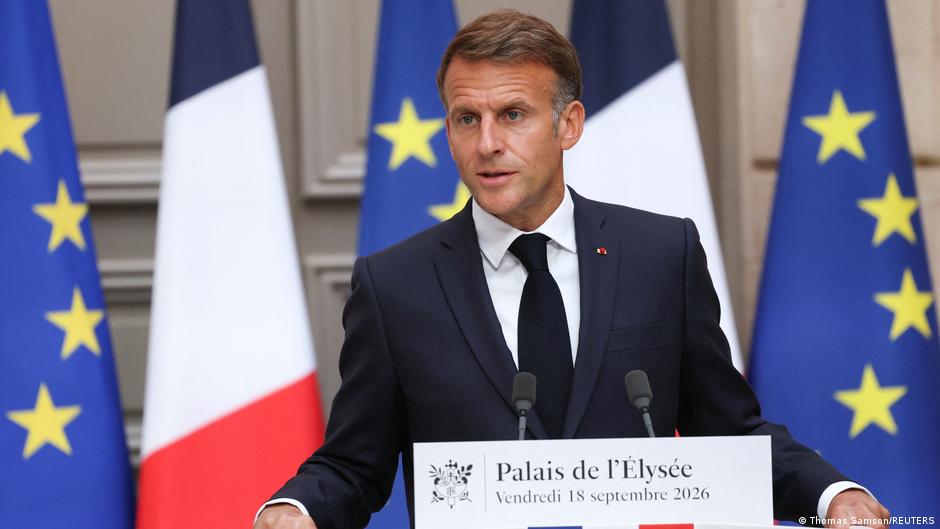
French President Emmanuel Macron has said France views as credible a scenario in which Moscow could mobilize around 300,000 people, a development that would deepen security uncertainty across Europe and sharpen the risk environment for technology startups, venture capital investors and companies operating critical digital infrastructure.
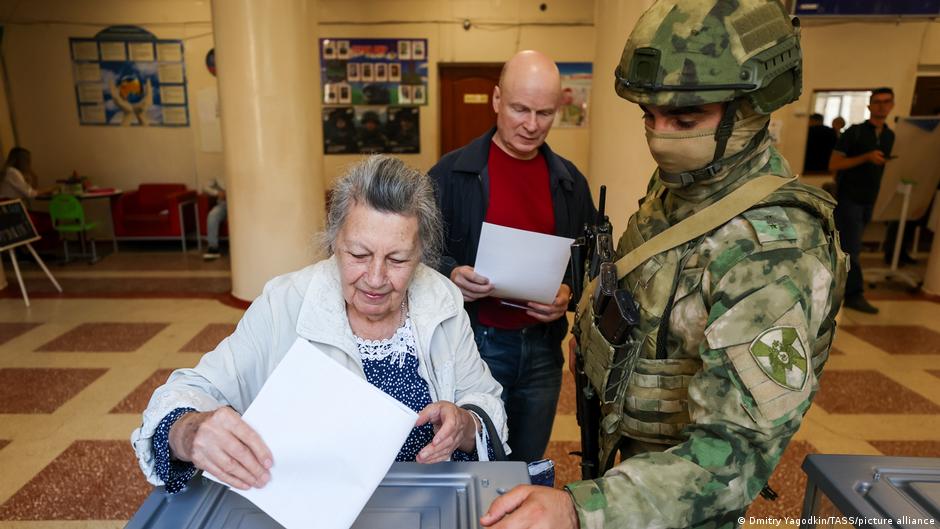
Speaking on Thursday, September 24, on TF1 and France 2, Macron said Russia had waited for its elections, held from September 18 to 20 for the State Duma, before moving toward what he described as a likely next step. He said it remained unclear whether any mobilization would be publicly announced or carried out in a less visible way.
“They waited for their elections, the elections have passed, and today it is clear that Russia will do this,” Macron said.
The warning places renewed emphasis on geopolitical risk for Europe’s innovation economy. Startups across cybersecurity, defense technology, logistics, energy resilience and cloud infrastructure have already become more strategically important since Russia’s full-scale war against Ukraine began. A new mobilization by Moscow, if it materializes, could accelerate demand for defensive technologies while also increasing operational risks for founders and investors exposed to European markets.
Hybrid Risk Moves Closer to the Startup Economy
Macron said there had been “several signs” suggesting Russia was preparing such a step, describing the scenario as one that France considers credible based on intelligence from the United States, Europe and Ukraine. His comments came with a broader warning that hostile activity across Europe has intensified in recent weeks.
For venture-backed companies, that assessment matters beyond the immediate military implications. Europe’s startup ecosystem depends on cross-border capital, cloud services, data flows, energy networks, transport links and investor confidence. Hybrid threats targeting cyber systems, critical infrastructure or public trust can quickly become business risks, particularly for early-stage companies with limited resilience budgets.
Macron said he had convened representatives of political forces the previous week to warn them about the development of the threat and its consequences for France. His remarks suggest that European governments are increasingly treating hybrid warfare not as a peripheral security issue, but as a direct challenge to domestic stability, infrastructure and economic continuity.
According to Macron, Russia sees Europe as Ukraine’s “strategic rear” because Europeans are helping Ukrainians, and because Kyiv is striking oil refineries and other targets in Russia in an effort to force Moscow to end the war. As a result, he said, Europe itself could become a target.
He pointed specifically to attacks in the information space through the spread of falsehoods, as well as activity in cyberspace. Those are areas where startups and scale-ups can be both targets and suppliers: exposed to phishing, breaches and disinformation, while also competing to provide monitoring, identity, infrastructure security and threat-intelligence tools to governments and enterprises.
Funding, M&A and Critical Infrastructure
The French president’s remarks also land at a time when defense-adjacent technology and cybersecurity have become more prominent themes for European investors. Venture capital funds that once treated defense as a narrow or politically sensitive category are increasingly examining dual-use technologies, including secure communications, autonomous systems, satellite analytics, cyber defense and infrastructure protection.
A credible mobilization scenario involving around 300,000 people could reinforce that shift. It may push limited partners, sovereign investors and corporate venture arms to view resilience technologies as a long-term investment category rather than a temporary response to the war in Ukraine. At the same time, heightened uncertainty can make fundraising more uneven for startups outside strategic sectors, particularly if investors become more cautious about macroeconomic and geopolitical exposure.
Macron had earlier said, on September 18, that France was preparing a plan to protect critical infrastructure amid the growing threat of hybrid attacks from Russia. Such measures can have direct implications for technology procurement and M&A. Governments and large industrial companies may look to acquire or partner with specialized cybersecurity, infrastructure monitoring and incident-response startups. The same risk environment can also raise compliance burdens and lengthen sales cycles for younger companies trying to serve public-sector or regulated customers.
The source article noted that Russia had previously been accused of interfering in elections and using migrants as a tool of pressure on Europe. Now, European intelligence services suspect a Russian trace in acts of sabotage, arson, attacks on critical infrastructure and violations of airspace.
For the innovation ecosystem, the widening scope of suspected activity underscores how security concerns are spreading across sectors. Energy startups, cloud providers, data-center operators, telecom vendors, mobility companies and AI firms handling sensitive data may all face closer scrutiny. Investors conducting due diligence are likely to pay more attention to cyber posture, supply-chain exposure, data residency, public-sector dependencies and the resilience of founding teams.
Sources cited by the original publication said many incidents, particularly cyberattacks and hacks, are not publicly disclosed, meaning the scale of Russia’s hybrid attacks is significantly larger than publicly visible. That opacity complicates risk pricing for venture capital and strategic acquirers. If attacks are underreported, startups may underestimate the probability of disruption, while investors may struggle to assess whether portfolio companies have adequate defenses.
Macron’s remarks do not by themselves establish that a Russian mobilization has been formally announced. But they signal that France sees the scenario as credible and is preparing for broader consequences across Europe. For startups and venture investors, the message is that the continent’s security environment is no longer a background issue. It is becoming part of the operating model, the funding thesis and, for some companies, the core market opportunity.