Macron’s Under-15 Social Media Ban Push Raises Stakes for Europe’s Tech Sector
France’s president is seeking an EU-wide framework after a national ban was blocked, creating new regulatory uncertainty for social platforms and youth-tech startups.
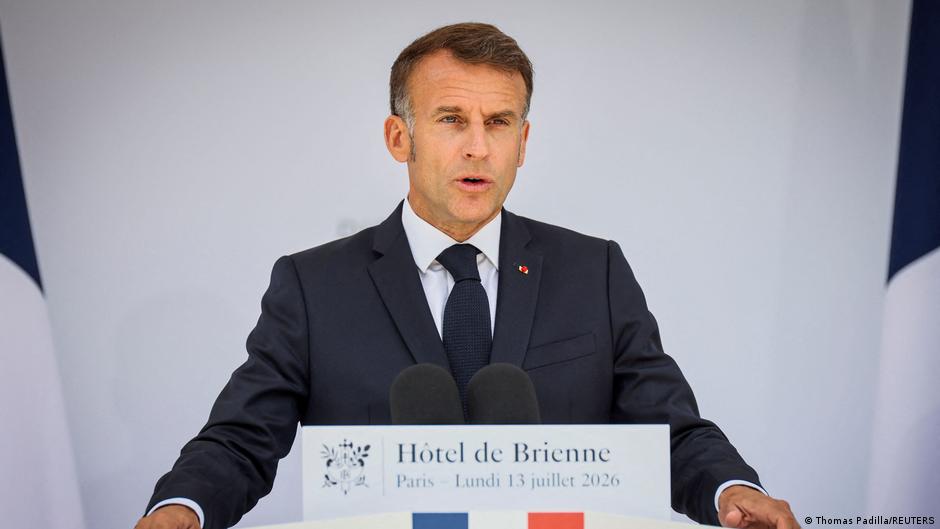
French President Emmanuel Macron has asked European Commission President Ursula von der Leyen to prepare a “European legislative act” that would ban children under 15 from using social media, according to AFP, escalating a policy debate with direct implications for social platforms, consumer internet startups and investors backing youth-focused digital products across Europe.
The request was made in a letter dated August 29, which AFP said it reviewed on Monday, September 7. Macron’s appeal follows a setback in France, where the Constitutional Council blocked a comparable national law on August 14. France’s highest constitutional review body said the measure violated freedom of expression, forcing the government to reconsider how such restrictions could be designed within both French constitutional limits and European Union law.
For venture-backed companies, the French initiative matters beyond one country’s domestic politics. If the European Commission were to move toward a harmonized rule, it could reshape the operating environment for platforms serving minors, age-verification providers, digital identity startups, edtech companies, child-safety software vendors and advertisers that rely on youth audiences. A binding EU-level approach would also change the risk calculus for investors assessing social, gaming and creator-economy startups in the bloc.
From French Setback to EU-Level Push
Macron, who is due to leave office after elections in April 2027, has said he hopes to “find a way forward” in the coming months through a “revised legislative act” at the national level that would comply with EU law and France’s Constitution. In his letter to von der Leyen, he argued that the next step should be broader than a French-only fix.
“It is now crucial to go further and harmonize this provision through a new European document,” Macron wrote, according to the source article.
Reuters described the Constitutional Council’s decision as a blow to Macron. The president has tasked Prime Minister Sebastien Lecornu with preparing a new, “legally impeccable” draft law. That phrasing signals the key tension for policymakers and technology companies alike: governments want stronger protections for children online, but any sweeping ban must survive legal scrutiny around free expression, proportionality and enforceability.
The legislative push followed a December 2025 report by France’s health oversight authority warning about harmful effects on children from platforms such as TikTok, Instagram and Snapchat. The report cited potential risks including lower self-esteem and possible increases in self-harm, suicide and drug use. According to the statistics referenced in the source, one in two teenagers spends between two and five hours a day on a smartphone, and 58% use phones to access social networks.
Investor Impact: Compliance, Identity and Platform Risk
For major social media incumbents, an EU-wide under-15 ban would likely mean higher compliance costs, new product controls and pressure to strengthen age assurance. For startups, the impact would be uneven. Companies building social apps, short-form content products, teen communities or creator tools could face a smaller addressable market in Europe or higher onboarding friction. That could affect growth projections, retention assumptions and valuations, especially for firms pitching consumer virality as a core part of their model.
At the same time, the policy shift could create demand for companies developing privacy-preserving age verification, parental consent systems, online safety analytics, moderation tools and child-protection infrastructure. Venture capital often moves toward regulatory pain points when compliance becomes unavoidable. If Europe standardizes rules, startups offering scalable tools to platforms, app stores, schools and telecom operators may find a more defined market.
The challenge is that age verification remains technically and politically sensitive. Systems that confirm whether a user is under 15 can involve identity documents, biometric estimation, device-level controls or third-party verification providers. Each approach carries trade-offs around privacy, accuracy, exclusion and regulatory burden. For founders, the opportunity is not simply to build verification technology, but to do so in a way that can satisfy European regulators without undermining user trust.
The initiative also raises questions for mergers and acquisitions. Larger platforms may acquire compliance technology rather than build it internally, while safety-tech startups could become more attractive targets if EU policy moves from national experiments toward a single framework. Conversely, social products with large underage user bases could face increased diligence from acquirers and investors, particularly around data protection, content risks and user demographics.
A Broader Global Trend
France’s debate is part of a wider international shift toward restricting minors’ access to social media. In December 2025, Australia blocked people under 16 from accessing most social networks. That precedent is likely to remain closely watched by European policymakers, platform operators and venture investors, especially as governments compare enforcement models and legal outcomes.
For Europe’s innovation ecosystem, the central question is whether a ban would produce clearer rules or a more fragmented compliance environment. Macron is explicitly calling for harmonization through a new European document, suggesting that France sees EU-level legislation as a way to avoid piecemeal national rules. For startups, harmonization can be preferable to managing 27 separate regimes, but it can also impose a high baseline standard across the entire single market.
The political timing is also significant. Macron has made the ban a key domestic agenda item in his final year in office. That gives the proposal urgency, but also exposes it to political negotiation in Brussels and legal constraints in Paris. The French president’s remaining window before the April 2027 elections may accelerate national drafting, yet EU legislation typically requires broader institutional consensus.
For founders and investors, the practical takeaway is that youth access to social media is becoming a material regulatory issue in Europe. Consumer startups that involve minors, social sharing, messaging, creator tools or algorithmic feeds will need to treat age policy as a core business risk rather than a peripheral compliance matter. Meanwhile, infrastructure startups that can help platforms verify age, protect minors and document compliance may find the policy momentum opens a larger market.
Macron’s request does not itself create a European ban. But it moves the debate from a blocked French statute toward the possibility of an EU-wide legal framework. That shift could redraw the boundaries for digital products aimed at younger users and influence where venture capital flows in Europe’s next cycle of consumer internet and trust-and-safety innovation.