Moscow drone attack highlights wartime risks for Russia’s tech economy
Regional officials reported two deaths, airport disruptions and fires near key infrastructure after hundreds of Ukrainian drones targeted Moscow and its surrounding region.
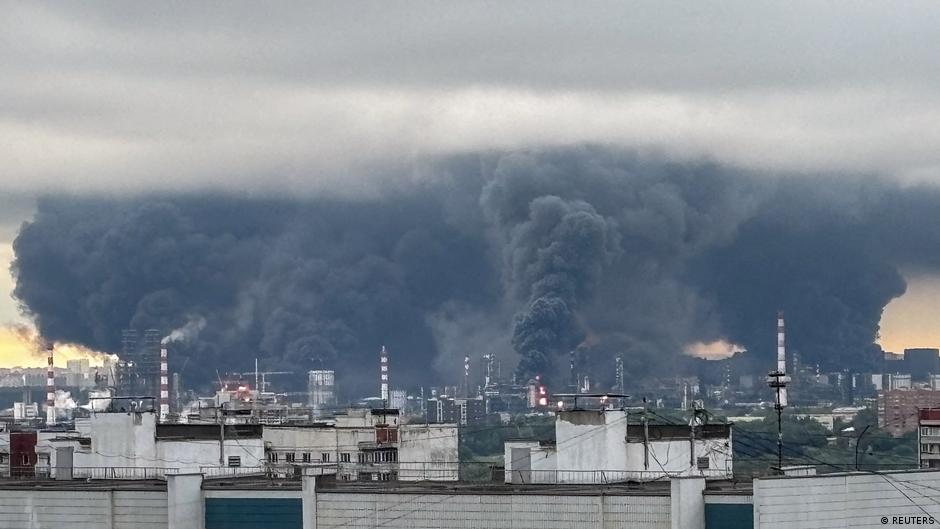
A large-scale Ukrainian drone attack on Moscow and the surrounding Moscow region killed two people and injured at least six, according to regional governor Andrei Vorobyov, underscoring how the war’s expanding aerial front is increasingly colliding with Russia’s logistics, energy and urban infrastructure.
Vorobyov wrote on Telegram on Sunday morning, September 20, that 249 Ukrainian unmanned aerial vehicles had been shot down over the Moscow region. Moscow Mayor Sergei Sobyanin separately said 186 drones had been intercepted on the approach to the capital. The figures, if confirmed, would point to one of the most extensive drone attacks reported around Russia’s political and commercial center.
For the technology and venture capital ecosystem, the immediate significance lies less in the battlefield details than in the operational risk now surrounding core metropolitan infrastructure. Moscow is Russia’s largest hub for startups, software companies, engineering talent, logistics platforms and corporate innovation teams. Disruption to airports, warehouses, energy facilities and residential districts can quickly translate into higher security costs, delayed supply chains and a more cautious funding climate.
Infrastructure disruption reaches Moscow’s business perimeter
According to Vorobyov, a warehouse complex in Sofyino caught fire after the attack. The anonymous Telegram channel VChK-OGPU claimed that a logistics complex of about 850,000 square meters at the site was fully engulfed in flames. The governor also reported drone impacts and fires in three apartment buildings and one private house.
Sobyanin said an object on the territory of the Moscow oil refinery had been damaged, adding that there were no casualties there. VChK-OGPU reported that the refinery in Moscow’s Kapotnya district was on fire. The same facility had already been attacked in June, according to the source article.
“An object on the territory of the Moscow refinery was damaged. There were no casualties,” Sobyanin said, according to the report.
The attack also disrupted aviation. Moscow’s Vnukovo, Domodedovo and Zhukovsky airports suspended operations, according to the report. For companies dependent on rapid movement of personnel, components, venture teams and cross-border commercial links, airport shutdowns add another layer of uncertainty to an already constrained operating environment.
VChK-OGPU also claimed that drones attacked a thermal power plant in Lyubertsy and that a drone hit a residential building in Kotelniki. The Telegram channel Ostorozhno, Novosti, citing local residents, reported a fire in a residential complex in Kotelniki. In Istra, debris from a drone damaged an apartment in a residential building, municipal district head Tatyana Vitusheva said.
Rising security costs for startups and investors
The reported strikes come as drones have become a defining technology of the war, reshaping defense procurement, manufacturing priorities and private-sector innovation. For Russian startups operating in robotics, autonomy, sensors, logistics, energy monitoring and cybersecurity, the domestic market is increasingly being shaped by military and civil-defense requirements. That can create demand for dual-use technology, but it also narrows the commercial environment and heightens scrutiny from regulators, corporate buyers and international partners.
Venture capital activity in such a setting faces a complicated risk profile. Physical infrastructure risk can affect valuations of logistics, mobility, hardware, industrial software and energy-adjacent startups. Insurance, redundancy planning, data resilience and workplace continuity become more central to investor due diligence. Companies serving warehouses, fuel distribution, airports or utilities may face urgent demand, but also greater exposure to wartime disruption.
The reported fire at a major logistics site in Sofyino is especially relevant for the startup economy because logistics infrastructure underpins e-commerce, retail technology, food delivery, hardware distribution and marketplace fulfillment. Any prolonged interruption at a large warehouse complex can ripple through software-enabled supply chains, affecting merchants, last-mile operators and platform businesses that rely on predictable inventory flows.
The reported damage at the Moscow refinery also highlights energy infrastructure as a key vulnerability. For data centers, cloud providers, telecom operators and industrial technology companies, resilience planning depends not only on digital redundancy but also on stable electricity, fuel supply and transport access. The attack narrative may push more companies to revisit backup power arrangements, distributed operations and emergency response protocols.
M&A and innovation strategy under pressure
For strategic buyers and private investors, the latest reported attack adds to the broader reassessment of operating risk in Russia’s technology sector. M&A activity involving infrastructure-linked startups may require deeper reviews of asset exposure, continuity plans and government dependencies. Companies with products that support surveillance, air-defense logistics, emergency communications or infrastructure monitoring may see stronger domestic strategic interest, while consumer-facing companies may face weaker sentiment if disruptions weigh on spending and mobility.
The events also reinforce the central role of drones in modern innovation cycles. Ukraine’s reported use of large numbers of UAVs against targets around Moscow illustrates the speed at which relatively low-cost autonomous systems can challenge high-value infrastructure. That dynamic has implications beyond Russia: venture investors globally have been tracking growth in defense tech, counter-drone systems, geospatial intelligence, electronic warfare, secure communications and resilient logistics.
At the same time, the human toll remains central. The regional governor reported two deaths and at least six injuries in the Moscow region. Fires in residential buildings, damage to apartments and disruption at major airports show that the impact extended beyond military or industrial targets into civilian life and daily economic activity.
For Moscow’s startup and venture community, the attack is another sign that wartime risk is no longer confined to border regions or military sites. The capital region’s role as a concentration point for talent, capital, corporate headquarters and infrastructure makes it economically significant. When drones reach that perimeter in large numbers, the consequences are measured not only in intercepted UAVs and damaged buildings, but also in investment assumptions, operating models and the pace of innovation across the broader ecosystem.