Zelensky Says U.S.-Russia Diesel Deal Risks Financing Prolonged War
Ukraine’s president warned that easing restrictions on Russian fuel exports could weaken pressure on Moscow and prolong instability for investors and startups.
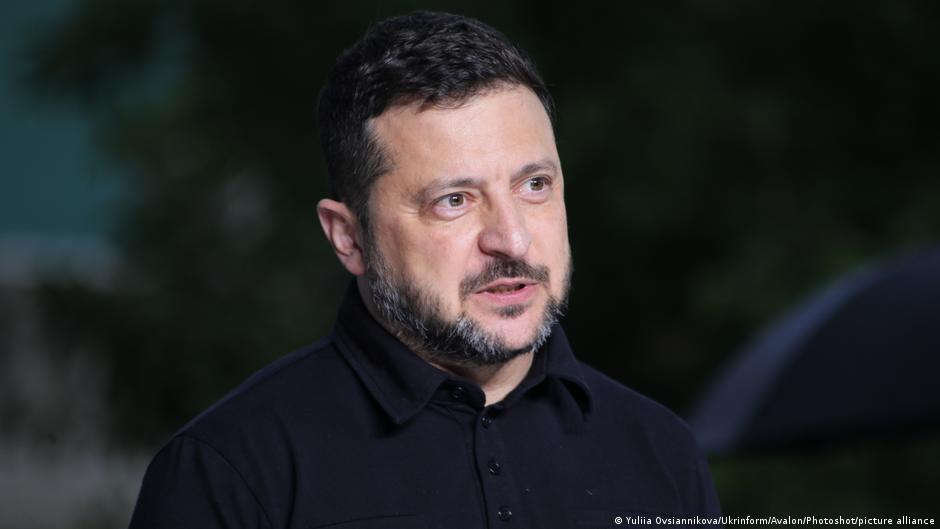
Ukrainian President Volodymyr Zelensky on Friday, October 9, sharply criticized a U.S.-Russia arrangement allowing Russian diesel fuel to return to global markets, calling the decision by the White House an “investment in war.”
The remarks followed U.S. President Donald Trump’s statement that he had held “very successful” talks with Russian President Vladimir Putin. According to Trump, the discussions produced an agreement on supplies of Russian diesel to the United States and to the wider global market.
For energy markets, the move could ease pressure on fuel supply. For the technology and venture capital ecosystem, however, Zelensky’s response underscored a broader risk: the possibility that short-term energy stabilization may come at the cost of longer geopolitical uncertainty, sanctions ambiguity and renewed pressure on Ukraine’s infrastructure, including the energy systems that support digital services, manufacturing, data operations and startup activity.
“Permission for Russia to sell petroleum products is an investment in the war that must be ended, not continued,” Zelensky said.
Zelensky argued that any concession to Moscow without a clear de-escalation mechanism would not bring peace. “Gifts to Putin will not work for peace,” he wrote, adding that Russia would “thank” others for diesel with further terror and hostile actions.
Sanctions Uncertainty Adds Risk for Capital and Founders
The decision described by Washington and Moscow lands in a market environment where venture investors have already had to price geopolitical instability into startup financing, cross-border expansion and merger activity. Ukraine’s technology sector has continued to operate through war, but its resilience depends heavily on energy reliability, secure infrastructure and predictable international policy.
Zelensky said Ukraine was ready for reciprocal steps toward de-escalation and called on Washington to increase pressure on Russia in order to reach a ceasefire. His proposal centered on mutual restraint around energy infrastructure: Ukraine, he said, would not burn Russian oil refining facilities if Russia stopped destroying Ukraine’s energy system.
“We are offering America exactly such an arrangement and believe that the strength of the United States is sufficient to achieve such a compromise,” the Ukrainian leader said.
For startups, such a framework would matter beyond the battlefield. Energy attacks have direct consequences for software companies, hardware developers, defense technology firms, logistics platforms and industrial innovators operating in or near Ukraine. Power disruption raises operating costs, interrupts product development and complicates due diligence for investors assessing runway, customer delivery and enterprise reliability.
Zelensky warned that any easing of sanctions against Russia without a clear agreement on de-escalation would be a sign of weakness. He said such a step would play into Moscow’s hands and support a scenario in which Russia kills more people and fights longer.
That warning is likely to resonate with investors focused on the innovation ecosystem in Central and Eastern Europe. Since the start of the full-scale war, Ukraine has become a focal point for defense technology, cybersecurity, dual-use innovation, drone systems and resilient infrastructure. But global capital remains sensitive to policy signals from Washington, especially when those signals affect sanctions enforcement, energy flows and the perceived durability of Western support.
OFAC License Opens Door to Russian Diesel Flows
On the same day as Trump’s announcement, the U.S. Treasury Department said the Office of Foreign Assets Control, acting on Trump’s order, was immediately issuing a temporary general license allowing supplies of Russian diesel fuel to the global market.
The practical effect is a temporary authorization for transactions that had been restricted, creating a potential shift in global fuel availability. The move may be welcomed by companies exposed to diesel prices, including logistics operators, manufacturers and transport-heavy platforms. But Zelensky’s criticism frames the policy as a strategic mistake if it reduces pressure on the Kremlin without securing restraint in return.
Russian Deputy Prime Minister Alexander Novak told TASS that Russia was immediately beginning to lift restrictions on diesel exports earlier than previously planned. He also confirmed Trump’s statement that Russian diesel exports could eventually reach 3 million tons per month.
That figure is significant for global energy planning, but it also raises questions for investors and corporate acquirers evaluating exposure to Russian-linked supply chains. Even temporary licenses can reshape compliance decisions, financing terms and risk models, particularly for companies operating across energy, shipping, commodity software, fintech, insurance technology and logistics analytics.
Venture-backed companies often depend on access to global partners, payment systems, cloud providers and enterprise buyers. Policy ambiguity around sanctioned markets can slow procurement, complicate banking relationships and deter strategic buyers from acquisitions involving cross-border operations. If the diesel arrangement is viewed as the start of broader sanctions relief, investors may reassess geopolitical scenarios across portfolios tied to Europe’s energy transition, defense modernization and industrial resilience.
At the same time, cheaper or more available diesel could reduce near-term pressure on some transport and industrial startups. But Zelensky’s argument is that the broader cost could be higher if the revenue or diplomatic signal enables Russia to continue the war for longer.
The dispute therefore sits at the intersection of energy policy, sanctions strategy and innovation finance. For Ukraine, the central issue is not only whether fuel markets receive additional supply, but whether the United States uses its leverage to secure a ceasefire and protect critical infrastructure. For the venture ecosystem, the outcome could influence capital allocation, startup survival and M&A confidence across one of Europe’s most strategically important technology regions.