Polish Opposition Leader Calls to Block Ukraine's EU Accession Amid Rising Political Tensions
Jarosław Kaczyński urges Warsaw to halt EU negotiations with Ukraine, citing strained relations and potential impacts on regional cooperation.
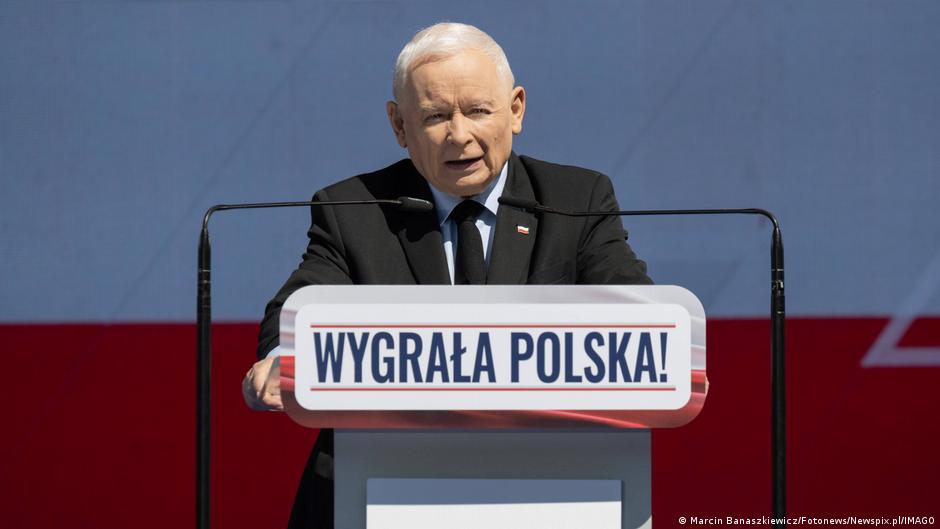
Jarosław Kaczyński, leader of Poland's opposition Law and Justice party (PiS), has called on the Polish government to block Ukraine's negotiations to join the European Union, signaling a significant diplomatic strain between the two nations. Kaczyński attributes the tension to actions by Kyiv that have exacerbated conflicts with Warsaw, complicating the broader political landscape in Eastern Europe.
Political Developments and Their Implications for EU Integration
On June 27, Kaczyński publicly urged Warsaw to halt Ukraine's EU accession talks, a move that contrasts sharply with the stance of Poland's current Prime Minister, Donald Tusk. Just days prior, Tusk had launched the Ukraine Recovery Conference (URC 2026) in Gdańsk, which successfully secured 160 agreements worth over €10 billion to support Ukraine's post-conflict rebuilding efforts.
Kaczyński’s call reflects internal political dynamics, as the PiS party appears to be positioning itself ahead of the upcoming Polish parliamentary elections scheduled for October 2027. The party seeks to appeal to Polish farmers concerned about the influx of Ukrainian agricultural imports and to citizens wary of financial burdens related to hosting Ukrainian refugees.
"This is less about Ukrainians themselves and more about the Ukrainian elite," Kaczyński said when returning a medal awarded by Ukraine, underscoring his criticism of Kyiv's political decisions.
The tensions escalated following Ukrainian President Volodymyr Zelenskyy’s decision to name a Ukrainian military unit after the Ukrainian Insurgent Army (UPA), a controversial group in Polish history due to its association with the Volhynia massacres during 1943-1944. Poland responded by revoking Zelenskyy’s Order of the White Eagle, its highest state honor.
In protest, several high-ranking Ukrainian officials, including Kirill Budanov, head of the President’s Office, and Foreign Minister Andriy Sybiha, returned their Polish awards. President Zelenskyy himself did not attend the Gdańsk conference, although he was expected to lead the Ukrainian delegation.
Impact on Tech Startups and the Innovation Ecosystem
These geopolitical tensions have broader implications beyond diplomatic relations, notably affecting the technology and startup sectors in both Poland and Ukraine. Poland has been a key regional hub for venture capital and tech innovation, often acting as a gateway for Ukrainian startups seeking EU market access and investment.
The potential suspension of Ukraine's EU accession talks threatens to disrupt cross-border collaboration, funding flows, and M&A activity vital to the innovation ecosystem. Ukrainian tech startups, which rely heavily on partnerships and market integration with EU countries like Poland, could face increased uncertainty, deterring venture capital investment and slowing growth.
Moreover, the strained political climate may discourage international investors who view regional stability as crucial for scaling startups and executing mergers or acquisitions. This could shift investment strategies, with venture capitalists favoring less politically volatile markets.
Poland’s role as an innovation leader in Central and Eastern Europe gives it substantial influence over regional tech trends. How Warsaw balances political posturing with economic pragmatism will be critical in shaping the future of Eastern Europe’s startup landscape.
As the situation evolves, stakeholders in venture capital and technology sectors will be closely monitoring the impact of these geopolitical developments on funding availability, cross-border collaborations, and market integration within the EU’s expanding tech ecosystem.