Russia-Flagged Ship Registry Growth Adds New Risk Layer for Energy Tech
A CREA analysis says sanctions pressure on Russia’s shadow fleet is reshaping maritime risk, with implications for energy startups and investors.
Russia’s national ship registry has expanded sharply as diplomatic and sanctions pressure forces vessels in the so-called shadow fleet to choose between detention risks, false flags or re-registration under the Russian flag, according to an analysis by the Centre for Research on Energy and Clean Air. For venture investors and energy-technology startups, the findings point to a growing risk environment around maritime logistics, sanctions compliance, fuel tracking and the insurance infrastructure that underpins global energy trade.
From January 2025 to June 2026, the registry of vessels sailing under the Russian flag grew by 36%, CREA said in an analysis published on Friday, September 25. Over that period, 107 vessels were added to the list. The largest monthly increase came in December 2025, when 25 new entries were recorded.
The expansion reflects a broader policy shift among open registries that are increasingly refusing to permit sanctioned cargo to be transported on shadow vessels. According to CREA, Barbados and Palau fully cleared their registries of sanctioned ships. Panama reduced the number of such vessels by almost two-thirds from its May 2025 peak, while the world’s largest ship registries launched a shared database, RISC, aimed at combating reflagging and other forms of sanctions evasion.
That tightening has left operators of Russia-linked shadow vessels with fewer options. CREA said the fleet is being pushed toward either sailing under false flags and risking detention, or entering the Russian ship registry. By June, 46 vessels that had previously sailed under the flags of Comoros or Gambia had been registered in Russia. Others moved to the flags of Sierra Leone and Equatorial Guinea, or continued operating without a recognized flag.
Compliance Technology Faces a Moving Target
The analysis is not only a shipping story. It also highlights a fast-changing market problem for startups building tools in sanctions screening, maritime intelligence, trade finance compliance, energy traceability, satellite monitoring and risk analytics. The more often vessels change flags, operate through opaque structures or rely on ship-to-ship transfers, the more valuable accurate data and verification tools become for banks, insurers, port operators, commodity traders and regulators.
CREA said 93 of the 107 vessels added to the Russian registry had previously been under sanctions, while 90 were under restrictions from more than one jurisdiction. Vessels that transported Russian oil before the first sanctions were imposed changed flags three times more often than before. Sixteen of them also transported Iranian or Venezuelan oil.
For venture capital, this creates a dual signal. On one hand, geopolitical fragmentation increases demand for software that can monitor vessel behavior, registry changes, cargo movements and ownership risk. On the other, companies operating in this segment face high-stakes regulatory exposure, complex customer diligence and markets shaped by policy decisions rather than ordinary commercial cycles. The addressable need is significant, but so are the liabilities.
After switching to the Russian flag, the vessels continued to transport Russian fuel around the world, CREA said. Oil worth 5.2 billion euros was delivered primarily to China. Ship-to-ship transfer schemes were also used in Egypt and the Red Sea, according to the analysis.
These patterns matter for startups working on energy transition and clean supply chains as well. Russian oil and liquefied natural gas flows that continue through sanctioned or high-risk networks can distort energy-market data, complicate emissions accounting and make it harder for buyers to assess the origin and risk profile of fuel. For climate-tech companies whose products depend on transparent commodity flows, shadow-fleet activity can undermine the reliability of the data layer on which their businesses are built.
Arctic Metagaz Incident Highlights Operational Risk
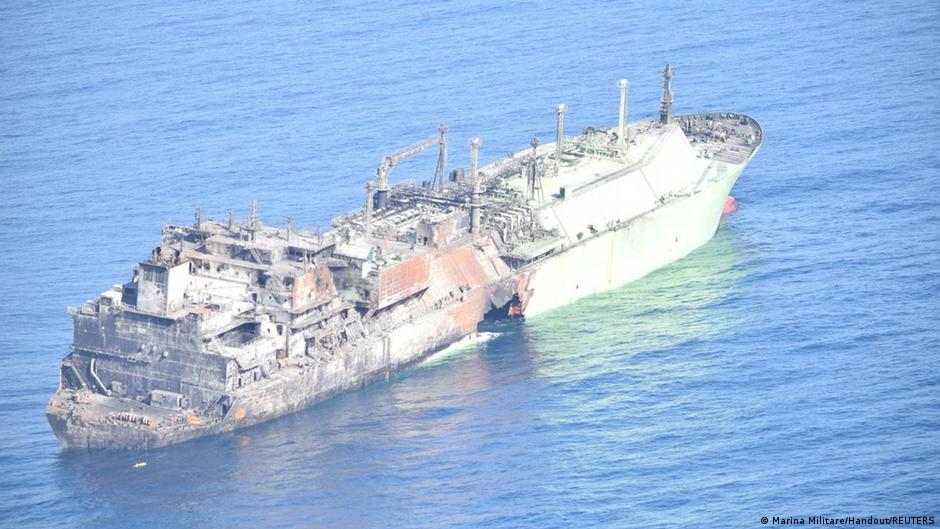
The risks are not limited to compliance. In March, the Russian liquefied natural gas carrier Arctic Metagaz caught fire in the Mediterranean Sea. Libya, Malta and Italy had to manage the crisis on their own, according to the source account. The incident has become a case study in the operational burdens placed on coastal states when high-risk vessels operate under flags that may not provide effective support during emergencies.
“The Arctic Metagaz incident showed the Russian flag for what it really is: a shield for dangerous vessels, providing no support in the event of a disaster and leaving coastal states to manage risks and deal with the consequences,” analyst Luke Wickenden said.
Arctic Metagaz is one of about 10 gas carriers used to transport sanctioned LNG from Russia’s Arctic LNG 2 terminal to the port of Beihai on China’s southern coast. In February 2026, the vessel left the port of Murmansk after loading and was likely heading toward the Egyptian port of Suez, gCaptain indicated. Since 2024, the ship has been under U.S. and U.K. sanctions.
For the innovation ecosystem, the episode underscores why maritime resilience, emergency-response coordination and vessel-risk scoring may become increasingly important categories. Startups selling to governments, insurers and energy traders may find stronger demand for platforms that combine satellite data, port-call records, sanctions lists and behavioral analytics. But commercialization will depend on trust, data provenance and the ability to withstand scrutiny from customers operating in legally sensitive markets.
The Russian registry’s growth also illustrates a broader investment theme: sanctions enforcement is becoming a technology problem as much as a legal or diplomatic one. As open registries coordinate through shared databases and sanctioned vessels seek new flags or operate without recognized ones, the market will reward systems that can identify risk in near real time. For founders, that could mean opportunity. For investors, it means diligence must extend beyond product-market fit to questions of jurisdiction, customer exposure, data quality and geopolitical durability.