Russia to Attend G20 Energy Meeting as Startups Watch Security Risks
A Russian representative is expected in Houston as G20 energy talks put security, sanctions and cross-border investment risk back in focus.
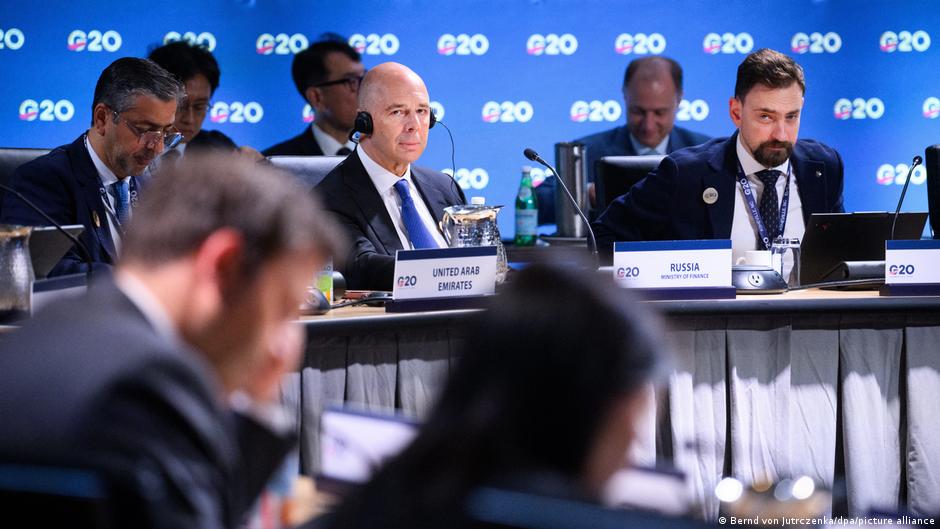
A Russian representative will attend next week’s meeting of G20 energy ministers in Houston, a U.S. administration official told Reuters, placing geopolitics at the center of a gathering formally organized around the theme of “energy abundance.”
The meeting is scheduled to take place from September 14 to 16 in the Texas city, one of the most important hubs for the global energy industry. The identity of the Russian participant has not yet been disclosed. The White House official cited by Reuters did not say who would travel from Russia to Houston.
For the technology and venture capital community, the meeting lands at a moment when energy security has become a defining investment variable. Startups working in power management, grid software, industrial automation, energy storage, climate infrastructure, shipping intelligence and defense-adjacent logistics are operating in markets shaped not only by demand and capital costs, but also by war, sanctions and supply-route risk.
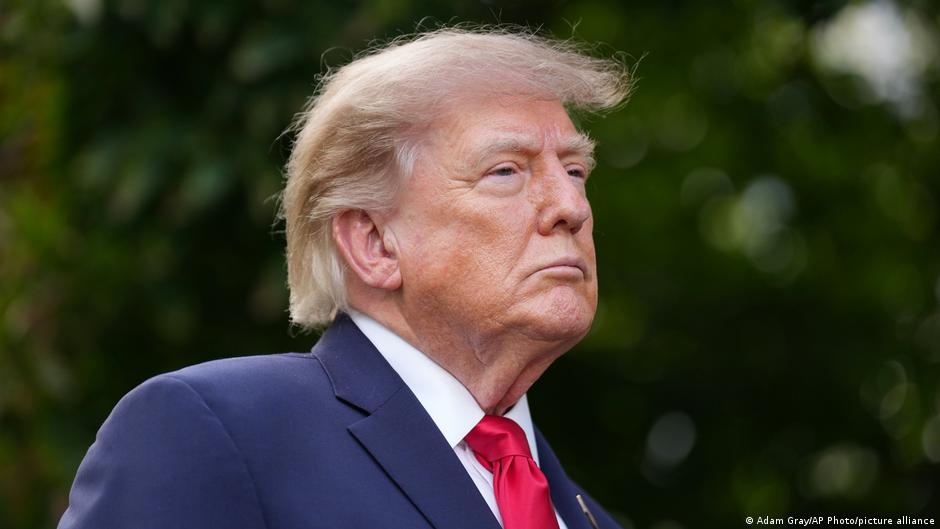
The Houston gathering is expected to include U.S. Energy Secretary Chris Wright, U.S. Interior Secretary Doug Burgum and Jarrod Eigen, a representative of President Donald Trump’s administration. Representatives of the energy sector from Europe and Asia are also expected to participate.
Energy Diplomacy Meets Venture Risk
Although the agenda is described as focused on “energy abundance,” the meeting will take place against a backdrop of broad concern over energy security. Many countries remain worried about the effects of Russia’s war in Ukraine, as well as tensions involving the United States and Iran. Those concerns have direct implications for venture-backed companies that depend on predictable energy prices, cross-border hardware supply chains and stable access to infrastructure markets.
The situation has been further complicated by the advance of the Tehran-backed Houthis in Yemen. On September 10, the group seized the port city of Mocha on Yemen’s western coast and strengthened its positions near the Bab el-Mandeb Strait, the southern exit from the Red Sea. The waterway is a critical route for global shipping, and instability there can ripple through freight pricing, insurance costs and energy logistics.
For startups, those pressures can quickly move from macroeconomic backdrop to operating reality. Higher shipping risks can raise the cost of importing components. Energy price volatility can affect data centers, battery manufacturers and heavy industrial pilots. Sanctions uncertainty can slow enterprise procurement and complicate international partnerships. Venture investors assessing energy and infrastructure startups increasingly need to underwrite geopolitical exposure alongside technology risk.
The meeting’s theme may be energy abundance, but the context is energy security.
Russia’s expected presence also highlights the delicate line between multilateral engagement and political legitimacy. Since the start of the war in Ukraine, Russian participation in high-level international economic forums has often been contested, especially by European officials. That tension matters for startups and investors because policy signals from such meetings can shape the pace of public-private partnerships, energy transition programs and M&A appetite in strategic sectors.
Sanctions, M&A and the Innovation Ecosystem
The Houston meeting follows another recent G20 encounter in the United States that drew attention to Russia’s re-emergence in formal economic settings. Russian Finance Minister Anton Siluanov took part in the G20 meeting of finance ministers and central bank governors held in Asheville on August 31 and September 1. It was the first time since the beginning of the war in Ukraine that Siluanov had participated in such a meeting. Previously, Russia had been represented at those events by secretaries.
According to U.S. media reports cited in the source article, Siluanov discussed with U.S. Treasury Secretary Scott Bessent the peace plan proposed by Donald Trump in November 2025, as well as the impossibility of easing sanctions before the end of the war. That sanctions point is particularly relevant to venture capital and technology M&A. Restrictions can limit acquirers, exclude counterparties, block financing channels and force investors to conduct deeper diligence on ownership, export controls and end-market exposure.
European criticism followed Siluanov’s appearance in Asheville. German Finance Minister and Vice Chancellor Lars Klingbeil called the very fact of receiving Siluanov at the event an “alarming signal.” In conversations with colleagues from other European countries, Klingbeil threatened to boycott the traditional group photograph of summit participants if Siluanov appeared in it. According to Klingbeil, representatives of other European countries joined his position, and the photo was ultimately taken without the Russian minister.
That episode underscores how diplomatic choreography can become a signal for investors. If governments disagree over who should be included in official forums, companies trying to sell into regulated energy markets may face slower decisions and uneven policy implementation across regions. Venture-backed firms in Europe, Asia and the United States may find opportunity in demand for resilience technologies, but they may also confront longer enterprise sales cycles and greater compliance burdens.
The presence of U.S. officials Wright, Burgum and Eigen in Houston points to the Trump administration’s emphasis on energy policy as a strategic economic domain. For founders, that could mean increased attention to technologies that expand production, secure infrastructure, improve resource management or support industrial capacity. For investors, it may sharpen interest in companies serving power generation, grid reliability, critical minerals, logistics security and dual-use monitoring tools.
Still, the participation of Russia, the continuing war in Ukraine, the U.S.-Iran context and instability near the Red Sea all suggest that energy abundance will be discussed in an environment defined by constraint. The result is a market where innovation may be rewarded, but where capital must price in policy risk, conflict exposure and the possibility that international cooperation remains fragile.
For VentureLine’s readership, the Houston G20 meeting is less a conventional diplomatic calendar item than a reminder of how closely the startup economy now tracks energy geopolitics. The next wave of energy and infrastructure companies will not scale in a neutral environment. Their markets are being shaped by sanctions, security concerns, government procurement, supply-chain resilience and the political boundaries of global finance.