Russian Drone Strikes Hit Kyiv Fuel Stations, Warehouses and Odesa Logistics
The attacks on urban fuel, warehouse and port infrastructure underscore wartime risks for Ukraine’s logistics and technology economy.
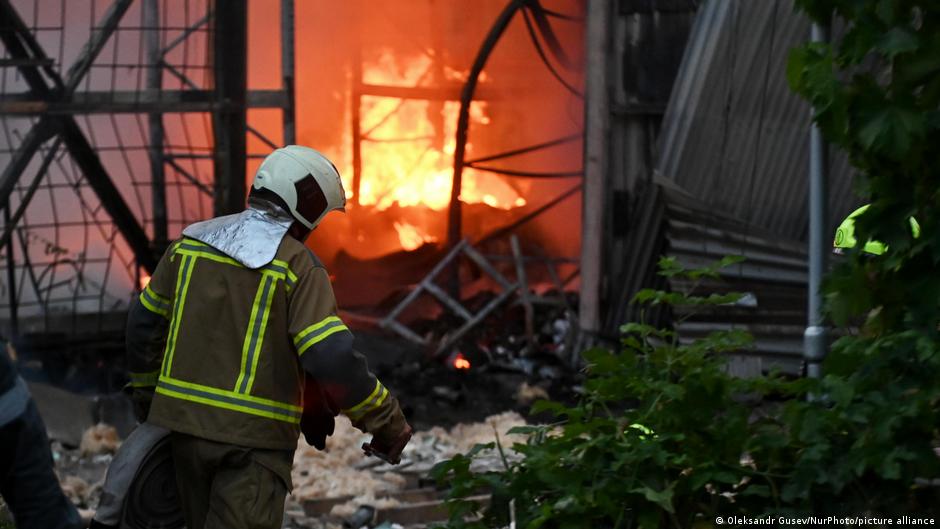
Russian drone strikes hit fuel stations and warehouse facilities in Kyiv, injuring seven people, authorities in the Ukrainian capital said, while officials in Odesa region reported a mass attack on civilian infrastructure including logistics, port and transport sites.
The strikes add to the operational risks facing Ukraine’s wartime economy, where logistics networks, fuel distribution, ports and transport corridors are critical not only to military resilience but also to the country’s technology startups, export-oriented businesses and investors weighing continuity of operations. For venture-backed companies, repeated attacks on infrastructure can affect everything from employee safety and office access to hardware supply chains, delivery routes and the reliability of commercial services.
Kyiv Mayor Vitali Klitschko said on Tuesday morning, September 15, that Russian unmanned aerial vehicles had struck fuel stations in the city’s Darnytskyi and Holosiivskyi districts. Seven people were injured, he said, adding that all of the wounded had been hospitalized and that two were in serious condition. Later, Klitschko said that one of those taken to a medical facility had died.
According to the Kyiv City Military Administration, Russia also struck warehouse premises in the Obolonskyi district in northern Kyiv. An air alert with a yellow danger level was announced in Kyiv and the surrounding region.
Infrastructure Risk Extends Beyond the Front Line
For Ukraine’s innovation ecosystem, attacks on warehouses, logistics assets and fuel infrastructure have significance beyond immediate physical damage. Kyiv remains a core hub for Ukrainian technology companies, product teams, software developers and startup founders, many of whom have continued operating through the full-scale war. Damage to urban infrastructure can disrupt local mobility, power and fuel availability, and the movement of goods used by companies that depend on distributed teams and cross-border supply chains.
The Odesa region, meanwhile, is central to Ukraine’s access to maritime trade and transport infrastructure. Regional officials said Russian forces carried out a mass attack on civilian infrastructure there, with residential buildings, logistics facilities, port infrastructure and transport infrastructure coming under fire.
“Residential buildings, logistics facilities, port and transport infrastructure came under attack,” Odesa regional military administration head Oleh Kiper wrote on Telegram.
Kiper said roofs, facades and windows of private homes were damaged, along with dozens of garages and cars. The reported targeting of logistics and port infrastructure is likely to be closely watched by businesses and investors because transport continuity remains one of the key constraints on Ukraine’s economic recovery and on the scaling prospects of companies moving physical goods, hardware or export-linked services.
In Zaporizhzhia region, local authorities said an infrastructure facility was hit by drones launched by Russia. Emergency services were working to extinguish a fire at the site, officials said. One person was killed and another was injured in the raid, according to the regional administration.
Ukraine’s Air Force said Russia attacked the country using 200 strike drones of the Shahed and Gerbera types, as well as Parodiya decoy drones. According to preliminary data, Ukrainian air defense units shot down or suppressed 187 Russian drones. The Air Force said hits by aerial attack assets were recorded at seven locations, while debris from downed drones fell in three places.
Implications for Startups, Capital and M&A
The latest strikes come as Ukrainian startups continue to operate in a high-risk environment shaped by air alerts, infrastructure damage and security costs. While the source reports no specific company losses, the broader pattern of attacks on energy, logistics and transport infrastructure remains material for founders and investors. Venture capital due diligence in Ukraine increasingly depends not only on revenue growth and product-market fit, but also on operational resilience, business continuity planning and geographic redundancy.
For software companies, the direct effects may be less visible than for logistics operators or hardware firms, yet staff safety, internet access, office continuity and customer confidence remain important. For startups with physical operations, manufacturing partners or delivery dependencies, strikes on warehouses, fuel stations, ports and transport assets can create delays, raise costs and complicate service-level commitments. These factors can influence valuations, runway planning and the timing of potential mergers or acquisitions.
At the same time, wartime pressure has accelerated demand for resilient infrastructure, defense-adjacent technologies, logistics optimization, unmanned systems, cybersecurity and emergency-response tools. The attack profile described by Ukrainian authorities, involving large numbers of drones and decoys, also highlights the continuing importance of counter-drone technologies and air-defense support systems, an area where Ukrainian engineering talent and battlefield-driven innovation have drawn attention from international partners.
Russia’s Defense Ministry, which is in the fifth year of its full-scale war against Ukraine, claimed that its strikes were carried out against “logistics centers and ports of Ukraine, as well as maritime vessels involved in the interests of the Armed Forces of Ukraine.” Ukrainian officials, however, reported damage to civilian infrastructure, including homes, fuel stations, warehouse premises, logistics sites, port and transport infrastructure, as well as casualties among civilians.
For investors following Ukraine’s technology sector, the central issue is not only the immediate toll of each strike but the cumulative pressure on the infrastructure that makes the startup economy function. The latest attacks underline that Ukraine’s innovation ecosystem continues to operate amid acute security risks, with capital allocation, expansion plans and acquisition strategies tied closely to the durability of the country’s logistics and urban infrastructure.