Russian Drone Strikes Hit Ukraine’s Odesa and Zaporizhzhia Regions
The overnight attacks killed at least three civilians and damaged port and civilian infrastructure, underscoring persistent risks to Ukraine’s business environment.
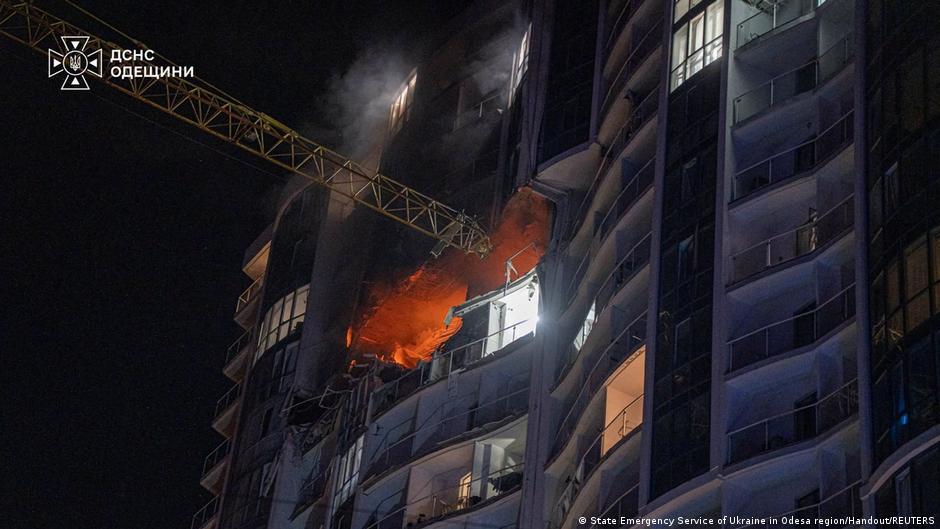
Russian attack drones struck Ukraine’s Odesa and Zaporizhzhia regions overnight on Sunday, September 27, killing at least three civilians and wounding four others in Zaporizhzhia, according to preliminary information from regional authorities.
The attacks targeted communities in southern Ukraine that remain exposed to recurring Russian strikes, including areas linked to transport, logistics and civilian infrastructure. For Ukraine’s startup and venture ecosystem, the latest assault is another reminder that operational resilience, infrastructure security and wartime risk management remain central to the country’s investment outlook.
Mykhailo Semikin, acting head of the Zaporizhzhia military administration, said Russian forces struck the settlement of Kamyshevakha and the village of Novotavriyske. According to preliminary data cited by Semikin, three civilians were killed and four others were injured.
In Novotavriyske, Russian troops attacked a car that was driving through the village, Semikin said. After the strike, the vehicle caught fire, and a man and a woman died at the scene.
Authorities also reported damage in Kamyshevakha, where one house was destroyed and several neighboring homes were damaged. The details remained preliminary, but the strikes added to the toll on communities and local infrastructure in regions already facing pressure from repeated attacks.
Port Infrastructure Remains a Strategic Pressure Point
Russia also struck port and civilian infrastructure in the city of Kiliia in Odesa region, the Izmail district administration reported. According to preliminary information, no one was injured in that attack. A fire that broke out at the site of the strike was extinguished by emergency services.
Odesa region’s port infrastructure is strategically important for Ukraine’s economy, including agricultural exports, cross-border logistics and supply chains that connect the country to global markets. While the reported Kiliia strike caused no casualties, attacks on port and civilian infrastructure can create broader uncertainty for companies that depend on predictable freight routes, warehousing, energy access and insurance coverage.
For venture-backed Ukrainian technology companies, the direct effect of such strikes may vary by sector. Software startups with distributed teams can often continue operating through remote infrastructure and international customer bases. Hardware, defense technology, logistics, agritech and manufacturing-linked startups, however, can be more exposed to disruptions in transportation corridors, facilities, energy systems and supplier networks.
The repeated targeting of civilian and infrastructure assets also affects how investors evaluate risk. Venture capital depends on confidence in execution timelines, customer access and the ability of founders to retain staff, protect assets and meet commercial milestones. In wartime Ukraine, those assumptions are routinely tested by attacks that can damage physical infrastructure even when companies themselves are not directly targeted.
Resilience Shapes the Investment Narrative
Ukraine’s innovation ecosystem has continued to operate during the war, supported by technical talent, international partnerships and demand for security, logistics and dual-use technologies. But the latest overnight strikes show the environment in which founders, employees and investors are making decisions: civilian harm, damaged homes, fires at infrastructure sites and the constant need for emergency response.
For foreign investors and strategic acquirers, the situation sharpens the distinction between Ukraine’s long-term innovation potential and its near-term operational risks. M&A discussions, venture rounds and commercial partnerships involving Ukrainian companies may require additional diligence around business continuity, data redundancy, staff safety, customer concentration and geographic exposure.
At the same time, these conditions can accelerate innovation in areas where Ukraine has urgent domestic demand. Technologies related to drone detection, infrastructure monitoring, emergency communications, logistics routing, cybersecurity, insurance analytics and resilient energy systems all sit closer to the center of the country’s wartime economy. The attacks on Zaporizhzhia and Odesa illustrate why such capabilities are not abstract opportunities but immediate operational needs.
The reported casualties in Zaporizhzhia also underline the human cost behind the macroeconomic and investment analysis. In Novotavriyske, a strike on a moving car left two people dead at the scene. In Kamyshevakha, residential buildings were destroyed or damaged. In Kiliia, emergency workers extinguished a fire after strikes on port and civilian infrastructure.
For startups building in or with Ukraine, the core challenge remains balancing growth against instability. Teams must continue serving customers, raising capital and developing products while planning around the possibility of sudden disruption. Investors, in turn, must assess not only market size and technology quality, but also the resilience of operations under sustained attack.
The overnight drone strikes on September 27 did not change that strategic picture so much as reinforce it. Ukraine’s technology sector continues to be shaped by the same forces affecting the broader country: security threats, infrastructure pressure, emergency response capacity and the need to keep economic activity functioning under fire.