Russian Fuel Curbs Return as Refinery Strikes Add Pressure on Startups
Kaluga and Zabaykalsky have restored gasoline sales limits, extending a fuel crisis with implications for logistics, mobility and tech operators.
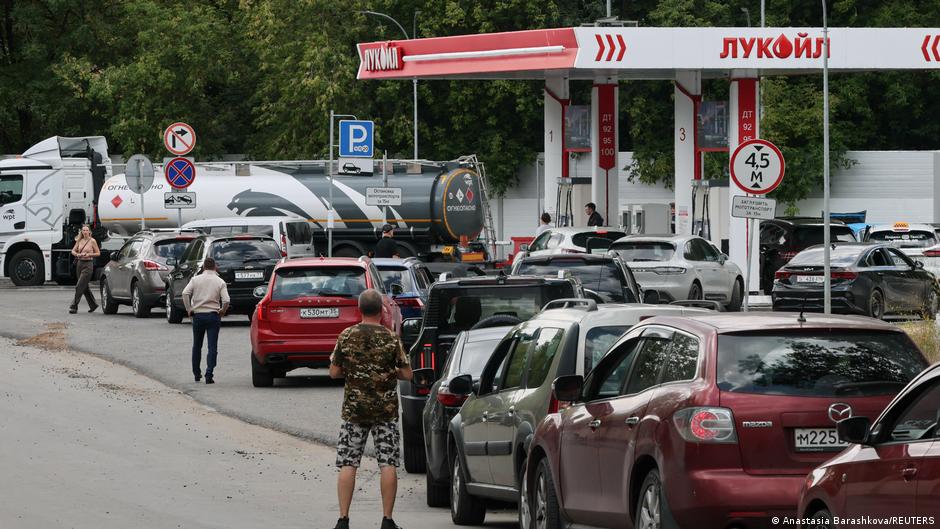
Regional authorities in Russia's Kaluga region and Zabaykalsky Krai are reintroducing restrictions on gasoline sales after a renewed wave of Ukrainian attacks on Russian oil refineries disrupted fuel supplies and revived queues at filling stations.
The measures, which take effect on September 23, underline how refinery outages and logistics bottlenecks are moving beyond the energy sector and into the operating environment for companies that depend on transport, field service, delivery networks and regional mobility. For startups and venture-backed companies in logistics, e-commerce, food delivery, mobility, industrial software and infrastructure services, the return of rationing signals a more volatile market in which fuel access can become a constraint on growth and execution.
In Kaluga, a region bordering Moscow and the Moscow region, Governor Vladislav Shapsha said on Tuesday, September 22, that gasoline purchases would again be restricted under an even-odd system tied to vehicle registration numbers. Drivers will be allowed to refuel on even or odd days depending on the first digit of their vehicle's license plate number. Fuel may be dispensed only directly into a vehicle's tank.
“We are now recording local logistics disruptions in fuel deliveries to individual filling stations. Queues have returned. This is causing justified dissatisfaction,” Shapsha wrote on his Telegram channel.
Kaluga had previously introduced even-odd gasoline restrictions on August 15. Those measures were lifted on September 1, but the region is now restoring them as supply problems re-emerge.
Fuel Rationing Spreads Across Regional Networks
In Zabaykalsky Krai, the regional operations headquarters also announced new limits from September 23. The BRK and Kors filling station networks will cap sales of AI-92 and AI-95 gasoline at 15 liters per vehicle. Buyanto Batomunkuyev, first deputy chairman of the regional government, said the restrictions reflected a limited fuel cushion: total fuel reserves at filling stations and oil depots stood at 17,000 tons, enough for only 20 days at the current rate of sales.
Zabaykalsky Krai introduced similar restrictions in June, and they were lifted on July 23. The return of limits less than two months later points to a recurring supply issue rather than a short-lived disruption.
Fuel sales restrictions, imposed either by regional authorities or by filling station chains themselves, were introduced this summer in almost all Russian regions and in annexed Crimea. The scale of the disruption prompted Russian President Vladimir Putin on June 28 to order systemic measures to stabilize the market.
The current shortage developed after Ukrainian drone attacks on Russian refineries. Ukraine has been defending itself for more than four years against Russia's military invasion. Strikes and fires at refineries forced some facilities to reduce output or halt production entirely. Restrictions were later lifted in multiple areas, but Ukrainian attacks on refineries intensified again from early August, leading to what has been described as a second wave of Russia's fuel crisis.
By mid-September, Russia's gasoline deficit had worsened. Fuel was absent at nearly every second filling station, according to Novaya Gazeta Europe, which cited data from the gdebenzin service.
Why Venture Investors Are Watching
For venture capital investors and startup operators, the immediate issue is not only the retail availability of gasoline but the wider reliability of energy-linked logistics. Fuel scarcity can raise delivery costs, slow route execution, reduce vehicle utilization and complicate service-level commitments. These pressures are especially relevant for companies operating physical networks rather than purely digital products.
Startups in last-mile delivery, marketplace fulfillment, ride-hailing, repair services, agricultural technology, construction technology and regional distribution could face higher operating risk if fuel access remains unstable. Even companies that do not own fleets may encounter second-order effects through contractors, suppliers and customers. A 15-liter per-vehicle cap, for example, can be manageable for private drivers but disruptive for commercial operators making repeated trips or serving dispersed territories.
The crisis may also reshape investor perceptions of infrastructure resilience in the Russian market. Venture capital typically prizes scalability, predictable unit economics and dependable logistics inputs. Fuel rationing cuts directly into those assumptions, making regional expansion more complex and forcing operators to build contingency plans around energy access, route density and working capital.
At the same time, supply constraints can create demand for technology that improves efficiency. Fleet optimization software, fuel monitoring tools, demand forecasting systems, route-planning platforms and industrial maintenance analytics may gain relevance as businesses seek to conserve fuel and keep vehicles productive. Companies offering tools for logistics visibility or fuel inventory management could find new urgency among enterprise customers, although monetizing that demand depends on procurement budgets and broader market stability.
For M&A, persistent volatility can work in two directions. Stronger logistics and infrastructure technology companies may become more attractive to strategic buyers seeking operational control and efficiency. Weaker startups, especially those with fuel-intensive models and thin margins, could become acquisition targets or face consolidation pressure if rationing continues to disrupt service delivery.
The renewed restrictions in Kaluga and Zabaykalsky Krai therefore matter beyond the fuel market. They show how wartime damage to refinery capacity can cascade into consumer access, regional administration, business operations and investment decisions. For Russia's innovation ecosystem, the question is whether startups can adapt quickly enough to an operating environment where a core physical input is no longer reliably available on normal commercial terms.