Russian Strikes Kill Four in Ukraine, Adding Pressure on Business Hubs
Attacks in Kherson, Sumy, Odesa and Kyiv regions underscored the operating risks facing Ukraine’s wartime economy and innovation sector.
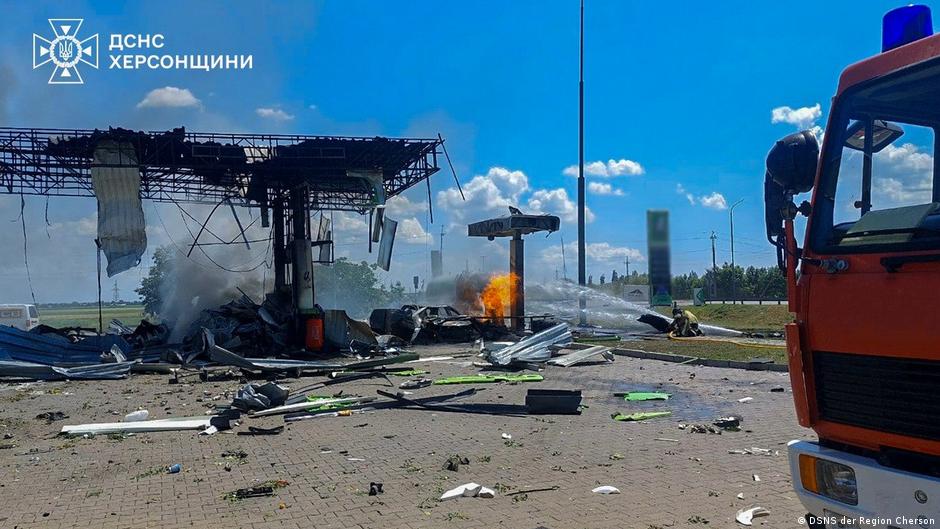
Four people were killed in Ukraine after a new series of Russian attacks hit residential, administrative and storage sites across several regions, adding to the security pressures facing civilians, local authorities and businesses operating in the country’s wartime economy.
Two people died near Kherson after a Russian drone strike, while two more were killed in Sumy following what local reports described as a guided aerial bomb strike. In Odesa, Russian forces struck the same 11-story administrative building twice, including a second attack while emergency crews were already working at the scene.
The attacks took place on Friday, September 18, and overnight into Saturday, September 19, according to regional officials and emergency services. They affected Kherson region, Odesa, Sumy and Kyiv region, with casualties reported among civilians and first responders and damage recorded at residential buildings, administrative property, hospitals and warehouses.
Strikes Hit Civilian and Commercial Infrastructure
In Kherson region, two men were killed in the village of Tekstylne after a Russian unmanned aerial vehicle struck the area on Friday evening. Oleksandr Prokudin, head of the regional military administration, said the attack occurred at around 6 p.m.
“As a result of the enemy drone strike, two men sustained injuries incompatible with life,” Prokudin wrote on Telegram.
Throughout the evening, Prokudin repeatedly reported air-raid alerts in the region, including warnings linked to suspected Russian launches of guided aerial bombs. On the same day, one of Kherson’s city hospitals was also attacked when a drone dropped explosives on the grounds of the medical facility. No casualties were reported in that incident.
In Odesa region, the State Emergency Service reported the aftermath of another Russian attack on September 18. A strike hit an 11-story administrative building, triggering a fire. After emergency services arrived and began work at the site, the same building was attacked again. Ten people were reported injured, including two rescue workers.
Odesa was attacked again overnight into September 19. After an air-raid alert was announced in the city and reports circulated that Russian small-size missiles were approaching, local residents posted footage on social media showing a fire that had started in a residential building inside the city. Initial details of that incident were not immediately provided.
Sumy also came under Russian attack on the evening of September 18. One projectile hit a multi-story residential building, with reports indicating that it was a guided aerial bomb. The explosion damaged several apartments and caused part of the building to collapse. According to preliminary data from local authorities, at least two people were killed and seven others were injured.
The military administration of Kyiv region also reported consequences from Russian strikes on the evening of September 18. Timur Tkachenko, head of the regional military administration, said two men were injured in Bucha district after storage facilities were hit. Warehouses were also damaged in Boryspil district.
Operational Risk for Ukraine’s Startup Economy
For Ukraine’s technology sector, the latest attacks reinforce a central condition of operating in the country: business continuity remains tied to air-defense alerts, infrastructure resilience and the ability of teams to work through repeated disruptions. The reported damage to administrative buildings, residential housing, hospitals and warehouses illustrates how military strikes can affect not only front-line communities but also the broader logistics and workplace environment on which startups, service firms and investors depend.
Ukraine’s startup ecosystem has continued to function during the war, but attacks of this kind shape the operating assumptions behind hiring, office use, physical security, data redundancy and supply chains. For venture-backed companies, especially those with engineering teams, hardware operations or local distribution networks, regional strikes can complicate investor diligence and raise the importance of contingency planning.
The reported damage to warehouses in Kyiv region is particularly relevant for companies that depend on storage, fulfillment, equipment movement or hardware prototyping. Even when a startup is primarily software-based, its employees, contractors, customers and vendors remain exposed to the same infrastructure risks as the wider economy.
Repeated strikes on urban areas such as Odesa and Sumy may also influence merger and acquisition discussions involving Ukrainian assets. Buyers and strategic partners assessing local operations must account for employee safety, insurance constraints, continuity of service and the reliability of facilities. At the same time, the persistence of Ukrainian teams operating under these conditions has become part of the country’s wartime innovation narrative, especially for companies building defense technology, cybersecurity, logistics tools and resilient communications systems.
The latest incidents did not include reported claims about technology companies being directly targeted. However, the pattern of attacks on civilian and administrative infrastructure underscores the environment in which Ukraine’s founders, investors and employees continue to work. For venture capital firms with exposure to Ukrainian startups, the events add another reminder that financing decisions in the country involve not only market and product risk, but also sustained geopolitical and physical-security risk.
Local authorities continued to report air alerts and damage assessments after the attacks. The immediate toll stood at four dead across Kherson region and Sumy, with injuries reported in Odesa, Sumy and Kyiv region.