Russian Strikes on Sumy and Mykolaiv Hit Civilian and Port Infrastructure
Attacks on a shopping center parking area, port facilities, warehouses and postal infrastructure add new pressure on Ukraine’s business environment.
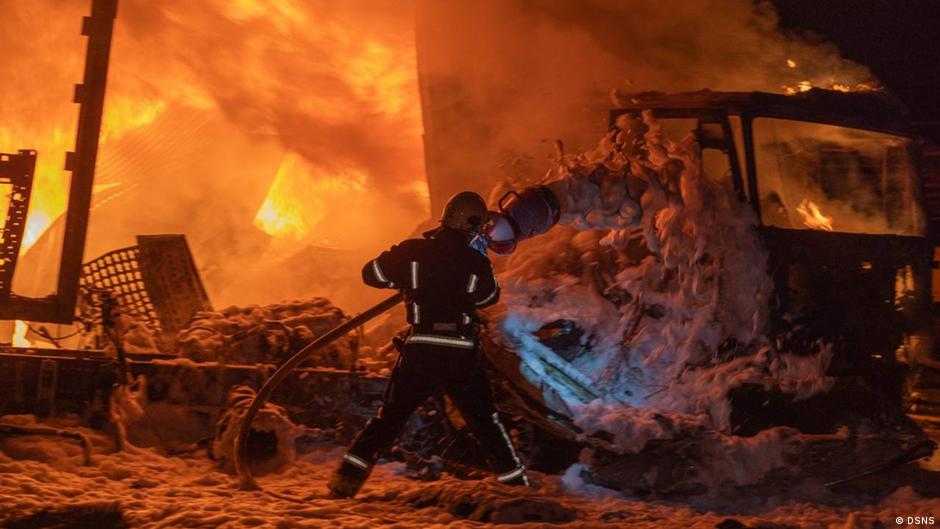
Russian forces struck the Ukrainian cities of Sumy and Mykolaiv on September 9, killing civilians, injuring dozens and damaging infrastructure that underpins daily commerce, logistics and regional economic activity. The attacks, reported by regional officials and emergency authorities, targeted areas including a shopping center parking lot in Sumy, port infrastructure in Mykolaiv, warehouses storing vegetables and a post office.
In Sumy, a Russian strike hit a parking area near the Manufaktura shopping center on the evening of Wednesday, September 9. Oleh Hryhorov, head of the Sumy regional military administration, said two people were killed: a 21-year-old man and a 21-year-old woman. Preliminary information indicated that around 20 others were injured. Two men and one woman were reported to be in serious condition, while another Sumy resident was in extremely serious condition. Teenagers were among those wounded.
Emergency workers and municipal services operated at the site of the strike. The Sumy regional military administration also said the threat of further attacks in the region remained in place, underscoring the continuing security volatility facing cities far from the front line but deeply exposed to air and missile attacks.
Infrastructure Risk Extends to Ukraine’s Innovation Economy
For Ukraine’s technology companies and startup ecosystem, the direct human toll of the attacks is the central reality. But the strikes also illustrate the wider operating risks facing businesses that depend on predictable logistics, resilient urban services and functioning civilian infrastructure. Shopping centers, warehouses, postal facilities and ports are not only physical targets; they are nodes in the networks used by small businesses, e-commerce operators, hardware startups, agricultural technology firms and exporters.
Mykolaiv, a southern city with port and logistics assets, remained under Russian attack throughout September 9, according to regional officials. Heorhii Reshetylov, head of the Mykolaiv regional military administration, said port infrastructure was damaged during the day’s attacks. Two people were killed and at least 12 were injured, including a one-year-old child.
Ukraine’s State Emergency Service said some Russian strikes hit warehouse premises where vegetables were stored, as well as a postal branch. Those details are significant beyond the immediate damage: warehouses and postal operators are critical to business continuity, including for early-stage companies that rely on third-party fulfillment, domestic delivery and regional supply chains rather than large in-house logistics operations.
Regional authorities in Sumy said the threat of repeated attacks remained, while Mykolaiv officials reported damage to port infrastructure and civilian facilities.
The attacks came after Russia had already carried out a large-scale overnight assault on the Mykolaiv region in the early hours of September 9. Regional authorities said drones and ballistic missiles damaged port and civilian infrastructure, as well as residential buildings. Officials had reported one woman killed and four people injured in that earlier wave.
For venture investors assessing Ukraine-linked companies, these episodes reinforce a pattern that has shaped wartime capital allocation since Russia’s full-scale invasion: strong technical talent and company formation continue to exist alongside acute infrastructure and security risk. Startups operating in software can often shift workloads, decentralize teams and serve global customers remotely. Companies tied to physical goods, manufacturing, agriculture, logistics, retail, defense production or energy systems face a more complex risk profile.
The damage reported in Mykolaiv is especially relevant to sectors connected to trade, food systems and distribution. Warehouses storing vegetables point to the vulnerability of agricultural supply chains, while port infrastructure remains essential for the broader movement of goods. A postal facility, meanwhile, reflects the exposure of the last-mile and business-to-consumer infrastructure that many digital commerce companies use to reach customers.
Sumy’s strike near a shopping center parking lot highlights another dimension: urban commercial spaces remain vulnerable even when they serve everyday civilian activity. Retail centers, nearby parking areas and municipal services are part of the environment in which local entrepreneurs operate, employees commute and consumers spend. Repeated attacks can depress foot traffic, disrupt staffing and force businesses to absorb costs for safety, relocation, insurance and redundancy.
Funding and M&A Implications
The venture and M&A implications are not uniform. Some investors may treat the continuing strikes as a reason to demand stronger contingency planning, distributed teams, backup infrastructure and clear customer concentration analysis before financing Ukraine-based startups. Others may see resilience under attack as evidence of operational discipline, particularly in software, cybersecurity, defense technology, communications, logistics optimization and infrastructure monitoring.
What the September 9 attacks make clear is that Ukraine’s innovation ecosystem is operating in a market where civilian infrastructure risk remains immediate. Investors looking at the country cannot evaluate companies only through conventional growth metrics such as revenue, churn, margins or product velocity. They must also examine geography, employee safety protocols, dependency on ports and warehouses, delivery partners, cloud redundancy and exposure to regional service interruptions.
At the same time, the persistence of business activity under such conditions has kept Ukraine visible to venture capital firms, strategic buyers and corporate partners focused on resilience technologies. Attacks on ports, warehouses and postal infrastructure can increase demand for solutions in supply-chain visibility, autonomous systems, emergency communications, infrastructure repair, cybersecurity and remote operations. But those opportunities emerge against the backdrop of civilian casualties and continuing destruction.
The latest reported strikes on Sumy and Mykolaiv therefore carry a dual message for the technology and investment community. They show the severe human and economic cost of Russia’s attacks on Ukrainian cities, and they demonstrate why risk management has become a core part of startup building in Ukraine. For founders, investors and acquirers, the country’s innovation story remains inseparable from the infrastructure and security pressures that shape every operating decision.