Trump Threatens EU Trade Curbs as Canada Partnership Plans Raise Startup Risks
A proposed EU-Canada associate relationship has drawn a tariff warning from Washington, adding uncertainty for technology, defense and procurement markets.
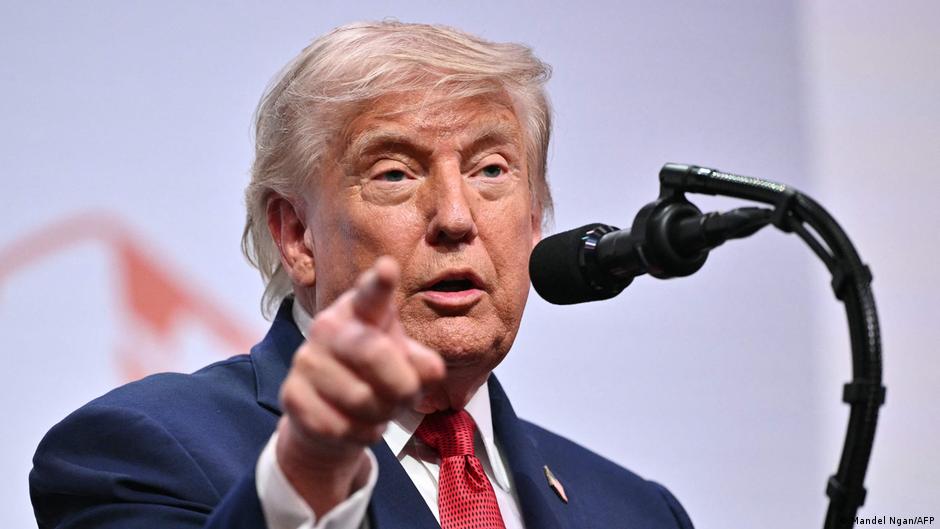
U.S. President Donald Trump has threatened to halt trade with the European Union or impose sharply higher tariffs if he concludes that the bloc’s effort to deepen ties with Canada is intended as an unfriendly act toward the United States. The warning adds a new layer of geopolitical uncertainty for technology startups, venture investors and strategic acquirers already navigating a fragmented transatlantic market.
Trump made the comments on Wednesday, September 16, after a journalist asked him about European Commission President Ursula von der Leyen’s plan to make Canada the EU’s “first associate member.” Speaking at a campaign event in North Carolina, the U.S. president called the proposal “ridiculous” and said Washington could respond with punitive trade measures if it judged the initiative to be hostile.
“If they do this and I consider it even in the slightest degree an unfriendly act, I will impose very high tariffs or stop trade with Europe,” Trump said.
He added that the U.S. response would depend on intent. If the plan was pursued with good intentions, he said, it would be acceptable. If the intentions were bad, he warned, Europe could face very high tariffs, describing that as one of the possible options.
For venture-backed companies, the comments matter less as a single campaign-trail exchange than as another signal that market access, procurement rules and cross-border expansion plans may be increasingly exposed to political retaliation. Startups selling software, advanced manufacturing tools, defense technologies, artificial intelligence systems or industrial hardware across North America and Europe could face higher costs, delayed customer decisions or more complex compliance planning if trade tensions escalate.
EU-Canada Technology Ties Move Into Focus
Von der Leyen outlined the EU’s ambition on September 16 in the European Parliament, where she appeared in the presence of Canadian Prime Minister Mark Carney. She said the European Union wanted to raise its relationship with Canada to the “highest possible level” and that she wanted to work with Carney so that Canada could become the first associate member of the EU.
The European Commission president did not provide details about what such a partnership would contain. She did, however, mention cooperation in technology and the defense industry, two sectors closely watched by venture capital firms as governments increase spending on strategic infrastructure, dual-use innovation and domestic supply-chain resilience.
Von der Leyen also stressed that joint work between Canada and the EU would “not be directed against others,” saying the aim would be to make both sides stronger. That framing is important for startups and investors because an EU-Canada framework could, depending on its eventual scope, influence research collaboration, public procurement access, defense contracting, data governance and corporate expansion routes.
Even without formal details, the prospect of closer EU-Canada alignment may be read by founders as a potential opportunity to bridge two advanced markets with shared interests in technology and security. At the same time, Trump’s response suggests that any new corridor for innovation, procurement or industrial cooperation could come with U.S. political risk attached.
Tariffs Add Pressure To Cross-Border Strategy
The warning comes amid an already deteriorating U.S.-Canada trade environment. According to the White House, Trump on September 16 signed a memorandum barring Canadian goods from participation in U.S. federal government procurement. The White House said the measure was a response to Canada, which it accused of unjustifiably introducing new barriers for American companies seeking access to the public procurement market.
Since September 15, the Trump administration has imposed additional 50% tariffs on Canadian cheeses, steel, aluminum, paper, furniture, lighting fixtures and other goods. Administration officials said the move was a direct response to new tariffs introduced by Ottawa.
Canada’s tariffs on U.S. exports worth about $20 billion also took effect on September 15. Those measures were themselves a response to U.S. tariffs of 50% on Canadian goods worth $20 billion that came into force on August 22. Canada withdrew from trade negotiations with the United States on August 21.
The sequence illustrates the type of retaliatory cycle that can complicate fundraising narratives and exit planning. Venture investors typically price regulatory and market-access risk into companies that depend on cross-border sales, government customers or hardware supply chains. When tariffs and procurement restrictions change quickly, startups may need more working capital, longer sales cycles and alternative go-to-market plans.
Defense and deep-tech companies could be especially sensitive. Von der Leyen’s reference to defense-industry cooperation points toward a sector where public procurement, export controls and alliance politics already shape commercial outcomes. A closer EU-Canada arrangement could broaden opportunities for Canadian and European suppliers, but Washington’s threat raises questions about whether U.S. customers, partners or acquirers would face pressure to reassess relationships tied to such a framework.
For software and AI companies, the direct tariff impact may be less immediate than for physical goods. Still, a broader trade confrontation between the United States and Europe could affect data-sharing arrangements, cloud procurement, strategic partnerships and the appetite for cross-border mergers and acquisitions. The more governments tie technology policy to economic security, the more startup growth plans become exposed to diplomatic signals.
AFP noted that Canada, like the EU, has been affected by the unpredictable trade and foreign policy of President Trump. That is why both Canada and the European Union are looking at new alliances, the agency observed. For the innovation ecosystem, that search for new alliances may create fresh channels for capital, customers and public-private collaboration, but it may also force startups to treat geopolitics as a core operating variable rather than a background risk.
The immediate next question is whether the EU and Canada can define an associate relationship in a way that preserves room for technology and defense cooperation without triggering further U.S. retaliation. Until details emerge, founders and investors are left with a familiar challenge: planning for growth across markets whose rules are increasingly shaped by politics as much as by demand.