United Russia’s Duma Lead Points to Policy Continuity for Russia’s Tech Sector
Early election results indicate a stronger parliamentary mandate for the ruling party, reinforcing the state-led environment facing startups, investors and acquirers.
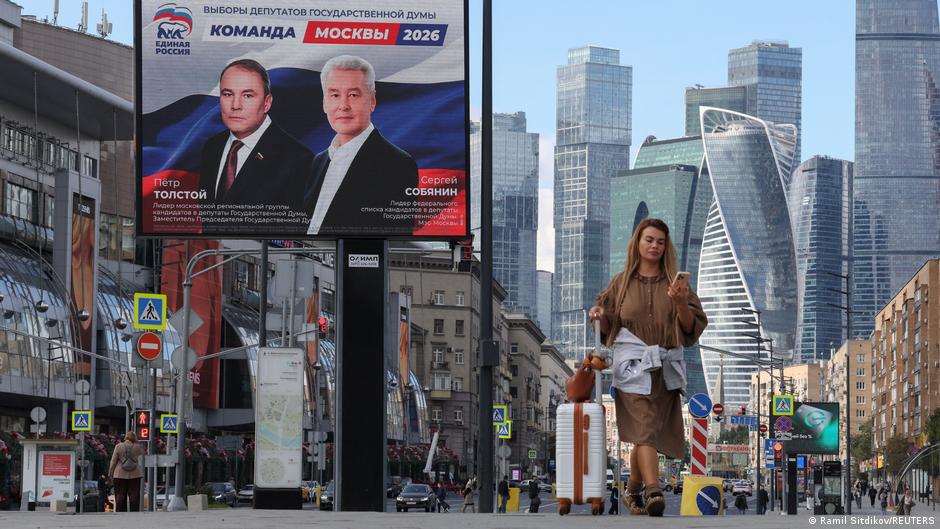
Russia’s ruling United Russia party is on course to win elections to the ninth convocation of the State Duma, a result that signals continued political consolidation and a predictable, state-centered policy environment for the country’s technology and startup sector.
After 82.19 percent of protocols had been counted, United Russia had 57.76 percent of the vote, Russia’s Central Election Commission said overnight on Monday, September 21, according to the Russian agency TASS. The Communist Party of the Russian Federation was in second place with 13.89 percent, followed by the Liberal Democratic Party of Russia with 8.77 percent, New People with 7.97 percent and A Just Russia with 4.99 percent.
The figures suggest that United Russia has improved on its 2021 State Duma result, when it won 49.82 percent of the vote. For venture investors, founders and strategic buyers watching Russia’s domestic market, the early tally points less to a change in direction than to an extension of the political conditions under which Russian technology companies have operated in recent years.
Constitutional Majority in Sight
United Russia candidates were also leading in 208 of 225 single-mandate districts. On that basis, the party of power is expected to receive more than 301 seats in parliament, the threshold needed for a constitutional majority.
Such a majority would give the ruling party substantial room to advance legislation without relying on opposition support. For the innovation economy, that matters because technology policy, industrial strategy, digital regulation, public procurement and rules affecting capital flows are all shaped through the legislative process. A larger governing bloc can move faster on priorities favored by the executive branch and state-linked institutions.
That may support sectors already aligned with official policy, including domestic software substitution, cybersecurity, artificial intelligence, defense-related technology, payments infrastructure and other strategic digital services. It may also deepen the role of state-linked customers, development institutions and large corporates as anchors for Russian startups seeking revenue and financing.
At the same time, a reinforced parliamentary majority may do little to reduce the constraints facing privately backed ventures that depend on cross-border capital, foreign buyers, international cloud and software services, or access to global markets. For many Russian startups, the practical question is not simply whether domestic policy becomes more supportive of technology, but whether that support can compensate for geopolitical isolation and a narrower investor base.
After 82.19 percent of protocols had been counted, United Russia had 57.76 percent of the vote, according to the Central Election Commission.
Opposition Limits and Investor Perception
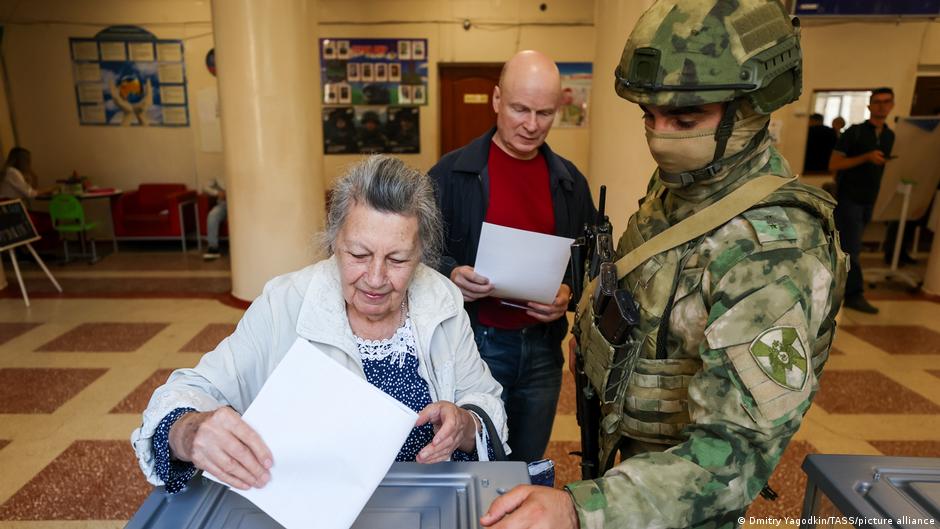
The election took place over three days and was also held in Ukrainian territories occupied by Russia. The only major party that had opposed the war, Yabloko, was removed from the election. Germany and the European Union criticized the Russian parliamentary vote, pointing to what they described as its staged character and to repression against the opposition.
Those criticisms are relevant to venture capital and M&A because political legitimacy, rule-of-law perceptions and institutional openness influence how investors assess country risk. International venture funds have already become far more cautious toward Russia-linked exposure, and elections viewed by Western governments as noncompetitive are unlikely to improve that risk profile.
For domestic founders, the outcome may entrench a split innovation landscape. Companies serving government, regulated industries or import-substitution priorities may find clearer demand and more predictable access to state-backed programs. Startups pursuing globally integrated business models may face continued difficulty raising capital abroad, closing exits to foreign acquirers, or attracting international strategic partnerships.
The vote also places New People, a party often associated with a more business-oriented and urban electorate, in fourth place with 7.97 percent. Its presence in the Duma could provide some parliamentary representation for entrepreneurial and private-sector concerns. However, the scale of United Russia’s projected dominance means any such influence would operate within a political framework controlled by the ruling party.
A Just Russia, with 4.99 percent in the early count, risked failing to cross the five percent threshold, according to the CEC data. If that result held, the distribution of proportional seats could further consolidate the position of parties that clear the barrier, depending on final tabulation and electoral rules.
What It Means for Startups and Deal Flow
For Russia’s startup ecosystem, the immediate message is continuity. Founders should expect policy priorities to remain aligned with sovereignty in technology infrastructure, domestic production capabilities and reduced dependence on foreign platforms. That could create opportunities for companies building enterprise software, data infrastructure, fintech alternatives, security tools and industrial technology for local customers.
Venture capital, however, depends not only on demand but also on exits. A parliament dominated by United Russia may help maintain state-backed funding channels and procurement programs, but it does not by itself restore access to Western IPO routes, global strategic acquirers or major international limited partners. Domestic M&A may remain the more realistic path for many technology companies, especially sales to large Russian corporates or state-linked groups seeking to internalize innovation.
The projected constitutional majority could also accelerate regulatory measures affecting data, online platforms, digital finance and corporate governance. For startups, that creates both clarity and risk: clearer signals on favored sectors, but potentially fewer checks on rules that increase compliance burdens or limit operational flexibility.
In that sense, United Russia’s strong early showing is a political event with direct business implications. It reinforces the operating reality for Russian technology companies: capital formation, customer access and exit routes will likely continue to be shaped by domestic policy priorities and geopolitical constraints rather than by a broad reopening to global venture markets.