US Cuts Scale of Military Drills with South Korea Amid Geopolitical Tensions
The reduction in joint US-South Korea exercises raises strategic concerns impacting regional stability and could influence tech startup ecosystems reliant on geopolitical stability.
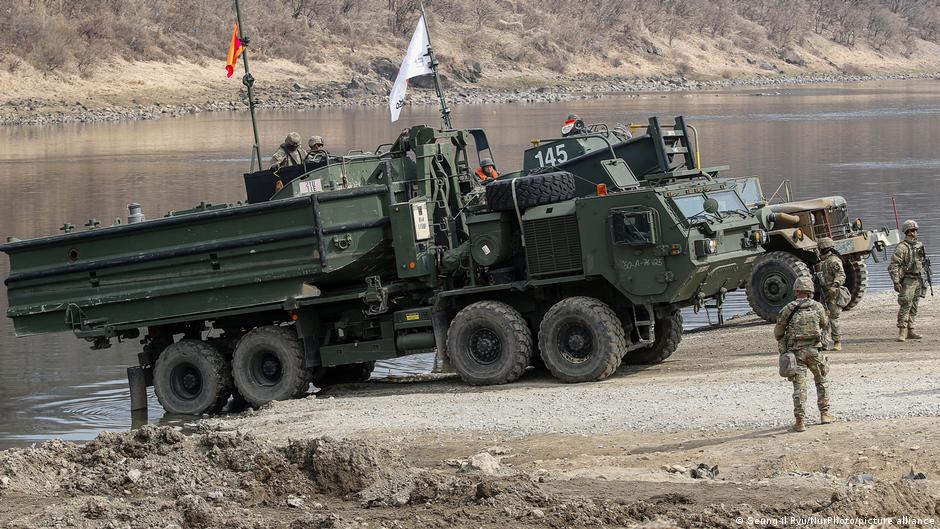
The United States has announced a significant reduction in the scale of its joint military exercises with South Korea, a move that reflects shifting geopolitical priorities and has implications beyond defense, extending into sectors like technology and innovation.
President Donald Trump directed the U.S. Department of Defense to scale down the long-standing joint exercises with South Korea, which have traditionally been held to prepare for potential threats from North Korea. This decision was publicly shared by Trump on August 16 via his social media platform, Truth Social.
Strategic Rationale Behind the Cutbacks
In his announcement, President Trump cited his "very good relationship" with North Korean leader Kim Jong Un as a factor influencing his reluctance to continue large-scale military drills that he described as expensive and provocative. Trump emphasized that the bulk of the financial burden for these exercises falls on the United States, a point he has raised repeatedly in the context of international alliances.
"These exercises not only cost a lot, mostly borne by the U.S. as usual, but also send a completely inappropriate and hostile signal to a country that, while I am president, has posed no threat and has behaved respectfully," Trump stated.
He also criticized South Korea for not supporting the United States in its conflict with Iran, highlighting broader diplomatic complexities that have influenced defense cooperation.
Implications for the Tech and Innovation Ecosystem
While primarily a military decision, the downsizing of the Ulchi Freedom Shield exercises—the 11-day drills scheduled to start August 17—sends ripples through the regional security landscape. Stability in the Korean Peninsula has direct and indirect effects on the business environment, particularly for tech startups and venture capital investors who rely on predictable geopolitical conditions.
South Korea hosts a vibrant and growing tech startup ecosystem, bolstered by substantial venture capital flows and innovation-friendly policies. However, regional tensions have historically influenced investor sentiment and cross-border partnerships. A reduction in U.S.-South Korea military collaboration could be interpreted as a shift in regional security guarantees, potentially prompting investors to reassess risk in Northeast Asia.
Moreover, technology startups in sectors such as defense tech, cybersecurity, and advanced manufacturing might experience changes in government contracts and funding priorities. Any perceived increase in geopolitical risk can also accelerate shifts toward diversification strategies among startups and investors looking to mitigate exposure to regional instability.
Historical Context and Future Prospects
Since the Korean War armistice in 1953, the United States has maintained approximately 28,500 troops in South Korea, underscoring the strategic importance of the alliance. The Ulchi Freedom Shield exercises have long been a key component of deterrence strategy against North Korea.
Despite the armistice, no formal peace treaty exists between South Korea and North Korea. South Korean President Yoon Suk-yeol, who took office last year, has actively pursued rapprochement efforts with Pyongyang. On August 15, he proposed peace talks to North Korean authorities, though no response had been received as of this writing.
The evolving security posture and diplomatic overtures may reshape how global investors and venture ecosystems view the region. Tech startups operating in South Korea or with cross-border collaborations should monitor these developments closely, as shifts in geopolitical dynamics often translate into changes in funding flows, mergers and acquisitions activity, and innovation partnerships.