U.S. Says Five Iranian Oil Tankers Destroyed as Gulf Risk Hits Startups
CENTCOM said the strikes followed missile attacks on a U.S. Navy ship, raising fresh concerns for venture-backed companies exposed to energy and logistics shocks.
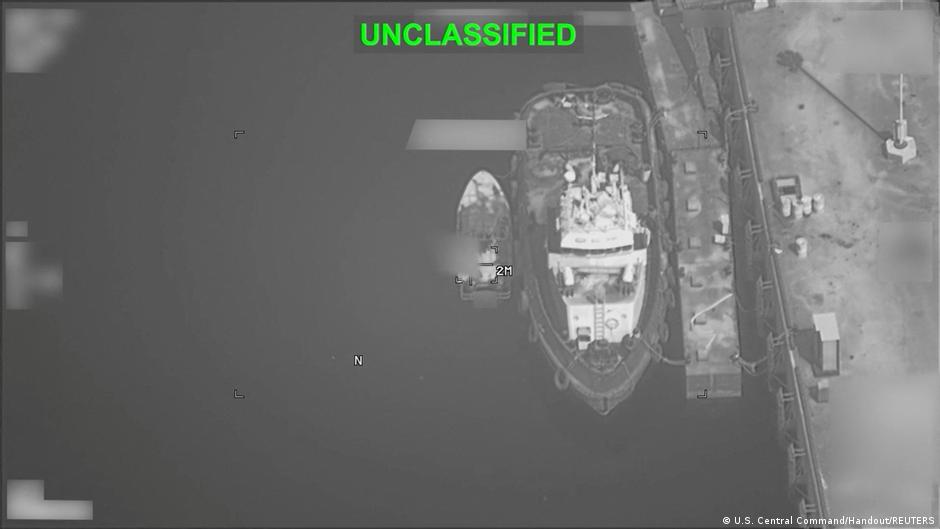
U.S. Central Command said it destroyed five Iranian oil tankers on Tuesday, September 8, after Iran’s Islamic Revolutionary Guard Corps twice attacked a U.S. Navy ship with ballistic missiles over the previous two days. The ship evaded the attacks and continued patrolling regional waters, CENTCOM said, adding that no U.S. personnel were injured.
The escalation adds another layer of geopolitical risk for technology startups, venture investors and corporate buyers already recalibrating around supply chain fragility, higher insurance costs and volatile energy markets. For companies building in logistics, maritime software, defense technology, energy trading, industrial automation and climate infrastructure, the Gulf confrontation is not a distant conflict. It is a live stress test for business models that depend on predictable shipping lanes and capital markets willing to absorb risk.
CENTCOM said U.S. forces destroyed the IRGC-linked oil tankers M/T Kaviz, M/T Charminar, M/T Horizon 1 and M/T Riesco in the Gulf of Oman, as well as the M/T Derya near Kharg Island in the Persian Gulf. According to the command, U.S. forces instructed crews to leave the vessels before they were struck and disabled.
The U.S. command said Iran used the tankers as part of a multibillion-dollar shadow network that finances the IRGC and its regional proxies.
CENTCOM also said Tehran lacks the means to protect those vessels. The latest action follows a September 5 strike in which CENTCOM forces destroyed three Iranian oil tankers after the IRGC allegedly attempted to attack a U.S. aircraft carrier and a guided-missile destroyer.
Investor Attention Turns to Energy, Shipping and Defense Tech
For venture capital, the immediate question is not only whether oil prices move, but how long uncertainty persists around the Strait of Hormuz, one of the world’s critical oil supply routes. Even without direct exposure to energy markets, startups can feel the effects through cloud infrastructure bills, hardware component transportation, international freight rates, insurance premiums and customer procurement delays.
Venture-backed logistics platforms, port automation vendors and freight visibility startups may see increased demand from customers trying to monitor rerouted cargo, calculate exposure and model delivery risks. At the same time, startups with thin margins or long hardware supply chains could face renewed pressure if shipping and fuel costs rise. That combination often benefits later-stage companies with enterprise relationships while squeezing early-stage teams that still rely on flexible budgets and experimental pilots.
The confrontation may also reinforce the defense technology investment cycle. Companies building maritime surveillance, autonomous systems, satellite monitoring, secure communications, threat intelligence and energy infrastructure protection are likely to be viewed through a more urgent lens by customers and investors. The U.S. military’s account of repeated missile attacks on naval assets and tanker strikes highlights the type of regional conflict scenario that has already pushed defense and dual-use technology from a niche VC category into a major investment theme.
For M&A, larger aerospace, cybersecurity, logistics and energy technology companies may look more closely at startups that can help customers operate amid unstable trade corridors. Strategic buyers typically move when technology becomes mission-critical, and maritime risk analytics, sensor networks, sanctions-compliance tooling and automated route intelligence could become more attractive if the Gulf remains contested.
Hormuz Remains the Core Strategic Risk
The U.S. had not carried out strikes on Iran since late July, according to the source article. President Donald Trump’s order at that time was explained as an effort to continue negotiations with Tehran over the future of the Strait of Hormuz, sanctions and Iran’s nuclear program.
The first U.S. strike after a month-long pause came on August 30, when the United States hit two Iranian missile launchers on Larak Island, located in the Strait of Hormuz. Tehran said it responded with attacks on American targets in the United Arab Emirates. Dozens of drones, according to Tehran’s claim cited in the source, attacked “American helicopters and personnel at Al Minhad base” in the UAE.
The Strait of Hormuz, crucial to global oil supplies, is one of the main points of dispute in the U.S. and Israeli war against Iran. Before fighting began in late February, the passage was open to shipping. Today, both Iranian and American armed forces claim control over it.
For startups, that contested control matters because modern technology companies are increasingly tied to physical infrastructure. Artificial intelligence firms depend on power-hungry data centers and global semiconductor supply chains. Robotics and hardware startups rely on imported components. Climate and battery companies require minerals, equipment and specialized shipping capacity. Fintechs, insurers and trading platforms must adapt quickly when sanctions, energy volatility and shipping disruption alter transaction risk.
VC firms are likely to examine portfolio exposure across three categories: companies directly serving defense and infrastructure customers, companies vulnerable to higher operating costs, and companies whose customers may pause spending because of macro uncertainty. In a market where funding discipline remains central, geopolitical shocks can accelerate the divide between startups selling essential tools and those selling discretionary software.
The reported destruction of five tankers does not by itself define the trajectory of the conflict. But it does signal that energy security, naval risk and sanctions enforcement are again becoming core variables for the innovation economy. For founders and investors, the Gulf is now part of the operating environment, not merely a geopolitical headline.