US Signals Russia Sanctions Will Hold Until Ukraine War Ends
A reported message from Treasury Secretary Scott Bessent at the G20 meeting underscores continued geopolitical risk for startups, investors and cross-border dealmaking.
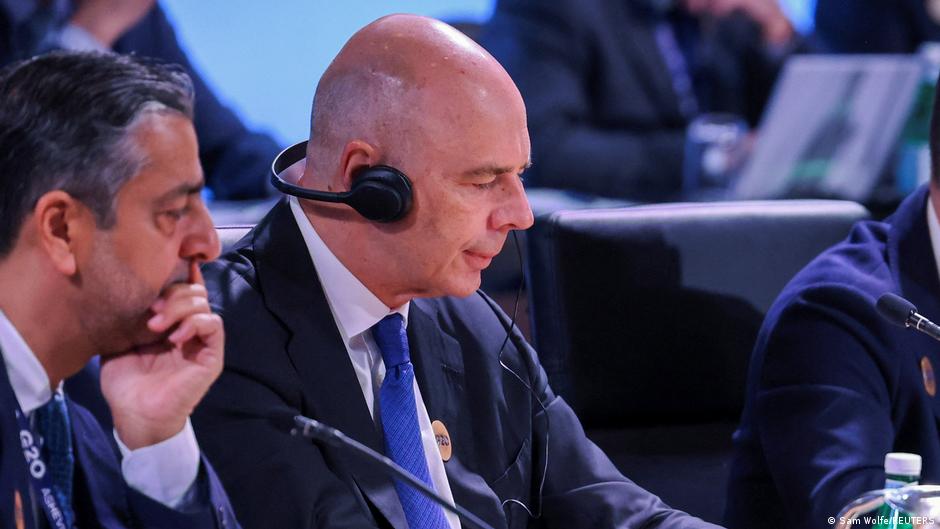
The United States has told Russia not to expect any easing of economic pressure before the war in Ukraine ends, according to Reuters, a message that reinforces a hard constraint on investors, startups and dealmakers watching for any reopening of business channels between Russia and Western markets.
Reuters reported that US Treasury Secretary Scott Bessent delivered that message to Russian Finance Minister Anton Siluanov during talks on the sidelines of a meeting of G20 finance ministers and central bank governors in Asheville, North Carolina. Citing a source familiar with the bilateral exchange, Reuters said Bessent told Siluanov that Moscow should not expect relief from economic pressure or agreements on other issues before the war in Ukraine is over.
For the startup and venture market, the significance lies less in any immediate policy change than in the removal of ambiguity. If the Reuters account is accurate, Washington is signaling that sanctions pressure remains linked to the outcome of the war rather than to narrower sectoral talks. That creates a more rigid planning environment for founders, venture firms and corporates assessing exposure to the Russian market, supply chains tied to sanctioned entities, or acquisitions involving assets with Russian links.
Signal for capital markets and startup planning
The message also lands at a time when European governments are working to tighten sanctions on Russia because of the war, according to the source material. That combination matters to the innovation economy: startups raising capital, especially in deep tech, fintech, logistics and industrial software, often depend on cross-border investors, banks, export controls and M&A routes that are highly sensitive to sanctions policy.
If there had been an expectation in parts of the market that diplomatic engagement at a G20 forum might foreshadow a softer financial stance, the reported exchange points the other way. Venture investors and acquirers typically price geopolitical risk over long timelines. A clear message that sanctions relief is off the table until the end of the war can affect due diligence, portfolio risk models, secondary transactions and the willingness of international funds to engage in any structure that could later face compliance scrutiny.
“One can find room for clear criticism, discuss with each other, find clear words about this war, but a joint photo would be too big a step for me at this stage.”
That remark came from German Finance Minister and Vice Chancellor Lars Klingbeil, who, according to the source text, described Siluanov’s presence at the gathering as an “alarming signal.” Klingbeil told journalists he had also threatened to boycott the traditional group photograph if Siluanov appeared in it. He said representatives of other European countries joined his position, and the final photo was taken without the Russian minister.
Beyond the optics, the episode is relevant to founders and investors because it shows that even multilateral venues remain politically charged. For global startups, attendance at major policy forums, access to ministerial networks and reputational positioning around sanctions compliance are no longer peripheral issues. They can affect partnerships, licensing conversations and financing prospects, especially where state-linked customers, banks or export-regulated technologies are involved.
Klingbeil also told reporters that, at the event’s general morning meeting, he told Siluanov that the war in Ukraine must end and reaffirmed Berlin’s support for Kyiv. That public stance adds to the broader policy signal coming from Europe: rather than using the G20 setting to normalize contact with Russian officials, several governments appear intent on keeping political and financial pressure visible.
For venture-backed companies, that environment tends to discourage any thesis built around a near-term normalization of Russian-Western financial ties. It can also complicate exit planning. Strategic buyers, later-stage investors and lenders generally avoid transactions where sanctions risk, political backlash or sudden policy reversals could impair integration or financing. Even companies with no direct Russia exposure may face knock-on effects through payment rails, commodity inputs, talent mobility or enterprise customer caution.
The Russian Finance Ministry had earlier published a press release on August 31 saying that Siluanov and Bessent met on the sidelines of the G20 gathering of finance chiefs and central bank governors. According to that statement, the two discussed issues related to Russian-American interaction on the financial track as well as interaction within the Group of 20.
On the same day, August 31, US broadcaster CNBC reported on its website, citing the US Treasury, that Bessent discussed US President Donald Trump’s “peace plan” for Ukraine with Siluanov in Asheville. Read together, the public and reported accounts suggest that diplomatic contact is continuing, but without any indication in the Reuters account that Washington is prepared to separate broader financial pressure from the war itself.
That distinction is important for the technology and venture ecosystem. Diplomatic engagement can sometimes be misread by markets as a precursor to commercial reopening. Here, the reported substance suggests the opposite: talks may continue, but investors should not assume they translate into sanction relief, easier capital movement or renewed deal flow.
For startup boards and VC partnerships, the practical implication is straightforward. Risk tied to the war in Ukraine and sanctions on Russia remains a live factor in underwriting decisions, especially for cross-border funds, frontier technology companies and corporate venture programs with global supply chains. Until there is a change in the underlying conflict, the signal from Washington, as reported by Reuters, is that the pressure architecture stays in place.