Western Tutors Employed to Educate Putin’s Alleged Children, Reveals Project Sostema
Reports indicate foreign governesses have been hired since 2017 to teach English and German to children linked to Vladimir Putin and Alina Kabaeva.
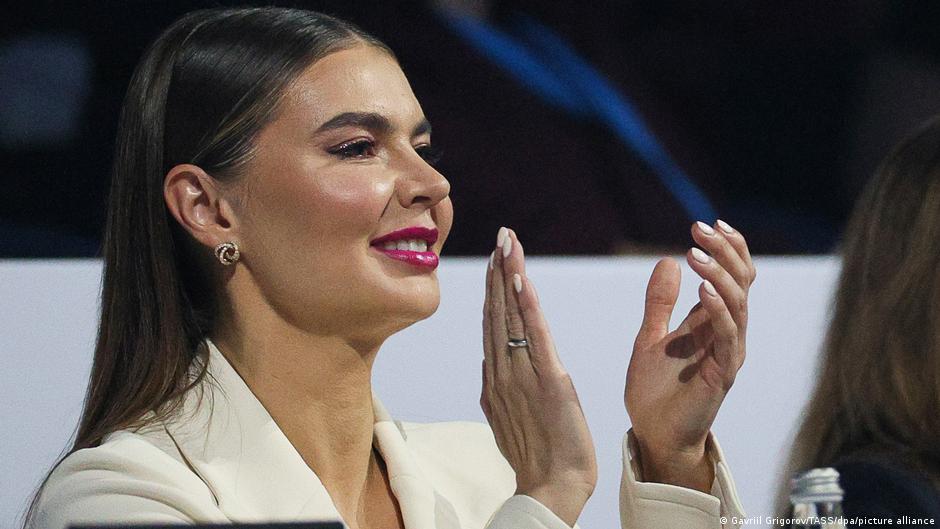
Tech startups and international ventures often highlight the importance of skilled human capital and cross-cultural expertise. In a parallel, albeit secretive development, a recent investigation by Project Sostema has disclosed that children allegedly fathered by Russian President Vladimir Putin and Olympic champion Alina Kabaeva are being educated by foreign governesses from Western countries. This unusual arrangement reveals significant annual expenditures and reflects broader patterns of global talent mobility and niche hiring practices that could indirectly influence Russia’s elite innovation ecosystem.
Foreign Language Tutors and High-Value Contracts
According to the investigation, from 2017 to 2026, about 20 tutors from the United Kingdom, New Zealand, Germany, Austria, and Ireland have been engaged to teach English and German to these children. In January 2026 alone, salaries for three governesses reportedly amounted to over 3.5 million rubles (roughly tens of thousands of U.S. dollars), underlining a high-value investment in private education.
Officially, these educators are registered as "lead translators" at the Institute for Professional Retraining of the International Medical Center "Sogaz." This designation enables them to obtain work visas and permits in Russia under the category of "highly qualified specialists." This maneuver illustrates the creative administrative solutions used to attract and retain foreign expertise even in sensitive contexts.
"By the age of four, Ivan must be immersed in a ‘language bath,’ speaking English like a literate European," one governess was reportedly instructed in 2019.
Such linguistic immersion techniques and high standards reflect practices often observed in elite educational startups and international private academies, potentially offering lessons on premium educational service delivery in restrictive environments.
Internal Coordination and Privacy Measures
The hiring and management of these tutors appear to be handled by Putin and Kabaeva’s extended family members, specifically Kabaeva’s cousins Olesya Fedina and Ekaterina Golovacheva. Official documents do not explicitly name Putin or Kabaeva, instead referring to the children as "wards," reinforcing the covert nature of the operation.
Further adding to the exclusivity, tutors live with the children at a presidential residence on Lake Valdai. They are subjected to strict health monitoring and prohibited from introducing personal political, religious, ideological, or LGBTQ+ viewpoints, as well as from discussing sexual education topics. These constraints emphasize the controlled environment surrounding the children’s upbringing.
Despite repeated inquiries, most tutors and family representatives declined to comment, underscoring a culture of discretion prevalent among Russia’s elite circles. The Kremlin’s spokesperson Dmitry Peskov also did not respond to questions.
Implications for the Tech and VC Ecosystem
While the direct connections between this private education arrangement and Russia’s tech startup ecosystem might seem tenuous, the case highlights broader themes relevant to venture capital and innovation contexts.
First, the deployment of foreign expertise under special visa arrangements signals a tacit acknowledgment of global talent’s critical role—even in politically sensitive spheres. Similarly, tech startups often rely on international talent to drive innovation, and policies facilitating such mobility can significantly impact ecosystem growth.
Second, the emphasis on multilingualism and cultural fluency for the next generation within elite circles parallels the increasing demand in startups for cross-border communication skills and global market readiness.
Third, the use of intermediaries and covert organizational structures to manage sensitive projects may offer insight into how high-stakes ventures and private deals are orchestrated in environments with opaque governance—a scenario familiar to some emerging tech markets.
Overall, this revelation serves as a reminder that the cultivation of private human capital—be it in political families or innovative startups—remains a strategic priority that involves complex resource allocation and international cooperation.