White House Says U.S. Envoys Discussed Ukraine Peace Plan With Putin
The diplomatic push could shape the risk outlook for technology startups, venture investors and cross-border dealmaking tied to Ukraine and Europe.
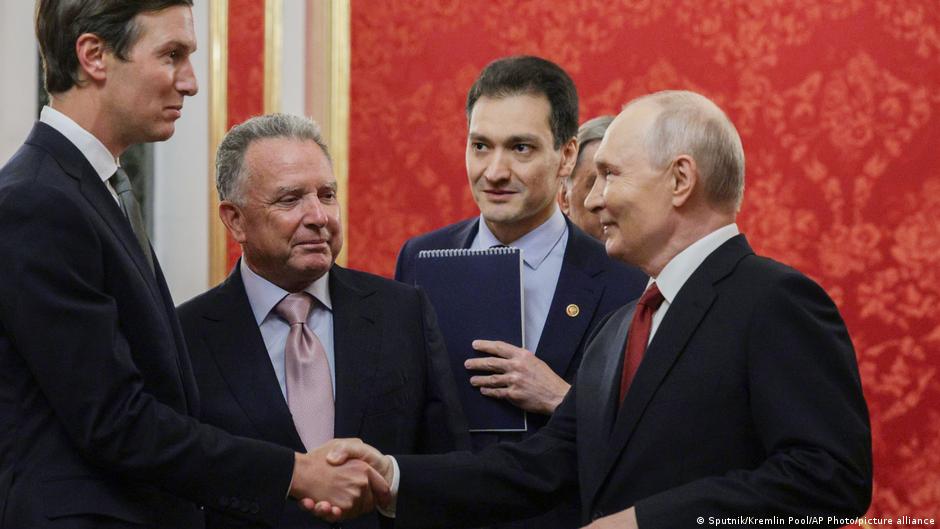
The White House said U.S. representatives Stephen Witkoff and Jared Kushner discussed “concrete plans” with Russian President Vladimir Putin for next steps aimed at ending the war in Ukraine, with details expected to be made public “in the coming weeks.” The envoys, who traveled to Moscow as part of a renewed diplomatic initiative announced by Donald Trump, are now expected to continue talks in Kyiv with Ukrainian President Volodymyr Zelensky.
For venture capital firms and technology startups operating in or around Ukraine, the initiative adds a new variable to a market defined by wartime resilience, security risk and constrained cross-border activity. Any movement toward a ceasefire or negotiated settlement would be closely watched by investors exposed to Ukrainian engineering teams, defense technology, cybersecurity companies, logistics platforms and reconstruction-related software ventures. The White House account, however, did not disclose the substance of the plan or whether it includes proposals involving Ukrainian territory.
A White House representative told AFP overnight into Sunday, September 6, that Witkoff, the U.S. president’s special envoy, and Kushner, Trump’s son-in-law, had discussed specific plans for further steps to stop the war during their meeting with Putin. The representative said the U.S. envoys “look forward to equally productive meetings” that will take place in Ukraine.
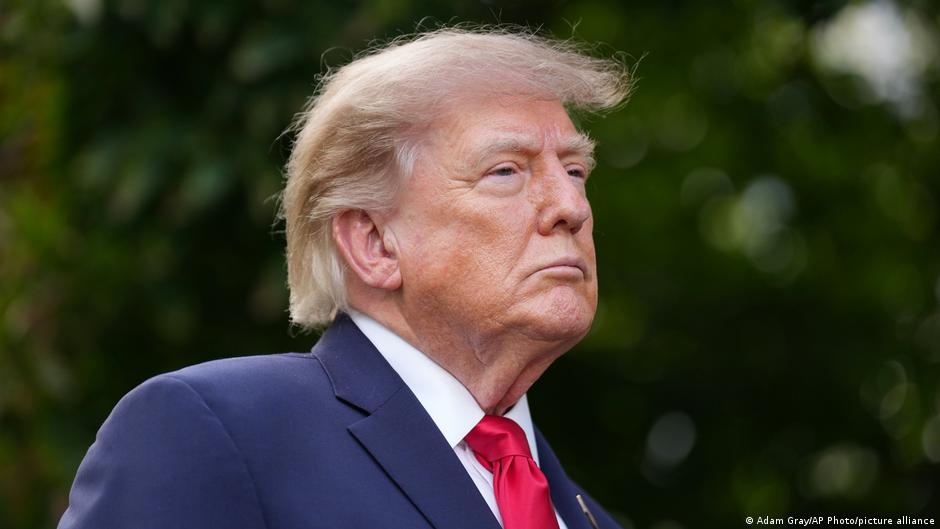
“We have an idea for peace,” Trump said, according to AFP, without specifying whether the plan involves any transfer of Ukrainian territory to Russia.
Trump also announced the new diplomatic initiative to end the war and said Witkoff and Kushner had carried with them a plan “to end the war,” AFP reported. The absence of public details leaves startups and investors without a clear basis for repricing geopolitical risk. In venture markets, even the prospect of negotiations can affect sentiment, but durable changes in capital allocation usually depend on verifiable security guarantees, market access and the restoration of predictable operating conditions.
Kyiv Meetings Could Matter for Startup Risk
After the Moscow visit, Kushner and Witkoff are expected to arrive in Kyiv for their first talks with Zelensky. Data from Flightradar24 showed that a Boeing C-32A carrying the U.S. special envoys landed at 01:30 local time at the airport in Rzeszow, Poland. Their Boeing departed Moscow’s Vnukovo airport and headed west while bypassing Belarus, then crossed the airspace of Latvia, Lithuania and Poland. From Poland, the envoys are due to travel to the Ukrainian capital by train.
The Kyiv leg is likely to be the more consequential stage for investors assessing the credibility of the diplomatic track. Ukraine’s startup ecosystem has remained active despite the war, with founders adapting to distributed teams, remote sales and demand from defense and security customers. But sustained uncertainty has weighed on valuations, mergers and acquisitions, and the willingness of international funds to lead larger rounds for companies with material operations in Ukraine. A diplomatic process endorsed by Kyiv could eventually help reopen more conventional growth financing, although no such outcome has yet been announced.
In Moscow, Russian officials described the talks in positive but guarded terms. Yuri Ushakov, an aide to the Russian president, told Russian journalists that Putin held “extremely frank” negotiations in which the American delegation presented “several ideas” on how the war in Ukraine could be ended. Ushakov said the U.S. representatives had prepared carefully for the trip and had not only expressed interest in a swift end to hostilities but also presented several possible routes toward a solution.
“Overall, it can be said that the negotiations were timely and very useful for both sides,” Ushakov said, according to Interfax. He added that Putin confirmed his readiness to continue working with the Americans to search for political and diplomatic outcomes.
Russian media also reported that Moscow gave the U.S. side its assessment of the course of military operations in Ukraine. According to RBC, the Russian side highlighted the successes of the Russian army and expressed “confidence in achieving the stated goals.” The same report said Trump’s envoys “promised to use this information during negotiations in Kyiv.” For technology investors, that framing underscores how far apart the parties may remain, and why any near-term business implications are still speculative.
Capital, M&A and Reconstruction Exposure
The talks arrive at a time when Ukraine-linked technology companies occupy a complex position in the global innovation market. Many continue to supply software engineering, cybersecurity expertise and defense-adjacent technologies to customers abroad, while also navigating infrastructure disruptions, talent mobility and security constraints. Venture funds with exposure to the region are likely to focus less on diplomatic headlines and more on whether talks produce mechanisms that can reduce operational risk.
If a credible path toward de-escalation emerges, it could improve the outlook for later-stage funding, strategic acquisitions and reconstruction-related technology demand. Software for energy systems, logistics, public administration, infrastructure monitoring and financial services could become more attractive to international backers if the political and security environment becomes more predictable. At the same time, any proposal perceived in Kyiv as compromising Ukrainian sovereignty could increase political uncertainty rather than reduce it, delaying investment decisions.
Zelensky, for his part, held a phone call the day before with the U.S. presidential envoys who had arrived in Russia and announced readiness to halt strikes on Moscow for the next three days. In a social media post, he said the plan for diplomatic measures in Kyiv involving the American team had been approved and that Ukraine was waiting for Steve Witkoff and Jared Kushner for a substantive conversation.
Until the plan is disclosed, the practical implications for startups and venture capital remain limited. The confirmed facts are that Washington says specific next steps were discussed in Moscow, Moscow says several ideas were presented, and Kyiv is preparing to receive the envoys. For founders, funds and potential acquirers, the next signal will be whether the Kyiv meetings produce a framework that can be evaluated beyond diplomatic language and translated into a clearer risk outlook for the Ukrainian and European technology ecosystem.