Yabloko Enters Novgorod Legislature, Preserving a Route to Duma Ballot
The liberal party’s regional result carries practical significance for Russia’s constrained political field and its innovation economy.
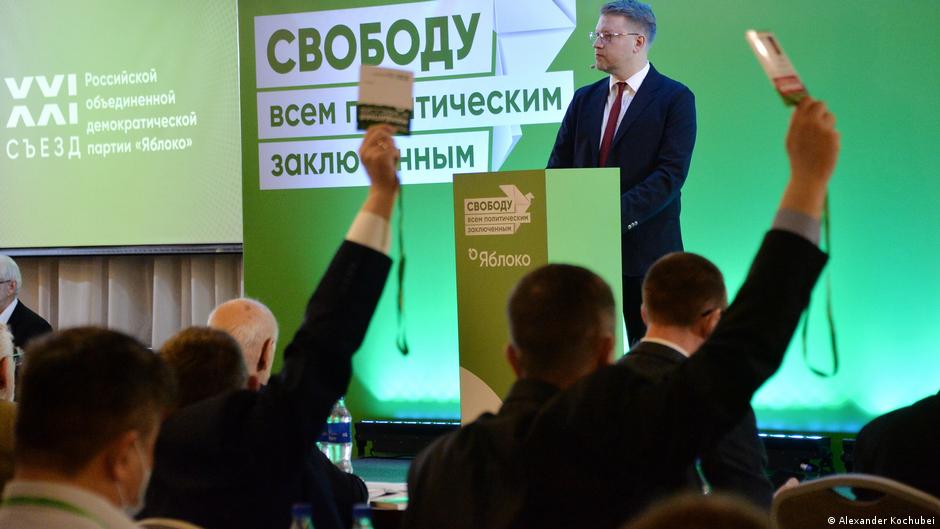
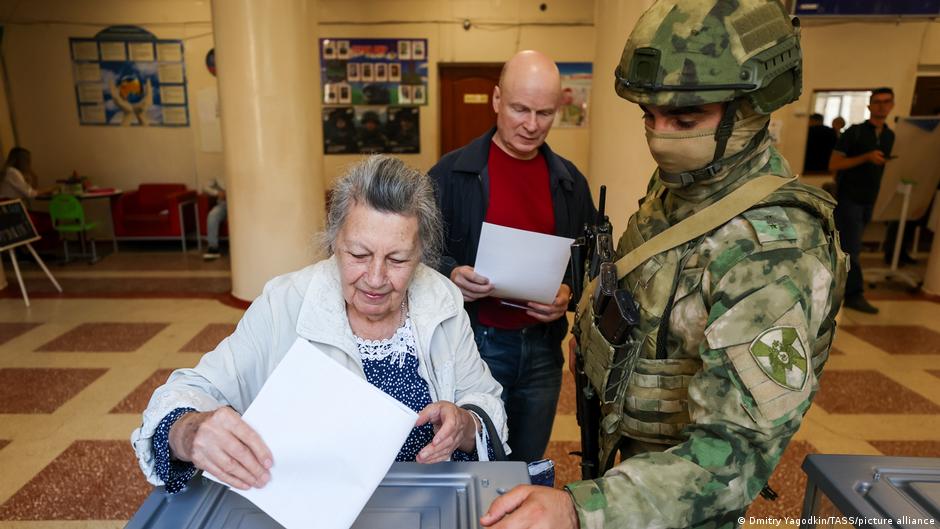
Russia’s liberal Yabloko party is on course to enter the Novgorod regional legislature after clearing the five percent threshold, a result that could help preserve one of the few remaining institutional routes for opposition participation in future national elections. For Russia’s technology founders, venture investors and innovation-focused companies, the result is less about immediate policy change than about the structure of political risk in a market where regulation, public procurement, capital formation and exit options remain deeply shaped by the state.
According to Russia’s Central Election Commission, Yabloko had 6.2 percent of the vote in elections to the eighth convocation of the Novgorod Regional Duma after 96.86 percent of protocols had been counted. The commission reported the figures in the early hours of Monday, September 21. By passing the five percent barrier, the party secures representation in the regional parliament. In the previous election at the same level in 2021, Yabloko received 3.83 percent of the vote.
The practical consequence is significant for the party’s national prospects. A Yabloko source said the presence of a deputy in a regional parliament would allow the party to continue participating in elections to the State Duma without collecting voter signatures. That procedural foothold matters in a political environment where ballot access itself can determine whether dissenting or alternative policy positions are visible at all.
“For the party, it has a very practical meaning: having a deputy in a regional parliament will allow Yabloko to continue taking part in State Duma elections without collecting signatures,” a Yabloko source said.
A Political Signal for a Risk-Sensitive Startup Market
For venture-backed businesses, the Novgorod result does not translate into a sudden change in Russia’s startup financing climate. But it does touch a core concern for investors: predictability. Early-stage technology companies depend on stable rules for intellectual property, payments, data, public contracts, foreign partnerships and potential M&A. Where political competition narrows, policy debate also narrows, and founders may have fewer channels through which to contest regulatory decisions or advocate for reforms that support innovation.
In that context, Yabloko’s ability to remain electorally present is relevant beyond party politics. It preserves at least one formal opposition pathway in regional institutions, even as the broader system remains tightly controlled. For startups, particularly those operating in sensitive sectors such as software, communications, fintech, civic technology or cross-border services, the existence of alternative political voices can affect the long-term assessment of country risk by founders, employees and investors.
The broader Novgorod vote was led by United Russia, which had 38.37 percent according to the reported figures. The Communist Party had 14.54 percent, the Liberal Democratic Party had 12.01 percent, New People had 9.87 percent, A Just Russia had 7.7 percent, and the Party of Pensioners had 5.55 percent. Yabloko’s 6.2 percent placed it above the threshold but far behind the dominant governing party.
The Yabloko source described the Novgorod campaign as taking place under extremely difficult conditions. The entire party list on the ballot was marked with a label related to “foreign agent” status because the list’s leader, party deputy chair Anna Cherepanova, had been recognized as affiliated with a “foreign agent.” Cherepanova herself was removed from the election because of an administrative case under Article 20.3 of Russia’s Code of Administrative Offenses. The source said that neither the labeling nor the removal of the list leader prevented the party from achieving a strong result.
Those campaign conditions are part of the environment investors monitor when evaluating Russia-linked exposure. Labels such as “foreign agent,” administrative proceedings and candidate removals are not startup policy in the narrow sense. Yet they contribute to a wider operating climate in which reputational, legal and compliance risks can spill into business decisions. Companies seeking external financing, international customers or acquisition interest are especially exposed to shifts in how the state defines acceptable affiliation, speech and political association.
Ballot Access and Innovation Policy
The procedural detail around State Duma elections is central. Before these elections, Yabloko had three factions in regional legislatures: Pskov, St. Petersburg and Karelia. According to the Yabloko source, the party lists there were removed. The Novgorod result therefore gives the party a remaining basis to take part in future State Duma elections without the burden of collecting signatures, a process that can be a high barrier for parties outside the dominant political mainstream.
For the innovation ecosystem, national legislative access can shape debates over taxation, digital regulation, state support programs, university commercialization, research funding, venture incentives and the rules governing acquisitions. Russia’s technology sector has long relied on a mix of private entrepreneurship and state-linked demand. In such systems, parliamentary access for alternative parties can matter because it provides a venue, however limited, for scrutiny of laws that affect startups’ ability to raise capital, scale products and attract technical talent.
The party’s recent experience at the federal level underscores the constraints. On August 10, Russia’s Supreme Court removed Yabloko’s federal list from State Duma elections following a lawsuit by Rodina, which accused the party, among other things, of copyright violations and illegal payments for election campaigning. Despite that decision, Yabloko candidates in single-mandate districts are still participating in the vote.
Yabloko has also occupied a distinct position among Russian parties on the war in Ukraine. It was the only Russian party to oppose the war. In comments cited by DW, Jürgen Hardt, the foreign policy spokesman for the CDU/CSU parliamentary group in the Bundestag, said that by excluding the party, Russian President Vladimir Putin had removed “the last significant voice of opposition” from the electoral process.
For venture capital, the implications are structural rather than immediate. Russia’s startup and technology markets face pressures from sanctions, restricted international financing channels, talent mobility challenges and limited cross-border exit pathways. Political pluralism is not a substitute for capital access or product-market fit, but its absence can compound uncertainty. M&A buyers, institutional investors and global partners assess whether a market offers rule stability, legal recourse and transparent policymaking. Elections in regional legislatures may seem distant from term sheets and acquisition talks, yet they can affect the long arc of confidence in the institutions around the market.
Yabloko’s Novgorod performance therefore offers a narrow but notable signal. The party remains far from power, and United Russia continues to lead by a wide margin. Still, a 6.2 percent result after nearly all protocols had been counted appears sufficient to place Yabloko back inside a regional parliament and to preserve a procedural path toward future Duma participation. For Russia’s constrained innovation economy, that foothold represents one of the few remaining institutional openings for political diversity in debates that ultimately shape the conditions for founders, investors and technology workers.