Yaroslavl Refinery Halt Adds New Risk Layer for Russian Tech Startups
Drone damage at a major Russian refinery is deepening fuel-supply stress with implications for logistics, cloud infrastructure and venture-backed operators.
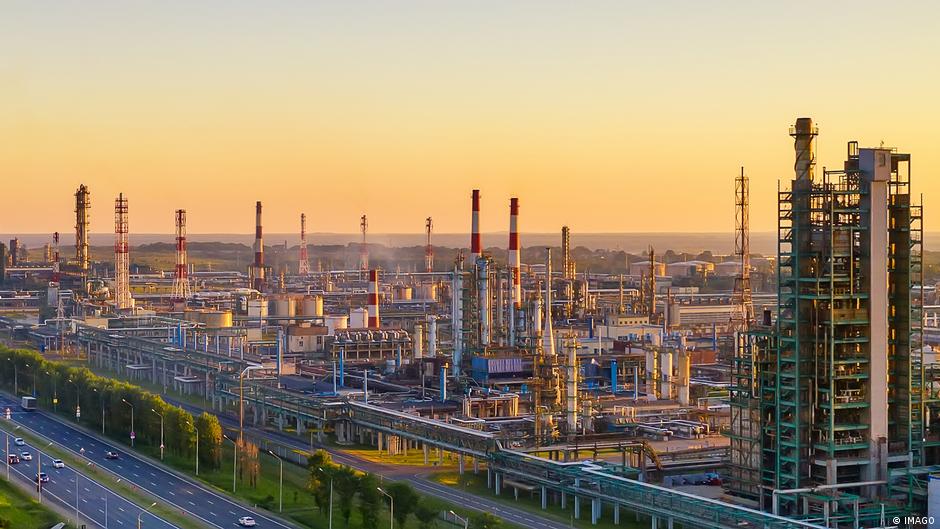
The shutdown of the Slavneft-Yaroslavnefteorgsintez refinery in Yaroslavl, known as YANOS, has turned another piece of Russia’s industrial infrastructure into a business-continuity problem for the country’s technology and venture ecosystem. The plant, which supplied fuel to the Moscow region and ranks among Russia’s largest refineries, halted oil processing and fuel shipments after drone strikes damaged key refining units, Reuters reported, citing four industry sources.
For venture-backed companies, the immediate issue is not refinery ownership or energy-sector balance sheets. It is operational exposure. Startups in delivery, e-commerce, warehouse automation, fleet management, food logistics, field services and hardware distribution depend on stable fuel availability and predictable road transport costs. A stoppage at a top Russian refinery serving the Moscow region affects the same arteries that many young technology companies use to move goods, maintain uptime and fulfill service-level promises.
According to the report, the latest attack took place overnight on Sept. 17 and damaged the AVT-3 crude-processing unit, which accounted for 40 percent of the refinery’s capacity. Yaroslavl regional governor Mikhail Evrayev confirmed damage and a fire at the site, which took several hours to extinguish.
The AVT-3 unit could process about 17,000 metric tons of crude per day, while YANOS annually supplied more than 2.6 million tons of gasoline and 4 million tons of diesel to markets.
The stoppage follows an earlier strike overnight on Aug. 28 that disabled another unit, AVT-4, which provided around 33 percent of YANOS capacity and had not resumed operations. After the attacks, YANOS stopped exchange-based fuel shipments. Russian media place the Slavneft refinery in Yaroslavl among the country’s five largest refineries by crude-processing volume, while the source also describes it as one of Russia’s top 10 refineries.
Startup Exposure Moves From Macro Risk to Unit Economics
Fuel shortages and refinery outages usually appear in market commentary as macroeconomic or wartime infrastructure issues. For startups, they translate quickly into unit economics. Delivery platforms face higher route costs. Online retailers face less reliable fulfillment. Mobility operators and logistics software companies see their customer base pressured by fuel scarcity. Industrial software firms serving manufacturers may face delayed deployments if client sites struggle with inputs, transport or emergency repairs.
The Yaroslavl refinery has repeatedly been targeted by Ukrainian drones since the start of Russia’s full-scale war against Ukraine. In 2026, fires occurred at the enterprise at least eight times. That pattern matters for investors because recurring disruption changes how companies price operational risk. A one-off outage can be absorbed. Repeated hits to refining capacity, especially near major consumption centers, push founders and boards to model fuel availability as a continuing constraint rather than an exceptional event.
YANOS is also the second major refinery in the region to suspend operations in September because of drone-attack consequences. Since Sept. 6, the Rosneft refinery in Ryazan, with capacity of 17 million tons of oil per year, has not shipped fuel. The stated capacity of the Yaroslavl refinery is 15 million tons of oil per year. Together, those disruptions sharpen the supply problem around central Russia, including the broader Moscow-linked market where many technology companies, engineering teams and logistics networks are concentrated.
For venture capital, this raises a familiar question in a harsher setting: which companies can convert volatility into demand, and which are simply exposed to it? Fleet-optimization startups, predictive maintenance providers, routing software vendors, industrial cybersecurity companies and energy-market data platforms may find that corporate customers are more receptive to resilience tools. But companies with thin delivery margins, heavy physical distribution or cash-intensive consumer operations could see financing conversations become more difficult if fuel risk erodes gross margins.
Funding, M&A and Resilience Technology
The investment implications are likely to be uneven. Strategic acquirers in transport, industrial software and energy services may become more interested in technology that reduces fuel waste, improves inventory visibility or helps route around shortages. At the same time, financial investors may apply steeper discounts to startups whose growth depends on cheap and abundant fuel. In that environment, M&A can become both a defensive tool and a consolidation mechanism: stronger operators may absorb distressed rivals with useful technology but fragile balance sheets.
Ukraine’s strikes on Russian oil-refining facilities contributed during the summer to a fuel crisis in Russia. The Kremlin and President Vladimir Putin have been reluctant to acknowledge the scale of the problem. Putin has said fuel difficulties are “temporary” and that attacks on refineries are not capable of influencing events at the front. Yet the market signals cited in the source point to continuing stress. According to data from Gdebenzin, a service that aggregates Russian fuel-search sites and services, AI-92 and AI-95 gasoline were unavailable at roughly half of the country’s filling stations in mid-September. The indicators varied day to day, but a chart cited by Novaya Gazeta Europe showed that acute fuel shortages had continued in Russia since mid-August.
For founders, such shortages can force choices that rarely appear in pitch decks: whether to limit service areas, renegotiate delivery fees, increase warehouse buffers, prioritize enterprise contracts over consumer growth, or pause expansion into fuel-constrained regions. For investors, the same conditions may make diligence more infrastructure-heavy. Instead of assessing only product, revenue growth and customer acquisition, funds may ask how a company performs under constrained logistics, interrupted fuel supply and rising transport costs.
The political backdrop adds further uncertainty. In mid-September, Kremlin spokesman Dmitry Peskov spoke positively about U.S. President Donald Trump’s idea of an “energy truce,” under which Ukrainian attacks on Russian refineries would stop. Asked whether Russia would in return halt strikes on Ukrainian infrastructure, Peskov did not answer. That asymmetry leaves the operating environment unresolved for startups and their backers.
The Yaroslavl halt is therefore more than an energy-market story. It is a reminder that innovation ecosystems depend on physical infrastructure, even when the companies inside them describe themselves as asset-light. Fuel supply, refinery uptime and regional logistics now sit closer to the core of startup risk in Russia, shaping everything from burn rates to acquisition appetite and the credibility of growth forecasts.