EU Summons Russian Envoy After Missile Strikes on Ukrainian Military Tech Exhibition
EU condemns Russian missile attacks damaging Ukrainian drone exhibition and Latvian consulate, signaling potential sanctions amid ongoing conflict.
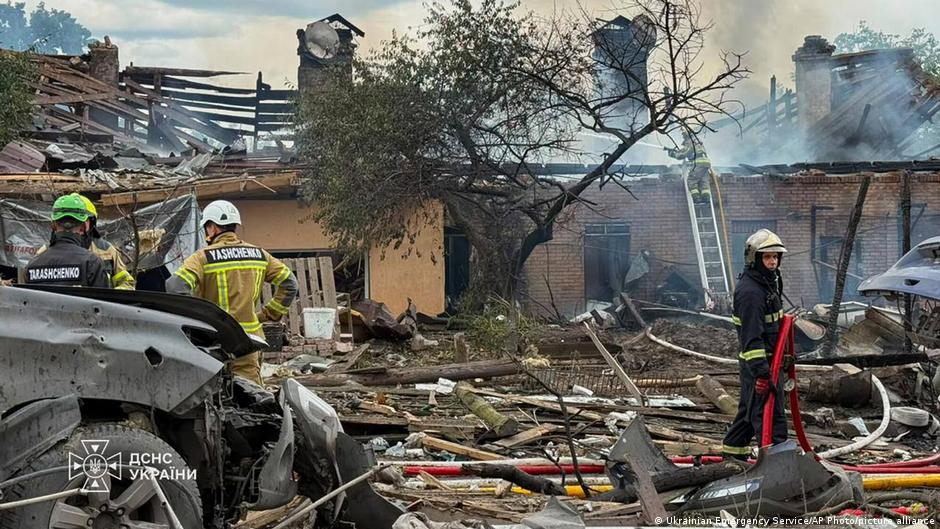
The European Union has announced it will summon the Russian permanent representative to the EU following a series of missile strikes targeting Ukraine, including a private weapons exhibition in the Kyiv region and the honorary Latvian consulate in Sloviansk. These attacks mark another escalation in the ongoing conflict and have drawn sharp criticism from EU officials.
Impact on Ukraine's Military Tech and Innovation Ecosystem
On July 24, Russian forces launched ballistic missile attacks using Zircon missiles on Ukraine's Kyiv region, striking a private military polygon in Bucha district where a drone exhibition was underway. According to Ukrainian authorities, this attack resulted in approximately ten fatalities and around one hundred injuries. The targeted site hosted developers and manufacturers of unmanned aerial vehicles (UAVs), alongside Ukrainian Armed Forces drone command representatives and intelligence personnel involved in planning operations against Russian targets.
The Ministry of Defense of Russia confirmed the strike, emphasizing the presence of key drone developers and military personnel at the location, framing the attack as a countermeasure against Ukrainian drone capabilities.
"We want to create production lines, because drones cannot simply lie in warehouses. Unlike artillery or missiles, drones are replaced every six months on the battlefield, sometimes every three months," said Ukrainian President Volodymyr Zelensky in a recent interview, highlighting plans to establish domestic drone manufacturing with U.S. support.
President Zelensky revealed that Ukraine currently operates UAVs capable of striking targets up to 3,000 kilometers away and anticipates acquiring drones with ranges up to 10,000 kilometers by 2027. This strategic move aims to expand Ukraine’s long-range strike capabilities, integrating advanced drone technology into its defense infrastructure.
In response to the attacks, the EU’s High Representative for Foreign Affairs and Security Policy, Kaja Kallas, condemned Russia's "indiscriminate" strikes, underscoring the deliberate targeting of civilian and diplomatic entities as a breach of international law. The EU has promised to broaden its sanctions list to include additional Russian military-industrial enterprises involved in such attacks.
The strike on the Latvian honorary consulate in Sloviansk symbolizes Moscow’s disregard for diplomatic norms, further straining Russia’s relations with EU member states and complicating prospects for regional stability.
Additionally, President Zelensky has called for the establishment of a "special command for long-range impact on Russia" within the Ukrainian armed forces, a unit intended to coordinate deep-strike drone operations targeting key Russian infrastructure. Kyiv regards these capabilities as critical for disrupting Moscow’s war efforts and maintaining strategic momentum in the conflict.
The ongoing conflict and targeted attacks on Ukraine's defense innovation hubs raise serious concerns about the security of emerging military technologies and the resilience of Ukraine's tech startup ecosystem focused on defense solutions. The EU's response and potential expansion of sanctions signal a closer alignment between diplomatic measures and the protection of technological innovation critical to Ukraine’s defense.