EU's Cohesion Under Threat as Russia, China, and US Employ Divide-and-Rule Tactics
EU's High Representative warns geopolitical powers target bloc's unity, impacting Europe's tech startup ecosystem and venture capital collaborations.
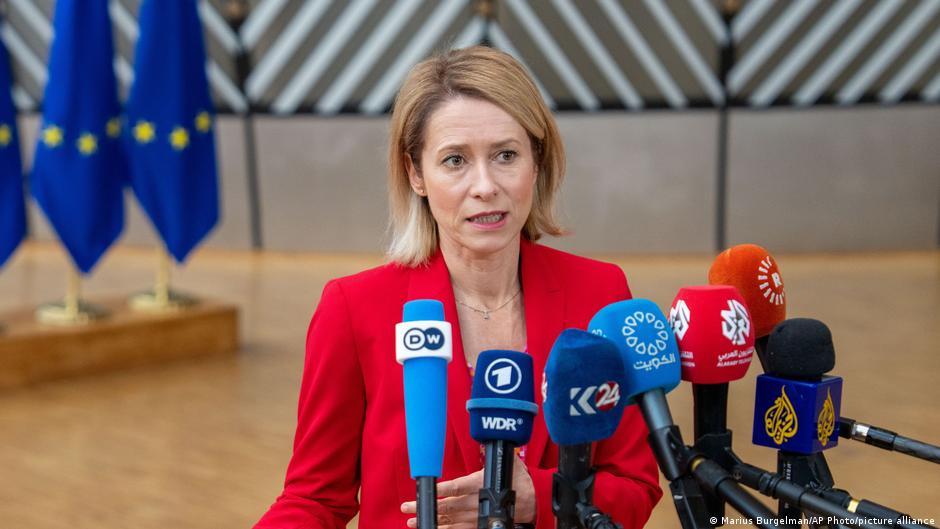
In an address at the Lennart Meri Conference in Tallinn, the European Union's High Representative for Foreign Affairs and Security Policy, Kaja Kallas, issued a stark warning about the geopolitical challenges facing the EU. According to Kallas, Russia, China, and the United States are actively seeking to weaken the European Union by exploiting divisions among member states through a classic "divide and rule" strategy.
Geopolitical Fragmentation and Its Impact on the EU's Innovation Landscape
Kallas emphasized that the unity of the EU is a source of strength: "If we stick together, if we act jointly, then we are strong." The High Representative pointed out that these global powers are wary of the EU’s consolidated influence because, collectively, the Union operates as an equal and powerful actor on the international stage.
"They do not like the European Union. That is crystal clear," Kallas stated, underscoring the strategic intent behind these external pressures.
She further highlighted how bilateral agreements between individual EU countries and Washington risk undermining the bloc’s cohesion. "I am very concerned because I sometimes see some countries going down this path. Division really works," said Kallas. The fragmentation poses a tangible risk not only to political unity but also to the EU's broader innovation ecosystem, including venture capital (VC) funding avenues and the collaborative environment essential for startups.
Since the beginning of Donald Trump's second term as U.S. President, many EU member states have sought independent channels of communication with Washington. Italy’s Prime Minister Giorgia Meloni, for instance, attempted to position herself as an intermediary between Europe and the U.S., though this approach faltered amid criticism from Trump toward Pope Leo XIV.
For the tech startup and venture capital community, the implications of such geopolitical fragmentation are significant. The EU's strength as a unified regulatory and economic bloc facilitates cross-border investments, harmonizes venture funding rules, and stimulates innovation through cooperative programs. Disunity risks creating an unpredictable environment where startups face more regulatory hurdles, reduced access to pan-European funding, and limited market scalability.
Moreover, Kallas rejected Russia's proposal to appoint former German Chancellor Gerhard Schröder as the EU's peace negotiation representative with Russia, describing the idea as "not very sensible." This stance reflects heightened geopolitical tensions that could further complicate international collaboration efforts vital for technology transfer and innovation partnerships.
VentureLine's readers should note that the geopolitical pressures described by Kallas extend beyond diplomacy and security. They reverberate through the EU’s tech startup ecosystem, affecting investment flows, cross-border mergers and acquisitions, and the overall climate for innovation. Maintaining EU unity is therefore not only a political imperative but also a critical factor for sustaining Europe's competitiveness in global technology markets.
As Washington, Beijing, and Moscow pursue strategies to leverage divisions within the EU, startups and venture capitalists must remain vigilant and advocate for policies that bolster the bloc's cohesion. A fractured EU risks losing its ability to act as a unified market, essential for attracting international investment and fostering homegrown innovation.